
 |
Border Collie Spaniel |
|
He is not recognized by the F.C.I. |
Origin |
Great Britain <> U.S.A. -> U.S.A. | |
Translation |
Francis Vandersteen |
A brief presentation of the Border Collie Spaniel |
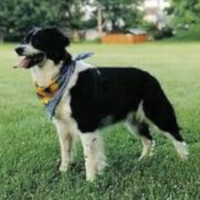
| The Border Collie Spaniel often inherits the athletic body of the Border Collie and the beautiful head of the Cocker Spaniel. They are muscular and wiry, with the body of an athlete. They have an alert expression and are always very aware of what's going on around them. Their thick coat will usually have a wave and be either black and white or brown and white. Those looking for an energetic, high-intensity breed should look no further than the Border Collie Spaniel. These dogs love to run and are also happy to stay active by swimming, hiking or participating in canine activities. Extremely intelligent and intuitive, the Border Collie Spaniel is a rewarding training partner. |
History of the Border Collie Spaniel |
| The Border Collie Spaniel is also known as the Border Collie Cocker and is thought to have originated in America at the turn of the century. It is typically the American Cocker Spaniel that is used in the mix rather than the English Cocker Spaniel. While the Border Collie is a high-energy working dog, the American Cocker is traditionally bred as a show dog and pet. Because these dogs have such different personality types, the temperament of the Border Collie Spaniel can be highly variable. |
A little of the Border Collie |
||
| The Border Collie originated in the 19th century in Northumberland, on the border between England and Scotland, hence its name. Although the Collie had been present and working in the region for many years before, it wasn't until the 19th century that the breed was standardized. The Border Collie has always made a superb farm dog and has been used to herd livestock for many years. They are prized for their work ethic and intelligence, and have competed successfully in sheepdog competitions since their origin. | ||
 |
||
| Standard of the Border Collie | ||
A little of the American Cocker Spaniel |
||
| Cockers have traditionally been used for hunting on land and in water, as well as for retrieving birds and waterfowl with a soft mouth. The American Cocker Spaniel was once considered the same breed as the English Cocker Spaniel, but they separated from each other around 100 years ago. The American Cocker was used more for parade and the English was kept as a working dog. Of course, both breeds are equally popular pets and are kept as such all over the world. The first Cocker Spaniel was registered with the American Kennel Club in 1878, and it was in the 1920s that the American and English versions came into their own. | ||
 |
||
| Standard of the American Cocker Spaniel |
Appearance of the Border Collie Spaniel |
| Physically, the Border Collie Spaniel is a good blend of each parent dog, and the appearance of each member of the breed varies greatly. Over time, they will develop a more uniform appearance. A medium-sized dog when fully grown, the Border Collie Spaniel will measure between 40 and 56 cm and weigh between 12 and 14 kg. They have well rounded skulls and relatively long muzzles. Their eyes are dark brown with an intelligent expression. They may have the hanging ears of a Cocker Spaniel or the semi-erect ears of some Border Collies. They have strong necks and rectangular bodies that are athletic and proportionately built. They should have a visible abdominal tuck. Their tails are long and often curled towards the end. The Border Collie Spaniel's coat is long and thick with a beautiful wave. Most of the breed's dogs will have the classic (black and white) Border Collie coat, although some may be brown and white. Spots and patches are all common markings. |
Temperament of the Border Collie Spaniel |
| The Border Collie Spaniel is a good-natured dog with a real zest for life, and loves nothing more than to do something. Not a lazy dog, the Border Collie Spaniel's main characteristics are its exuberant energy and endearing stamina. They love to do things with their family and enjoy lots of attention. In fact, this breed can be a bit of an attention seeker. They don't like to be left alone for too long and can be prone to separation anxiety. They need human companionship and are not always satisfied when left to their own devices. Full socialization is necessary to avoid nervousness towards strangers, and the Border Collie Spaniel should be exposed to people of all shapes and sizes during their first months of life. They can make very good watchdogs as they are very attentive and will certainly be the first to know if someone new has arrived. |
Needs and activities of the Border Collie Spaniel |
| The Border Collie Spaniel is considered to have a high energy level and can run continuously for hours on end. Daily exercise is a must to maintain this breed's weight and give it the lifestyle it desires and deserves. Intense daily play is recommended for both mental and physical stimulation and satisfaction. It's recommended to provide your Border Collie Spaniel with at least 60 minutes of exercise a day to avoid property destruction and anxious behavior caused by boredom. Some hybrids will require more, perhaps 120 minutes a day. This dog is not a couch potato, his mission is to run, so be prepared to run alongside him. |
Maintenance of the Border Collie Spaniel |
| The Border Collie Spaniel is not a hypoallergenic dog and is known for its abundant shedding. Daily brushing with a stiff bristle brush and a carpet-brushing comb is recommended. Trimming his coat is highly recommended if you want to maintain an easy grooming routine. If not, your Border Collie Spaniel should be professionally groomed every 6 to 8 weeks to give it an elegant appearance and avoid tangles. Bathing your dog should be limited to every 6 to 8 weeks to avoid over-oiling, your groomer can help you decide if this should be done. Don't neglect teeth or nails, brush them at least a few times a week and check nails often during breaks, trimming them every few weeks. |



 English (United Kingdom)

Comments