
 |
Chiweenie |
|
He is not recognized by the F.C.I. |
Origin |
Mexico <> Germany -> U.S.A. | |
Translation |
Francis Vandersteen | |
This breed is also known as |
Mexican Hot Dog
|
A brief presentation of the Chiweenie |
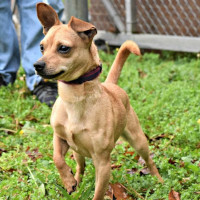
| The Chiweenie, affectionately known as the Mexican Hotdog or German Taco, is a specific cross between a Chihuahua and a Dachshund. These portable-sized, cute-looking dogs are the ideal companion for single people, the elderly and families with older children looking for a loyal, affectionate companion dog. Chiweenies become unique in their appearance, and it's hard to find two that look exactly alike, as they more closely resemble each other's characteristics. Size, color, hair length and facial expression can vary from one dog to the next. As far as personality traits are concerned, Chiweenies are mischievous and alert dogs, very active and energetic, protective and devoted. |
History of the Chiweenie |
| The Chiweenie is a recent specific crossbreed dog developed in North America, probably in the early 1990s. Although not an actual breed, it is recognized by the American Canine Hybrid Club, Designer Dogs Kennel Club, Dog Registry of America, International Designer Canine Registry and Designer Breed Registry. Chiweenies have grown in popularity in recent years, although their breeding has been linked to controversy, with reports of them being bred and sold for profit in puppy mills. |
A little of the Chihuahua |
||
| Despite being the world's smallest dog breed, the Chihuahua has a big personality. These little dogs are loyal, intelligent and courageous. The breed is thought to have originated from wild dogs domesticated by the Toltecs, who then gained popularity in Mexico and then America, where they were refined. Today, they are a popular companion dog, appreciated for their charming yet bold characters and small size. Chihuahuas come in many colors and can be smooth or long-haired. It has an easy-care coat, which can be kept in order by brushing. | ||
 |
||
| Standard of the Chihuahua | ||
A little of the Dachshund |
||
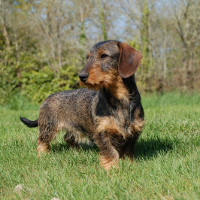
| There are two types of Dachshund recognized by the UK Kennel Club, the standard and the miniature. Each type comes in 3 possible coat variations, smooth-haired, longhaired and curly-haired. Dachshunds originated in Germany and were bred mainly to hunt badgers, but also foxes, wild boar, rabbits and to track wounded deer. Dachshunds are small, muscular and robust dogs with a strong, sometimes stubborn character. They are generally extremely loyal and faithful, and curious about open-minded people. | ||
 |
||
| Standard of the Dachshund |
Appearance of the Chiweenie |
| Chiweenies tend to have the body of their Dachshund parent and long legs. Their coat can be long or short, silky or rough, solid color or a combination of the following: white, red, brown, black. If the Dachshund parent is a miniature, his Chiweenie offspring will of course be smaller than those of classic Dachshunds, but on the whole, Chiweenies are small dogs, 20 to 25 centimeters in height and weighing between 3.5 and 5.5 kilos. They have floppy ears that stand erect when alert, pointing outwards like bat wings. The nose can be short or pointed, black or brown, the tail is generally long and curved, they have small paws and almond-shaped eyes (black, brown or green). |
Temperament of the Chiweenie |
| Chiweenies are affectionate and caring, always attentive to their environment and staying as close as possible to their owners. They are loyal and protective of their family, and tend to choose one family member over others, with whom they develop a stronger bond. These dogs are therefore a good choice for single people, but also the elderly and families with children. However, they are not the best pets for young children, as Chiweenies are easily annoyed by excessive activity or noise, and don't necessarily tolerate the turbulence associated with small children. In addition, they have sensitive backs, due to their long bodies, and fragile paws, so a certain level of awareness is advised when playing and interacting with Chiweenies. Despite their sensitive nature, Chiweenies are generally laid-back and very friendly. They love to play and run around, but also to snuggle up on the sofa, making them a coveted pet with which to interact in a lively and fun way, but which can also be comfortably seated on your lap. Chiweenies like to be the center of attention and can become jealous. So they tend not to get on well with other animals. Raising a Chiweenie alongside other dogs or cats as a puppy will solve this problem, as they will get used to other animals from an early age. Chiweenies are good watchdogs because they're alert and tend to bark, just like their Dachshund parent, a hunting dog. Chihuahuas are also renowned for their high-pitched voice and loud sound, so it's the perfect combination for a cute dog who loves to express himself. In any case, they're sociable dogs who like to be around people. They are attached to their families and can suffer from separation anxiety. They can also be aggressive towards other dogs. Socialization and training are therefore essential to raising well-tempered dogs. |
Needs and activities of the Chiweenie |
| The Chiweenie needs plenty of activity to get rid of its accumulated energy. If your furry companion doesn't get enough exercise, he'll get bored and this will cause behavioral problems such as chewing and barking. Try to give your dog at least 30 to 60 minutes of vigorous exercise every day, such as a hike, a swim, a trip to the local dog park, a walk or run around the neighborhood, or a long game of fetch. They also enjoy agility training and can be very good at it. Chiweenies can become obese if they don't get enough physical activity every day. |
Maintenance of the Chiweenie |
| Chiweenie care depends on the coat type of the parent breeds. Short-haired Chiweenies are easy to care for, requiring only a stiff bristle brush two or three times a week. Long-haired Chiweenies need to be brushed more often, and you may also need to use a metal comb to avoid tangles. The wire-haired version of this dog should be groomed at least once every six months. You can do this yourself by removing the outer coat with a stripping knife or by a professional. You should also check their ears once a week and trim their nails if necessary. In addition, take care of their teeth by brushing them several times a week, as small dogs are prone to dental disease. |



 English (United Kingdom)

Comments