 |
Foodle |
|
He is not recognized by the F.C.I. |
Origin |
U.S.A. <> France -> U.S.A. | |
Translation |
Francis Vandersteen |
A brief presentation of the Foodle |
| A lovely mix of the versatile Poodle and the small Toy Fox Terrier, the Foodle is a good pet choice for an active household with plenty of time to devote to training and outdoor activities. Foodles have a natural inclination to be territorial and will always watch over their home and family, ensuring that any stranger who arrives is greeted with a loud bark. Foodles have tiny bodies and could be classified as a toy breed. They have a good mix of physical traits from each breed and are built in good proportions with a lean, stiff body. Some will have the traditional Poodle coat, while others will inherit a shorter, stiffer coat. |
History of the Foodle |
| A combination of the very popular Poodle and the American Toy Fox Terrier, the Foodle is a new hybrid breed also known as the Foxipoo or Fox Doodle. Established in the USA at the end of the 20th century, this cross-breed is not yet widely known. As a rule, it's the Poodle Toy that's used in the mix, making it a small dog. With a history of less than thirty years, we need to appeal to their parents to better understand this specific newly established crossbreed dog. |
A little of the Toy Fox Terrier |
||
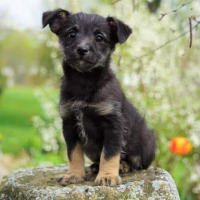
| The Toy Fox Terrier is a direct descendant of the British Fox Terrier. Anecdotally, American breeders discovered that the biggest characters in the litter were the biggest characters in the litter. In the early 20th century, they then bred the toys to create a miniature version of the Fox Terrier with an amplified personality. Chihuahuas and Italian Greyhounds were added to the mix, providing greater genetic diversity and choice for breeders. Many describe the resulting Toy Fox Terrier as a dog with the fiery nature of any Terrier, but with a knee-jerk temperament. Traditionally, these dogs were kept as both pets and vermin hunters. They have also appeared in circus acts, their intelligence and cheeky nature making them perfect for the part. Today, they are kept as pets, show dogs and successful competitors in canine activities such as agility. | ||
 |
||
| Presentation of the Toy Fox Terrier | ||
A little of the Poodle |
||
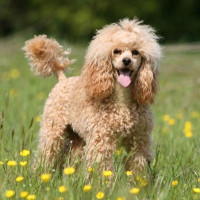
| Poodles are a much-loved breed worldwide, available in three distinct sizes: Toy, Miniature and Standard. Each type is distinctly different, and it's often the two smallest that are used in hybrid creations. The Poodle is so versatile, attractive, intelligent and adaptable, it has become one of the most prolific contributors to specific crossbreeding dogs. Poodles have been featured in German works of art since the 15th century, although it was in France that they were popularized and became a real hit with the aristocracy. With their remarkable swimming ability, Poodles were once used to retrieve waterfowl, a job rarely seen today. | ||
 |
||
| Standard of the Poodle |
Appearance of the Foodle |
| The Foodle is small, measuring between 25 and 30 cm and weighing between 4 and 5.5 kg as an adult. In general, however, the Foodle is not yet very uniform and there can be many differences, even between puppies from the same litter. Some will inherit more and more Terrier genes, while others will look more like a Poodle. Foodles have well-separated dark almond-shaped eyes and low-set ears. They have a reasonably long, narrow muzzle that ends in a small, soft, ever-black nose. Foodles have well-muscled, lean, rectangular bodies. Their limbs are straight and their hind legs can generate a good deal of power. The dogs have a medium-sized tail, which is straight and should not curl excessively over the back. Coat type is particularly variable, with some dogs having tight curls and others developing a stiff, straight coat. There are several potential coat colors, including white, black, gray, brown and red, and many will have more than one color. |
Temperament of the Foodle |
| As with many smaller dogs, the Foodle has a big personality and a temperament that can sometimes be fiery. They are courageous and will rarely show shyness, whatever the circumstances. Their courageous nature doesn't mean they're any less affectionate than other companion dogs, and they'll form close bonds with their families, happy to sit on their laps in the evening. The Foodle is a good companion for children, but is best suited to the company of older children, as their small size makes them more prone to accidents in the event of a fall or mishap. Although the Foodle can accept other dogs, they don't do well in the company of small pets, such as cats or rabbits, as the temptation to chase and torment them can often prove too strong. Alert and territorial, the Foodle is an excellent watchdog and will alert its owner to any newcomers with a burst of short, loud barks. Despite their small size, their inherent courage even makes them good watchdogs. |
Needs and activities of the Foodle |
| The Foodle needs around 60 to 90 minutes of high-level exercise every day to stay healthy and well behaved. A dog that doesn't get enough physical activity can become bored and anxious, as well as developing behavioral problems such as excessive barking or irritation. This breed is good at running and jumping, and would enjoy Frisbee, fetch and flyball, as well as agility classes and obedience training. Other activities the Foodle can enjoy are hiking, jogging, walking, visiting the dog park, swimming or simply running around the yard. They need to be supervised outdoors, as they are small enough to be prey for large birds and other animals. |
Maintenance of the Foodle |
| The Foodle is actually considered hypoallergenic, as it rarely causes allergic reactions, but it does shed a small amount of hair when you hold it. You should brush them with a stiff bristle brush at least two or three times a week to promote good circulation and skin health, and trim their nails as needed. Clean their ears with cotton balls once a week, and watch for earwax build-up and mites that appear as a black accumulation in the ear. Because the Foodle is sensitive to skin conditions, you should only use the shampoo or soap recommended by your veterinary care provider. Brush his teeth with a toothpaste specially formulated for dogs at least a few times a week. |



 English (United Kingdom)

Comments