 |
German Shorthaired Lab |
|
He is not recognized by the F.C.I. |
Origin |
Germany <> Canada -> U.S.A. | |
Translation |
Francis Vandersteen |
A brief presentation of the German Shorthaired Lab |
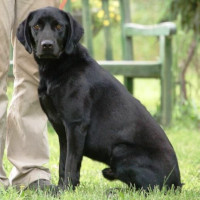
| The German Shorthaired Lab, sometimes referred to by its fuller name, the German Shorthaired Labrador Retriever, is a medium-sized dog with an athletic build and boundless energy and, as you may have already guessed, a cross between the German Shorthaired Pointer and the Labrador Retriever. Always on the move, these dogs thrive in rural environments and need plenty of exercise and space to stay fit and happy. A handsome, noble-looking dog, the German Shorthaired Lab tends to resemble a stiffer, more muscular Labrador, which can be reproduced in a wider variety of coat colors and patterns. Their short, dense coat is low-maintenance, but will shed a lot, especially in hot weather. |
History of the German Shorthaired Lab |
| Data on the early breeding of the German Shorthaired Lab is sorely lacking, and experts can only estimate their origin and date. However, we can learn a lot about their history by taking a closer look at each parent breed, the German Shorthaired Pointer and the Labrador Retriever. |
A little of the German Shorthaired Pointing Dog |
||
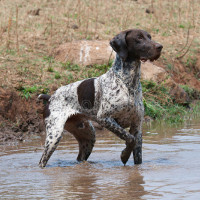
| The German Shorthaired Pointer is prized for its ability to work efficiently on land and water. It is still used by hunters, particularly in Germany and surrounding countries. Their inviting personality and gentle nature have ensured that they are also considered good pets, and many will be kept for companionship rather than as working dogs. A relatively new breed, it wasn't until the mid-1800s that the German Shorthaired Pointer was officially established. They were bred from a good mix of dogs, including the English Pointer, the Weimaraner and the Hungarian Vizsla. | ||
 |
||
| Standard of the German Shorthaired Pointing Dog | ||
A little of the Labrador Retriever |
||
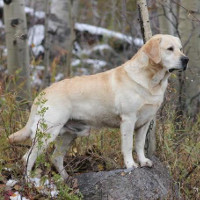
| A very popular companion dog indeed, the Labrador Retriever tops the list of the most popular breeds in countries around the world. This title has been hard-earned over the years, and Labrador Retrievers have proven themselves time and again to be reliable, loving animals that can be trusted with children and are incredibly easy to live with. Most assume that this breed was established in Labrador, but they come from Newfoundland, a neighboring Canadian province. Indeed, the Newfoundland dog breed was used in the creation of Labrador, alongside smaller water dogs. Imported in large numbers to England in the 1800s, Labradors quickly established themselves and, like the original black dogs, yellow and chocolate examples of the breed were soon accepted. Traditionally used as hunting dogs, modern Labrador Retrievers are now used in a wide variety of fields, often considered service dogs, search and rescue dogs and even therapy dogs. | ||
 |
||
| Standard of the Labrador Retriever |
Appearance of the German Shorthaired Lab |
| German Shorthaired Labs have a pleasing appearance, with good musculature and a truly athletic conformation. Their skull is large and broad, with a strong muzzle that tends not to be as long as that of the Braque. Their ears are generally large and broad, often extending beyond the jaw. They are robust yet elegant, carrying themselves with quiet dignity. Their limbs are long and strongly built, yet allow for a rapid pace. They generally have a broad tail, particularly thick at the base. Although there is some variation, most German Shorthaired Labs will weigh between 25 and 30 kg and measure between 53 and 60 cm. The German Shorthaired Lab's short coat may well be black, chocolate and yellow in Labrador, but will often feature white spots and markings. |
Temperament of the German Shorthaired Lab |
| Both adventurous and jubilant, the German Shorthaired Lab is a real pleasure, and it's hard to stay in a bad mood for too long in their company. They approach any task given to them with joy and enthusiasm, and are never afraid of a new challenge. They have a seemingly endless supply of energy, and require a great deal of mental and physical stimulation to keep them satisfied. When it comes to sociability, the German Shorthaired Lab is an undeniable social butterfly. Friendly and outgoing, these dogs love being in human society, particularly enjoying the opportunity to play with young children and have fun. Despite this, parents must take care to supervise youngsters in their company to avoid them being knocked over by an overexcited dog. These dogs truly live to please their owners and will always try to be cooperative and well-behaved. Rarely hostile, the German Shorthaired Lab is a mediocre watchdog, although a number of dogs of this breed may initially be wary and calm around new people. Full socialization when you're young can help you quickly overcome any shyness. |
Needs and activities of the German Shorthaired Lab |
| The German Shorthaired Lab is a very active dog. He'll need exercise to keep the weight off. What's more, exercise can be used to work both his body and his brain. He'll enjoy agility, obedience training and visits to the dog park where he can hone his social skills. This hybrid needs a home with a fenced yard, so he's not suited to apartment living. Barking, chewing and other malicious behaviors can occur if he doesn't get enough fresh air, physical activity and mental stimulation. He could be an excellent jogging or hiking partner if the opportunity arose. |
Maintenance of the German Shorthaired Lab |
| The German Shorthaired Lab is generally double-layered. The top coat is short, thick and straight, and can be longer on the underside of the tail and hips. The undercoat is soft but protective, and repels water, enabling him to swim in cold water. He doesn't shed much, and doesn't need much extra grooming. Brush on every day. In times of heavy shedding, you can use a dead-hair removal tool to help eliminate loose fur. It can be washed once every two months, unless of course it's dirty or muddy. Because this hybrid loves water so much, it can be prone to ear infections. Make sure his ears are completely dry after each bath. An active dog like this may wear down his nails naturally, but check them regularly in case they need trimming. Brush his teeth every two or three days. |



 English (United Kingdom)

Comments