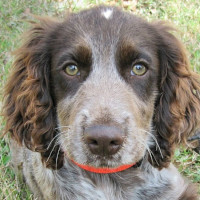
 |
German Shorthair Toller |
|
He is not recognized by the F.C.I. |
Origin |
Germany <> Canada -> U.S.A. | |
Translation |
Francis Vandersteen |
A brief presentation of the German Shorthair Toller |
| The German Shorthair Toller is a mix of the parent breeds German Shorthaired Pointer and Nova Scotia Retriever. They are large dogs that love to hunt. Its parent breeds have origins in Germany and Nova Scotia, Canada, and both excel in the field or in the water. The German Shorthaired Pointer is an avid tracker, searching for game both on land and in the water. The Nova Scotia Retriever is the smallest of the Retrievers, but excellent at attracting and retrieving waterfowl. They are very energetic and need to be active every day. The German Shorthair Toller is an excellent combination of the two breeds and is perfect for those who enjoy hunting or simply want a companion dog. |
History of the German Shorthair Toller |
| There isn't much information on the German Shorthair Toller breed itself, but we can learn more about the parent breeds to understand what to expect from the hybrid breed. |
A little of the German Shorthaired Pointer |
||
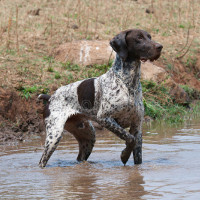
| The German Shorthaired Pointer traces its origins back to the 17th century, but the dog we know today didn't come into being until a couple of hundred years later. Most likely, the German Shorthaired Pointer was crossed with Spanish Pointers and Bloodhounds. It is from this combination that experts believe the German Shorthaired Pointer inherited its pointed nose and waist. In 1925, the first German Shorthaired Pointer was imported to the United States. Shortly afterwards, Dr. Charles Thornton of Montana launched a German Shorthaired Pointer breeding program. Five years later, the American Kennel Club registered its first German Shorthaired Pointer. During the Second World War, the breed almost disappeared in Europe. Those affected by the war had to hide the German Shorthaired Pointer along with other valuables. Even after the war ended, people living in Europe found it difficult to breed them, as those living on one side of the Iron Curtain were unable to travel to the other side to explore breeding options. However, the German Shorthaired Pointer thrived in the United States. Writer Robert B. Parker featured a German Shorthaired Pointer in his detective novels, and Rick Bass immortalized his dog in a book entitled Colter: The True Story of the Best Dog I Ever Had. | ||
 |
||
| Standard of the German Shorthaired Pointer | ||
A little of the Nova Scotia Duck Tolling Retriever |
||
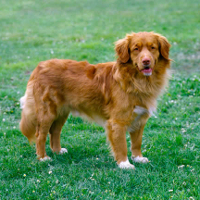
| The Nova Scotia Retriever originated in Canada. It is thought, however, that the Toller's ancestor came to Nova Scotia via owners who moved from Britain and were then crossed with Retrievers and Working Spaniels. The result was the Nova Scotia Retriever. Don't forget that tolling means "decoy", so the dog not only retrieved the waterfowl, but also helped with the hunt, so the "tolling" part of his job comes across as interaction with the hunter. The hunter usually throws a stick, the Indians who used the dog threw fox skins, and the dog creates enough disturbance that the ducks are attracted out of curiosity. Once the ducks are close, the hunter will surprise them and put them to flight so that he can target the ducks. Once the prey has fallen, the Toller then retrieves the ducks. The Nova Scotia Retriever is a rare breed, and was only recognized by the American Kennel Club in 2003. | ||
 |
||
| Standard of the Nova Scotia Duck Tolling Retriever |
Appearance of the German Shorthair Toller |
| The German Shorthair Toller will be a combination of the two parent breeds, the elegant German Shorthaired Pointer and the magnificent Nova Scotia Retriever. The coat of this beautiful hybrid varies in color and can include liver and a combination of liver and white like the Pointer parent. The Toller parent is often red or orange, and as the Pointer parent can also be red, this is a color that can be seen. The coat may be reddened or ticked, or may have the white markings on feet, chest, tail tip and face seen in the Toller dog. Your German Shorthair Toller will be medium-sized and solid-boned. It has a deep chest and sturdy legs. This hybrid may have high triangular ears or ears that fall to the sides of the face. Teeth are well defined, eyes are brown and the nose can match the coat. |
Temperament of the German Shorthair Toller |
| The German Shorthair Toller is intelligent and eager to please its owner. They are easy to live with, although they can sometimes be reserved. They can develop separation anxiety if left alone for long hours at a time. Although he's a big dog, he's most definitely a house dog and is very devoted to his family. He will be very unhappy if left outside in the yard or in a kennel. He is an assiduous hunter who can also be playful when not hunting. Tolling is a natural trait, born in the Toller parent, which makes it invaluable to its hunting partner. They are excellent dogs with children and often have much more patience with children than other hybrids. They are not good watchdogs, but will bark to alert you to something out of the ordinary. Owners must be pack leaders and must not abuse their authority over the dog. |
Needs and activities of the German Shorthair Toller |
| The German Shorthair Toller is a fairly active dog. It is recommended that he gets enough exercise to ensure he maintains a healthy weight. He may tend to put on weight if not exposed to regular activity. He'll do best in a home with a large yard in which he can be allowed to run and play, but if he's kept in an apartment, plenty of exercise is a must. He may also enjoy joining you for a leisurely stroll. The dog park is an ideal place for the German Shorthair Toller, as he'll appreciate the opportunity to get out, run and play with other dogs. He needs regular exercise to avoid excessive chewing. He may tend to chew or be destructive if not properly exercised. Some experts recommend two hours of exercise in order to bear the German Shorthair Toller's ills. It's important to remember that the German Shorthair Toller does best with plenty of room to play and a space of its own inside your home. |
Maintenance of the German Shorthair Toller |
| The German Shorthair Toller has a short, thick, water-repellent coat that will most likely have a dense undercoat. It may be slightly longer under the tail and hips, and the hair on the head may be softer and shorter. This hybrid's coat should be easy to maintain, as it does not shed excessively. Brush it with a pincushion brush once a week. Bathe only when necessary, or risk losing the natural oils that help keep the coat naturally soft and shiny. It's also important to check his feet if he's been hunting to make sure they're in perfect condition. Check for cuts or cracks and keep nails trimmed to a good length. If your dog loves water and you take him swimming often, be sure to check that his ears aren't too wet, which could lead to the formation of yeast or bacteria. Keep his teeth clean by brushing them a few times a week. |



 English (United Kingdom)

Comments