 |
Paperanian |
|
He is not recognized by the F.C.I. |
Origin |
France and Belgium <> Germany -> U.S.A. | |
Translation |
Francis Vandersteen | |
This breed is also known as |
Pomillon |
A brief presentation of the Paperanian |
| Paperanians are refined little dogs with a sophisticated appearance. Their expression is always cheerful and attentive, their dark, attractive eyes eagerly scanning their surroundings. Small in stature, with a slender frame and fine bones, it's clear that this crossbreed has inherited the good looks of its parents on both sides. An excellent addition to a young or growing family, the Paperanian is not only tolerant of children, but actually enjoys playing with them. Suitable for smaller homes, Paperanians require only moderate physical activity and don't need to walk much. |
History of the Paperanian |
| The Paperanian, also known as the Pomillon, is a gentle cross between the better-known Papillon and Poméranian breeds. Although these two small breeds may be small in size, they more than make up for it when it comes to their sparkling personalities and sociable natures. As relatively new specific crossbreed dogs, information on the Paperanian is limited and there is no clear evidence as to where and when they were developed, although they have probably been around for a few decades. Their parents, however, have a rich history and are both incredibly popular dogs. |
A little of the Continental Toy Spaniel |
||
| The Papillon dates back to the 1500s and was originally established in France or Italy. Their name is very French, translating the word papillon in a nod to the shape of their ears. Adored by aristocrats through the ages, this high-flying social butterfly remains a sought-after breed that makes a devoted and docile companion. | ||
 |
||
| Standard of the Continental Toy Spaniel | ||
A little of the German Toy Spitz / Pomeranian |
||
| The Pomeranian has its origins in the much larger Spitz-type dogs that worked in the Arctic and are thought to be descended from the German Spitz. The dog we know today as the Pomeranian was first discovered in the 19th century and probably originated in a German province called Pomerania. Well-known for their royal treatment, Pomeranians were even owned by Queen Victoria herself, who greatly contributed to their popularity at dog shows in the early 20th century. These smiling, fox-like dogs are beloved pets today, and certainly not lacking in confidence. | ||
 |
||
| Standard of the German Toy Spitz / Pomeranian |
Appearance of the Paperanian |
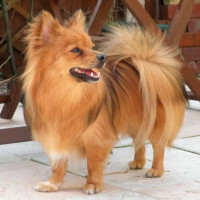
| The mixture of Papillon and Pomeranian has given birth to a new breed whose appearance can vary somewhat from litter to litter. No matter which parent it takes after the most. the Paperanian will inevitably be small and delicate with a good amount of plush fur and a tail that curves elegantly over the back. With a slim, graceful, compact body and slender limbs, this dog was built to sit on laps rather than pull loads or hunt for hours in the field. The Paperanian's head is delicate, with a rounded skull. The breed's medium-sized, triangular ears stand upright and are fringed with silky fur. Paperanians have alert, expressive brown eyes and a small black nose. The Paperanian's coat varies, but is generally medium to long and fairly dense. Dogs can be black, white, fawn or brown, and some individuals are bicolored. A small dog, the Paperanian is a toy breed that weighs between 2 and 5 kg and measures between 18 and 30 cm at the withers when fully grown. |
Temperament of the Paperanian |
| Gentle and affectionate, Paperanians like to be social and will rarely be happy when away from their family. Loyal and gentle, they form close bonds with their owners and can often complain on their behalf when separated. Good with people of all ages, this breed loves to play with children and will do as much harm as any other dog. Likewise, most pedigree dogs will enjoy the company of other animals, including other dogs. Enthusiastic about life, you'll rarely notice the racket or snarling of Paperanians. Not suited to being a guard dog, Paperanians are quite tolerant of new people when well socialized, and are not hostile or territorial enough to defend their family. Although it may bark in the direction of an intruder, it will rarely do much more. |
Needs and activities of the Paperanian |
| The Paperanian hybrid, a Papillon/Pomeranian mix, is a dog with a modest amount of energy to expend on a daily basis. He'll love going for long walks or jogs with you and, if you're a busy person, and he's small, these long walks only last 20 to 30 minutes. Giving him a moderate amount of playtime at home with his favorite toys or spending time outside on a leash in a fenced or similarly enclosed area will help him manage his energy levels. Because he's small and not overly active, he'll live very well in an apartment or family home with or without a fenced yard, provided the commitment to proper exercise is maintained. They can live in urban or rural environments, and tolerate moderate climates, neither too hot nor too cold, unless appropriate extra protection is provided. |
Maintenance of the Paperanian |
| The Paperanian Papillon/Pomeranian hybrid is a dog that will require moderate maintenance. As you'd expect from a longer-haired dog, brushing is necessary two or three times a week to remove dead hairs, mats and tangles. Shampoo every two or three weeks to keep the coat clean and shiny. After bathing, be sure to wrap your four-legged family member in a towel to keep the fur as dry as possible. This hybrid is a low-loss animal and is considered hypoallergenic. Therefore, when bathing your dog, you should use a mild shampoo for hypoallergenic dogs. Weekly attention should be paid to the ears and nails of this hybrid, cleaning the ears with a cotton ball and an approved ear-cleaning solution, and trimming the nails as required. Teeth should be brushed twice a week to prevent bad dog breath, periodontal disease and tooth loss. |



 English (United Kingdom)

Comments