
 |
Papshund |
|
He is not recognized by the F.C.I. |
Origin |
France and Belgium <> Germany -> U.S.A. | |
Translation |
Francis Vandersteen |
A brief presentation of the Papshund |
| The Papillon and the Dachshund are two instantly recognizable dog breeds. Mix them together, one parent from each breed, and you get the Papshund. Shaggy, a typical Papshund is like looking in a fairground mirror, because you can see a stretchy Papillon or a Dachshund with big butterfly ears. As both parent breeds are small, as you'd expect, the Papshund is a small companion. But what they lack in size they more than make up for in character. It's particularly important that this hybrid is well socialized as a puppy. Otherwise, once it becomes an adult dog, it will be strong-minded and potentially aggressive. A well-trained Papshund is a delight and makes an excellent family companion. Papshunds are companion dogs rather than working animals. They need an indoor lifestyle, some say pampered, with plenty of attention and exercise to thrive. |
History of the Papshund |
| You might think that the creation of a specific hybrid such as Papshund is well documented, but that's not the case. Who came up with the idea of mixing a Papillon with a Dachshund remains a mystery. Indeed, rather than knowing when the breed was created, it's wise to think about why the Papshund came into being. The main hypothesis has to do with their extreme fineness, but some people might also suggest that hybrids are stronger and healthier than purebreds. And this is not true. There's no truth to the myth that hybrid dogs are healthier. Unfortunately, the laws of genetics have an inherent randomness, which means that puppies can inherit the worst of each parent and not necessarily the best. So buying a hybrid or a specific crossbreed is no guarantee of good health. The same general rules apply that each parent must be carefully screened for genetic disease before breeding. Diluting a dog's health problems with blood from a different breed guarantees nothing. |
A little of the Continental Toy Spaniel |
||
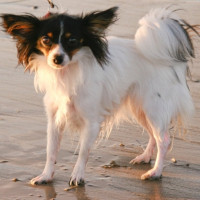
| The Papillon dates back to the 1500s and was originally established in France or Italy. Their name is very French, translating the word papillon in a nod to the shape of their ears. Adored by aristocrats through the ages, this high-flying social butterfly remains a sought-after breed that makes a devoted and docile companion. | ||
 |
||
| Standard of the Continental Toy Spaniel | ||
A little of the Dachshund |
||
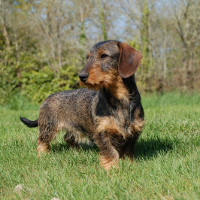
| On the other hand, the Dachshund steals a march on the Papillon with their ancestors originating in 15th century Germany. Back then, they were working dogs, used to flush out and pursue animals such as badgers, rats, hares and even wild boars. Indeed, the name Dachshund means badger dog. Over the years, the Long and Low Dachshund has developed into a range of miniature and standard sizes, with different coat types. They are now kept as pets rather than working dogs, but they have never completely lost their independent spirit and that powerful prey. | ||
 |
||
| Standard of the Dachshund |
Appearance of the Papshund |
| If you're familiar with the appearance of the Papillon and the Dachshund, it's not hard to recognize a Papshund. Think of them as butterflies and you won't go wrong. While a Papillon has a cunning little face, the Dachshund has a long muzzle, making it a dog with a well-developed snout. Their ears are large, but unlike a Dachshund's floppy ears, they're more likely to be erect and adorned with luxurious fur. As for their body, it's likely to be the length of a Dachshund, with short, sturdy legs. Dachshunds can be long- or short-haired, but a long-haired Dachshund crossed with a Papillon makes a luxurious long-haired dog. |
Temperament of the Papshund |
| Papillons and Dachshunds are active, busy little dogs with a keen sense of curiosity. This is reflected in their combined offspring, the Papshund. Described as energetic, this reflects their mental attitude and need for lots of stimulation. Although they like to be active, they lack the stamina of other small dogs, such as Terriers. Papillons and Dachshunds are both small dogs. However, the wise owner expects the same obedience and cooperation of a large breed, such as a Dobermann. Otherwise, a Papshund would develop small dog syndrome, whereby they misbehaved because they were allowed to. It's also worth remembering that Dachshunds have a working heritage that hunts small mammals. This means they may be inclined to hunt other domestic animals, such as cats and rabbits. This is avoidable if the puppy is well socialized from an early age, but should be taken into account when introducing a Papshund into a multi-pet household. |
Needs and activities of the Papshund |
| The Papshund, despite its size and close to the ground, is an active dog that loves to run around indoors and outdoors. A small yard or indoor space to roam is ideal for this hybrid. However, Papshund's elongated body makes jumping a potential hazard, especially at this age. So avoid jumping too high, and avoid standing him up on his hind legs. Papshunds do not tolerate cold climates well, but adapt very easily to life in an apartment. |
Maintenance of the Papshund |
| Papshunds are not hypoallergenic, but are considered moderate shedders. The hair is long and soft on the body, and requires weekly brushing to maintain a healthy coat. It's important to check Papshund ears for dirt and debris, and remove deposits with a veterinarian-approved solution or pet wipe to prevent ear infection or unpleasant odors. Papshund has no doggy odor and is easy to clean with regular grooming practices. This clean hybrid doesn't require regular bathing, and a spray bottle, washcloth or pet wipes can help remove excess dirt and debris when brushing. |



 English (United Kingdom)

Comments