 |
Poolky |
|
He is not recognized by the F.C.I. |
Origin |
France <> Australia -> U.S.A. | |
Translation |
Francis Vandersteen | |
This breed is also known as |
Silky Poo |
A brief presentation of the Poolky |
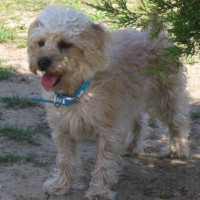
| An adaptable little dog that thrives in the company of its family, the Poolky is a cross between the Poodle and the Australian Silky Terrier. Small but well-built with a solid body, this dog may be small but is certainly not delicate. With their dark brown eyes, floppy ears and lovely wavy coat, it's no wonder this hybrid is rapidly gaining in popularity. Well-suited to the urban lifestyle, the Poolky is happy to occupy a small space and doesn't need a garden as long as it takes a few walks outside every day. Although they love to play, their style is more intense and they'll happily curl up on your lap after a game for a 20-minute recovery. |
History of the Poolky |
| While the Poodle is a frequent contributor to specific crossbreed dogs, the Australian Silky Terrier is not used as often. It's thought that this mixed breed was first created in America in the early 21st century. Although all sizes of Poodle can be reproduced, Miniature and Toy Poodles are used much more than the Standard Poodle to create a smaller hybrid. Although Poolky is the term used by the registry of specific crossbreeds, some will refer to this dog as the Silky Poo. Although the Poolky hasn't been around long enough for us to talk about their history, their parents certainly have a story to tell. |
A little of the Poodle |
||
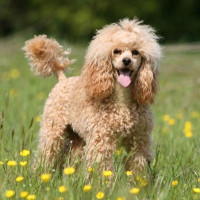
| The Poodle forms the basis of a large number of specific crossbreed dogs, as they not only have a loving, intelligent personality, but also a coat that doesn't shed and come in three distinct sizes, Toy, Miniature and Standard. Poodles are a type of utility dog traditionally used to sniff out truffles and retrieve prey, particularly ducks from water during hunting. While many people associate the Poodle with France, the truth is that they are thought to have originated in Germany. Over the years, the Poodle has contributed to many breeds, including the Bichon Frise and the Miniature Schnauzer, to prevent their extinction when population sizes were reduced. | ||
 |
||
| Standard of the Poodle | ||
A little of the Australian Silky Terrier |
||
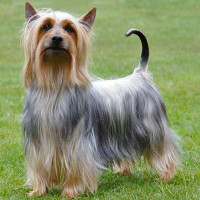
| The Australian Silky Terrier is a product of the English Yorkshire Terrier and a mixture of Australian Terriers created in Australia at the end of the 19th century. Mainly used to hunt vermin, although small and long-haired, this breed was traditionally a working dog. This breed has always been appreciated for its robust nature and tenacious attitude. | ||
 |
||
| Standard of the Australian Silky Terrier |
Appearance of the Poolky |
| The Poolky, or Silky Poo, is a dog of fairly varied appearance, not least because its parent can be a Poodle of any size. They have a small skull with almond-shaped brown eyes and a small black nose. Their expression is gentle and confident. Their muzzle is square and in proportion to their face. Their small ears hang down in triangular flaps. Their short necks lead to strong, supple bodies. Dogs of this breed generally weigh between 3.5 and 10 kilos and measure between 23 and 38 centimeters at the withers at maturity. Most Poolky dogs have lost the long, silky coat of their Australian Silky Terrier parent. Instead, they have a short to medium wavy coat, which is certainly lower maintenance, although it can sometimes look a little unkempt. Their coat color is variable and can be a solid color, such as black, white or brown, although many also have white or brown patches. |
Temperament of the Poolky |
| A wonderful pet and a dog that loves to be hustled into action, the Poolky will fit in perfectly with most families. They love spending time with children and are gentle and patient in their presence. While their loving nature and desire to be around people is certainly an advantage, they can become overly dependent on their owners' company and tend not to like being left alone for too long. In some individuals, separation anxiety can become a real problem. As Poolkies are small dogs, they can be kept in small houses and apartments and don't necessarily need access to the garden, provided they get enough exercise. However, owners shouldn't expect a dog that sits still all day, as this breed is playful and energetic despite its small size. As both breeds have hunting in their history, it's not surprising that the Poolky can have a well-developed prey drive. It's important that owners are aware of this and don't try to accommodate the dog with smaller animals such as gerbils or rats. With thorough socialization, it's possible for the Poolky to coexist with other dogs, as well as cats. The Poolky's inherently friendly nature makes it a poor defense dog. However, they make great watchdogs, as they are constantly on the alert and will hold their attention unwaveringly when a new person arrives at the house. |
Needs and activities of the Poolky |
| The Poolky is a small, moderate-energy hybrid. They like to spend time playing and having a bit of fun outdoors during the day, but given their size, the Poolky can satisfy most of their daily exercise needs indoors. Terrier qualities can make the Poolky restless if not properly stimulated, and chewing or digging behaviors can occur. Owners can prevent negative behaviors by providing exciting chew toys and daily play with their Poolky. With proper exercise and mental stimulation, Poolky does well in small spaces, such as apartments. If your Poolky has access to a yard, be sure to keep an eye on him, as he may enjoy digging and trying to find a way out. The Poolky also prefers to live in more temperate climates. |
Maintenance of the Poolky |
| The Poolky has many of the qualities of a Poodle coat, such as the tendency to be a hypoallergenic dog, as well as continuous hair growth. Grooming, including trimming, is a must for the Poolky to maintain a soft, tangle-free coat. The soft, silky coat facilitates the removal of dirt and debris from the hair, and frequent bathing is not suggested for this hybrid. While brushing your Poolky's coat, check his ears for debris and remove it with a veterinarian-approved solution. Keeping your dog's ears clean will help prevent ear infections and bad odors, although the Poolky is not known for having a strong dog odor. |



 English (United Kingdom)

Comments