
 |
Pugalier |
|
He is not recognized by the F.C.I. |
Origin |
China <> Great Britain -> U.S.A. | |
Translation |
Francis Vandersteen |
A brief presentation of the Pugalier |
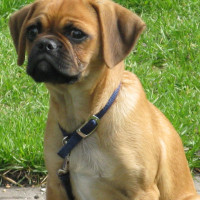
| The Pugalier is a cross between the Pug and the Cavalier King Charles Spaniel. It generally resembles the Pug with slightly longer fur, flatter ears and a longer muzzle. Many are fawn and black, but other color combinations, such as red and black, are also seen. Responsible breeders try to ensure that only those with the least brachycephalic characteristics are bred to prevent later health problems. One of the gentlest dog breeds around, the Pugalier is a friend to all and doesn't have a bad bone in its body. Particularly good with young children, the Pugalier's tolerance is almost unprecedented in the canine world. Eager to please their owners, some dogs are upset by a short attention span during their first training sessions. |
History of the Pugalier |
| The demand for specific crossbreeds has grown steadily over the past two decades, with smaller, more fashionable dogs more often included in mixes. For this reason, it was no surprise that the Pugalier became a cute mix of the placid Cavalier King Charles Spaniel and the clumsy Pug. The date and place of origin of this crossbreed are unknown, as is the case with many specific crossbreed dogs. The first Pugalier was probably developed at the beginning of this century. While the Pugalier itself lacks any substantial history, both its parents are well-known dog breeds with fascinating histories. |
A little of the Pug |
||
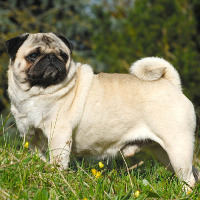
| The Pug is a breed with a long and interesting history. Their origins date back some 2,000 years to ancient China. These flat-faced dogs were a common ancestor for another instantly recognizable dog breed, the Pekingese. The Pug was introduced to Europe in the 16th century by Dutch merchants and quickly became a popular companion dog for aristocrats and royalty. Over the centuries, their appearance has changed somewhat, with the modern dog having a much flatter face than their more robust ancestors. | ||
 |
||
| Standard of the Pug | ||
A little of the Cavalier King Charles Spaniel |
||
| The Cavalier King Charles Spaniel also enjoys a noble history with many European royal families, having been chosen as their companion dog. They have featured in many important paintings over the years. The original Spaniels were built more sportingly and had wider faces than today's Cavies. Over time, they were created to look more aesthetically pleasing, even if their health suffered. Today, they remain a popular pet thanks to their incredibly gentle nature and tolerance of young children. | ||
 |
||
| Standard of the Cavalier King Charles Spaniel |
Appearance of the Pugalier |
| As the Pug and Cavalier King Charles Spaniel are very different dogs, it would make sense that their offspring vary enormously. However, most will have a distinctive look that defines them as their own breed. Although the Pugalier is a brachycephalic breed, with a broad, shortened skull, most will develop a longer muzzle and larger nostrils than their Pug parent. Their brown eyes tend to be large and prominent, but not as pronounced as those of the Pug. Although their ears are pendulous, they more closely resemble the Cavalier's wider flaps. Their skull is large for their body and often domed. Their chest is fairly broad, although their body is compact. Their limbs are robust and strong. The Pugalier's tail can be straight like the Cavalier or curled like the Pug. Most will not have the same plume of fur as the Cavalier. The Pugalier's coat is short and straight, except in a few cases where the longer, silkier Cavalier coat is inherited. The vast majority of dogs have a fawn coat with a dark face mask, but individuals can be a mixture of white, red, black and brown. With both parents being small breeds, a fully developed Pugalier usually measures between 25 and 35 cm and weighs between 4.5 and 9 kg. |
Temperament of the Pugalier |
| With a winning personality, this dog's temperament is what makes it a true superstar. Inheriting the kindness of the Cavalier and the confident, mischievous nature of the Pug, the Pugalier is a fabulous companion for the whole family. They have great patience with children and form strong, affectionate bonds with every member of the family. As well as tolerating children, they do very well with other animals and can thrive in multi-pet households. Curious and always ready to laugh, the Pugalier sometimes assumes the role of family clown and seems to take great pleasure in entertaining others. They enjoy playing games, solving puzzles and generally interacting with other animals and people. Although this is a breed that simply enjoys being in the company of others, it can be a challenge when they are so dependent on interaction that they are no longer satisfied when alone. Separation anxiety is a potential problem and should be avoided at all costs. Because of this tendency, keeping a Pugalier in an unoccupied house for most of the day is not a good idea. So accepting are they of strangers, the Pugalier makes a very poor choice for a guard dog, as they are more likely to welcome a new person with licks and cuddles than to bark at them or chase them away. |
Needs and activities of the Pugalier |
| While both parent breeds of this hybrid enjoy lounging and snuggling with their humans, they also require some degree of physical activity. The Pugalier will benefit from daily exercise, which can include walking, indoor and outdoor play and trips to the dog park. It's important that your dog doesn't engage in overly strenuous exercise, such as a long run or hike. Since hybrids don't require a lot of physical activity, they'll do just fine in an apartment and won't need a yard. As the Pugalier is good at light activity, it makes an excellent pet for those who aren't very active. |
Maintenance of the Pugalier |
| The Pugalier doesn't require much maintenance. The breed will generally require minimal grooming. However, if your dog inherits the coat of its Cavalier parent, more grooming may be required. For those who inherit the Pug's short coat, brushing should take place once a week, two to three times a week is preferable for those who inherit the Cavalier's coat. Dogs with many wrinkles should be wiped with a clean, damp cloth to avoid developing a skin infection. Pugalier dogs will shed all year round, which will require some maintenance of your furniture, carpets and clothes. As with all dogs, you'll need to brush his teeth several times a week to ensure long-term dental health. |



 English (United Kingdom)

Comments