Schneagle

He is not recognized by the F.C.I.

Origin
Germany <> Great Britain -> U.S.A.
Translation
Francis Vandersteen

A brief presentation of the Schneagle

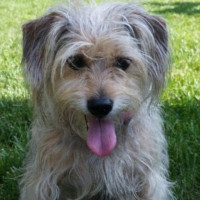
The Schneagle is a newcomer to the hybrid dog scene. It has a silky coat and a confident, sociable nature. With both parents, the Beagle and the Schnauzer, bred to hunt to some extent, it's not surprising that the Schneagle's hunting instincts remain strong. Likewise, their highly developed scenting instinct makes them fabulous sniffer dogs. The Schneagle's size depends on the Schnauzer variant it was bred with, but most are small to medium-sized dogs with sturdy, well-muscled bodies and proportionately built lean limbs. One of their most endearing features is their soft, flexible ears, which frame their faces with elegance and really add to their charm.

History of the Schneagle

A blend of the reliable, good-natured Schnauzer and the sniffer hound that is the Beagle, the Schneagle is a new kid on the block among specific crossbreed dogs. Miniature, Standard and Giant Schnauzers can all technically be used in the mix, but it's usually the miniature or standard models that are derived, as their size is closer to the Beagle. To better understand the Schneagle, we should look at the history of each of its parent breeds.
        

A little of the Schnauzer

        
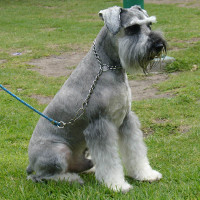
The Schnauzer is a German breed from Bavaria, distinguished by a facial coat that includes long eyebrows and a large moustache. A versatile working dog, in addition to hunting vermin, the Schnauzer would have been used on farms to herd animals, guard property and even pull carts. Farmers developed three different breed sizes to ensure that every farm task could be performed by the most appropriate sized dog. To create the smaller variant, local breeds such as Affenpinschers and Poodles were mixed, while breeds such as the Great Dane would have enriched the gene pool of the Giant Schnauzer.
Standard of the Schnauzer

A little of the Beagle

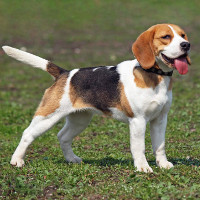
The Beagle is a much-loved dog breed, popularized in films such as Cats & Dogs and Shiloh. Most agree that the original Beagle was a British breed bred as a sniffer dog to hunt on foot in pursuit of small prey, such as rabbits. They were descended from larger, longer dogs, such as the Foxhound, which would have been used by hunters on horseback. Satisfied when in the company of other dogs, Beagles would have hunted in packs and often lived away from home with their canine companions. It was in the 1800s that the Beagle began to make a name for itself on the international scene after being exported to the USA, where locals fell in love with them, even creating their own breed standard. Thanks to their trainability and superior scenting skills, police officers and similar organizations use Beagles as sniffer dogs.
Standard of the Beagle

Appearance of the Schneagle

Schneagles come in a variety of guises, some more closely resembling a Schnauzer dog, while others will inherit more Beagle genes. This is even true within the same litter, where puppies may not even resemble their own siblings. Most are compact, medium-sized dogs, weighing 8 to 18 kilos and measuring 33 to 46 centimetres. Schneagles should have a good-sized muzzle and round eyes set squarely in the face, often dark brown, but can also be hazel. Their foreheads are rather flat and their ears widely spaced and hanging, sometimes forward. They have a prominent black nose, giving them excellent breathing capacity. Their necks are fairly thick and their bodies muscular and lean. Their tails are rather thin and can taper to a point. It's difficult to predict how Schneagles' coats will turn out, given that Beagles and Schnauzers have very different coat types. The majority will develop a fairly short, stiff coat, but this is likely to become longer and thicker. Most will have two or three coat colors, which can include black, white, beige and gray.

Temperament of the Schneagle

Open, alert and friendly, the Schneagle is a wonderful companion for man and beast alike. Owners find they are dependable, predictable and firm. They are loyal to their loved ones and tend to respect them. Energetic, Schneagles don't like to be left alone with little to do, and are always eager to be given a task or to be outdoors. When socialized from a puppy, the Schneagle should tolerate children and other pets, but great care should always be taken with small animals, such as rodents and rabbits, which are likely to be dangerous in their company and will be seen as prey. Some will become protective of their possessions and families, and may choose to keep them when they deem it necessary. Some dogs can be particularly virulent, which is something to consider if you live near neighbors. Problems, such as separation anxiety or incessant barking, can arise when a Schneagle is left to its own devices for too long without being kept busy and stimulated, mentally and physically. It's much harder to cure these vices than to prevent them, so owners should make a conscientious effort to ensure that there's always someone there for the Schneagle, and that they're provided with sufficient exercise, playtime and other forms of mental stimulation.

Needs and activities of the Schneagle

The Schneagle can be a bit lazy if you allow him to be. He'll sit on the couch for hours, but if you encourage him to go out with you, he'll happily join in. Because he gets on well with other dogs, he's an excellent candidate for a trip to the dog park. He'll also have time to play in a fenced-in area. Again, remember, he belongs indoors with his family. He will suffer from separation anxiety if he has to be away from his family for a long time. He's an energetic dog, so you can buy him toys to play with indoors. A good idea is to buy toys that stimulate his mind as well as those that encourage physical play. He'll also appreciate short, brisk walks around the neighborhood with you. Short periods of activity are best for the Schneagle. For him, activities that he can enjoy with you while exercising will keep him happy.

Maintenance of the Schneagle

The Schneagle can be relatively low-maintenance when it comes to grooming. However, depending on the length of its hair, some Schneagles require more maintenance than others. The level of shedding depends on the dominant parent breed. The Beagle tends to shed more, whatever the time of year. The Miniature Schnauzer sheds very little, if at all. If the Schneagle inherits Miniature Schnauzer genetics, he'll be hypoallergenic and you'll be able to brush him after several weeks. If he inherits Beagle genetics, you'll need to brush him once a week to remove any excess hair. Bathe him once a month, unless otherwise indicated. Brush his teeth two or three times a week to prevent tartar build-up and bad breath. To prevent tooth decay, brush his teeth every day. Trim his nails once a month unless he wears them naturally, as they can break or tear if left too long.

Comments

Latest page updates

  • Telomian

    Telomian He is not recognized by the F.C.I. Origin Malaysia Translation Francis Vandersteen A brief presentation of the Telomian The Telomian is a very rare breed of dog, and the only one native to Malaysia to have been bred outside the country. They were originally bred by the indigenous people of Malaysia to combat parasites such as snakes, rats,...
  • King Wheaten -- Cavalier King Charles Spaniel X Irish Soft Coated Wheaten Terrier

    King Wheaten He is not recognized by the F.C.I. Origin Great Britain <> Ireland -> U.S.A. Translation Francis Vandersteen A brief presentation of the King Wheaten The King Wheaten is a small dog with a heart this big and a playful disposition. Borrowing the energy and soft-coated waves of the Irish Soft Coated Wheaten Terrier and the size and...
  • Spanierd -- English Springer Spaniel X German Shepherd

    Spanierd He is not recognized by the F.C.I. Origin Great Britain <> Germany -> U.S.A. Translation Francis Vandersteen A brief presentation of the Spanierd The Spanierd is a hybrid dog. Its parent breeds are the English Springer Spaniel and the German Shepherd. They have an affable personality. He's known for entertaining family and friends with his...
  • Alaskan Goldenmute -- Alaskan Malamute X Golden Retriever

    Alaskan Goldenmute He is not recognized by the F.C.I. Origin U.S.A. <> Great Britain -> U.S.A. Translation Francis Vandersteen This breed is also known as Alaskan GoldenGoldenmuteAlaskan Gold Retriever     A brief presentation of the Alaskan Goldenmute The Alaskan Goldenmute is a descendant of two great dog breeds: the Alaskan Malamute and the Golden...
  • French pointing dog Pyrenean type

    French pointing dog Pyrenean type FCI standard Nº 134 Origin France Translation Mrs. Peggy Davis Group Group 7 Pointing Dogs Section Section 1.1 Continental Pointing Dogs « Braque » Type Working With working trial Acceptance on a definitive basis by the FCI Tuesday 18 January 1955 Publication of the official valid standard Tuesday 01 August 2023 Last...
  • French pointing dog Gascogne type

    French pointing dog Gascogne type FCI standard Nº 133 Origin France Translation Mrs. Peggy Davis Group Group 7 Pointing Dogs Section Section 1.1 Continental Pointing Dogs « Braque » Type Working With working trial Acceptance on a definitive basis by the FCI Monday 17 January 1955 Publication of the official valid standard Tuesday 01 August 2023 Last...
  • Vucciriscu

    Vucciriscu He is not recognized by the F.C.I. Origin Sicily Translation Francis Vandersteen En français, cette race se dit Vucciriscu Diese Norm ist in deutscher Sprache sichtbar Vucciriscu En español, esta raza se dice Vucciriscu In het Nederlands, wordt dit ras gezegd Vucciriscu This breed is also known as Sicilian Vucciriscu Sicilian Butcher...

© 2026 Groupe Milouchouchou ASBL. Tous droits réservés. En savoir plus

Protected by Copyright01
We use cookies

We use cookies on our website. Some of them are essential for the operation of the site, while others help us to improve this site and the user experience (tracking cookies). You can decide for yourself whether you want to allow cookies or not. Please note that if you reject them, you may not be able to use all the functionalities of the site.

Ok