 |
Skypoo |
|
He is not recognized by the F.C.I. |
Origin |
Australia <> France -> U.S.A. | |
Translation |
Francis Vandersteen | |
This breed is also known as |
Skydoodle |
A brief presentation of the Skypoo |
| A charming little dog, the Skypoo, also known as the Skydoodle, is an intelligent canine that can be trained to a high standard and often has exceptional manners. Because of their small size and moderate exercise requirements, Skypoos are becoming increasingly popular in cities as apartment pets. Like their two parent breeds, Skye Terriers and Poodles, which are available in a wide range of colors, Skypoos feature a broad spectrum of coat colors and shades. Perhaps their most remarkable feature is their unusual ear, which generally resembles that of the Skye Terrier and tends to be covered with a long, silky coat. |
History of the Skypoo |
| The Skypoo is one of those unusual breeds of specific crossbreed dog that has emerged and has yet to make a name for itself. For this reason, little is known about their history. While we know little about the Skypoo's recent past, there's still much to discuss when it comes to each of their parent breeds, the Poodle and Skye Terrier. |
A little of the Australian Silky Terrier |
||
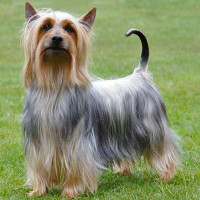
| This is in contrast to the Australian Silky Terrier, which comes from working stock and retains the prey drive of its Terrier ancestors. This breed was developed in Australia in the 19th century from dogs brought over from England. Indeed, if the silky-haired Australian Terrier reminds you of the Yorkshire Terrier, it's no surprise that the latter is the founding stock of the Silky. Other Silky breeds include the Cairn Terrier, the Skye Terrier and the Dandie Dinmont. If the Shih Tzu is a pocket dog, the silky-haired Australian Terrier is an action hero. They love to be active, have a strong adventurous streak and an even stronger prey drive. | ||
 |
||
| Standard of the Australian Silky Terrier | ||
A little of the Poodle |
||
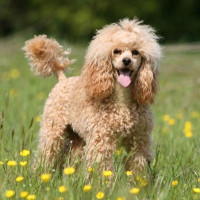
| The Poodle is an adaptable breed with many positive characteristics, enabling it to feature in many of the new hybrids. It is the Standard Poodle that is bred with the Siberian Husky to produce the Siberpoo. While people tend to associate Poodles with France, we know that they are in fact a German breed. They were used in Germany for hunting, mainly in pursuit of ducks. Their distinctive haircut was actually the result of hunters wanting a more practical coat when getting wet on the job, rather than looking for a fashionable mutt. Today, the Poodle is an extremely well-known dog, with its three variants (toy, miniature and standard) ranking at the highest international level. | ||
 |
||
| Standard of the Poodle |
Appearance of the Skypoo |
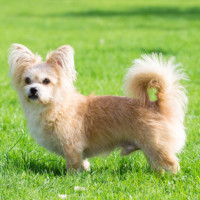
| Skypoos have a robust appearance and, although their bodies are long and their limbs short, these characteristics are less pronounced than in the Skye Terrier due to the dilution of these genes by the addition of the Poodle to the lineage. They have a relatively small head with a pointed muzzle of medium length and roundness, and dark brown eyes. Their ears sit proudly atop their heads and are widely spaced, drooping forward or straight. Their tail is fairly long and slightly curved, covered with a thick plume of fur. Most Skypoos will be bred from Miniature or Toy Poodles, so they measure between 25 and 38 centimeters and weigh from 8 to 18 kilos. Although many Skypoos tend to be cream or white in color, they can be composed of several different colors, including black, red, blue and gray. Although their coat can be long and stiff like the Skye Terrier or dense and curly like the Poodle, for most dogs their coat will fall somewhere in between these two options and will be of medium length with some degree of curl. |
Temperament of the Skypoo |
| A dog that likes to be part of the family, the Skypoo likes to be close to the people it loves most. They are very social and affectionate, never afraid of attention. With everyone, the Skypoo is a good companion for families with children. Intelligent and curious, Skypoos have a zest for life and are generally eager to please their masters, making well-behaved housemates. Their good nature makes them the ideal choice for those with limited experience of dogs and dog training, as they can make even a novice trainer look like a pro. Perfectly adapted to modern life, Skypoos are happy to live in small spaces and don't necessarily need access to a garden. They are generally quiet and don't tend to bark incessantly, as is a problem in other breeds. For these reasons, people living in apartments may find the Skypoo an ideal choice. |
Needs and activities of the Skypoo |
| The Skypoo is at home in almost any environment, including apartments. It is equally suited to city and country living, and does well in all types of homes. It easily handles hot and cold temperatures and, while active, doesn't require much exercise. A daily walk or trip to the dog park is a good thing to keep this hybrid happy and healthy. This specific crossbreed loves to explore and would love to spend the afternoon strolling around a large backyard. However, since he's prone to wandering, it's best to make sure your Skypoo is well protected. As an intelligent hybrid, the Skypoo also needs plenty of mental stimulation. |
Maintenance of the Skypoo |
| While the Poodle is considered hypoallergenic, the Skye Terrier is not. As a result, most Skypoos are not hypoallergenic. They are soft, and their thick coats are prone to matting and tangling. They require daily brushing, and many need frequent professional grooming. This is particularly true of dogs with hard-to-care-for curly coats. Skypoo should only be bathed when necessary, and as the breed is prone to skin problems, it's essential to use a moisturizing dog shampoo approved by your vet. Ears should be inspected and cleaned weekly, and nails trimmed as required. Teeth should also be brushed regularly. |



 English (United Kingdom)

Comments