 |
American Bull Dane |
|
He is not recognized by the F.C.I. |
Origin |
U.S.A. <> Germany -> U.S.A. | |
Translation |
Francis Vandersteen | |
This breed is also known as |
American Dane |
A brief presentation of the American Bull Dane |
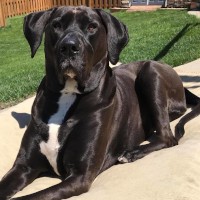
| The American Bull Dane is a gentle, loyal companion. The American Bull Dane is descended from the American Bulldog and the Great Dane in the USA, although the exact history is not precisely documented. There's not much information available on this hybrid, but it's thought that the American Bull Dane gained popularity when breeders began crossing dogs together with the aim of creating an impressive breed. The American Bull Dane has features of both the American Bulldog and the Great Dane. For example, the head is similar to that of the American Bulldog, while the body size is somewhere between that of the American Bulldog and the Great Dane. This splendid canine has been bred to be an affectionate companion while retaining exceptional watchdog qualities. Thanks to its constant vigilance and fearlessness, this hybrid is a success. The American Bull Dane participates in activities such as hunting, guarding, police work and military work, but is also described as a playful, gentle giant. |
History of the American Bull Dane |
| The American Bull Dane is descended from the American Bulldog and the Great Dane, making it a giant breed. Although the exact year of origin is unknown, it is known that the breed's development took place in the United States. Its original and current purpose is to perform guard duties and maintain a companionable relationship with the family. |
A little of the American Bulldog |
||
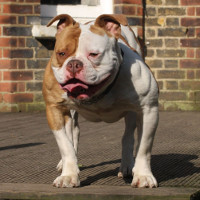
| The American Bulldog is descended from the ancient Mastiff family. In the 1800s, the American Bulldog was imported to the United States and was an expert at capturing wild pigs. At the time, the American Bulldog was also used for baiting bulls, an exotic American sport. Before World War II, the American Bulldog was popular in the South as a working dog for farmers and ranchers. John D. Johnson of Georgia helped repopulate the American Bulldog and preserved the breed as best he could. Originally, the American Bulldog was massively powerful and aggressive towards others. Through selective breeding, breeders succeeded in eliminating many of these aggressive traits. In 1989, the American Bulldog Association was created to oversee the breeding of this breed. | ||
 |
||
| Presentation of the American Bulldog | ||
A little of the Great Dane |
||
| The Great Dane was known for its speed and endurance. The Great Dane was an outstanding hunter in Germany and was praised for its efforts. In the 1880s, the Great Dane was imported to the United States, where it gained in popularity. This giant breed is still a popular choice among families and continues to serve as an excellent guard dog. | ||
 |
||
| Standard of the Great Dane |
Appearance of the American Bull Dane |
| The American Bull Dane resembles both the American Bulldog and the Great Dane. Dogs generally show more dominant traits of one breed than the other. The American Bull Dane is considered a giant breed that more closely resembles the size of the Great Dane. This friendly dog stands between 68.5 and 89 centimeters tall, and weighs between 45 and 91 kilos. The American Bull Dane has a smooth, glossy coat that can come in various color combinations, but the most common color combination is black and white. The tail is long and tapered. The ears are short and hang downwards, and the attractive eyes of this hybrid are generally dark brown. The body is muscular and the posture powerful. |
Temperament of the American Bull Dane |
| The American Bull Dane is described as affectionate and loving. The energy level of this hybrid is low and, although it loves adventure, this dog is also happy to spend hours in front of the TV keeping its master company. Playful and intelligent, this strong, independent dog is not considered a suitable breed for new owners due to the difficulty of training it, as this very active breed can have its own habits. The American Bull Dane can intimidate young children and must be socialized from an early age to avoid danger; as with any dog, supervision is always required when interacting with children and small animals. The American Bull Dane can get along with other dogs, but must be trained to accept others, as he is an effective guard dog and can be protective. He can also learn to accept other animals if he is raised with them and given the opportunity to socialize in a dog park. |
Needs and activities of the American Bull Dane |
| The American Bull Dane is a giant breed with low energy levels. He'll be content to sit close to you and enjoy the day. Because of its size, however, it needs regular exercise to maintain a healthy lifestyle. We recommend giving your American Bull Dane at least 30 to 40 minutes of daily exercise. It would be beneficial for your American Bull Dane to go for 2-3 walks a day and play. The American Bull Dane is not overly active, but it should still live in a home with plenty of room to move around. The breed would do best in a home with a large yard to avoid boredom and encourage interactive play. The American Bull Dane can live in urban or rural areas, whatever the climate, as long as temperatures are not too extreme. |
Maintenance of the American Bull Dane |
| The American Bull Dane is not considered a hypoallergenic breed, and sheds moderately. The breed has a soft, smooth coat that makes it easy to groom. Daily brushing with a rubber currycomb brush will remove dead hairs and keep its coat hygienic. Bathing should be limited to every 6 to 8 weeks, if necessary. His nails should be trimmed or filed every 2 to 3 weeks, as they can easily tear if neglected. Your dog's teeth should be brushed regularly to maintain oral hygiene and prevent serious dental disease. Because of its size, this breed may have a tendency to drool slightly, but this shouldn't be important. Ears should be wiped and cleaned weekly to prevent earwax and debris from accumulating inside, which can lead to bacterial and yeast infections. |



 English (United Kingdom)

Comments