
 |
Bernese Rottie |
|
He is not recognized by the F.C.I. |
Origin |
Switzerland <> Germany -> U.S.A. | |
Translation |
Francis Vandersteen | |
This breed is also known as |
Bernweiler
|
A brief presentation of the Bernese Rottie |
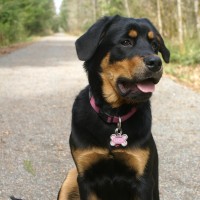
| The Bernese Rottie, also known as the Bernweiler, is a large hybrid breed that was recently developed from a cross between a Bernese Mountain Dog and a Rottweiler. These dogs will be loyal, playful and affectionate pets, but will require good socialization. They will be prone to some health problems and obesity, so will need between 30 and 60 minutes of exercise a day. These handsome dogs will have an appearance somewhere between that of the Rottweiler and the Bernese Mountain Dog. They will have a large head and a compact but athletic body. Today, this specific cross-breed is used as a guard and working dog, but is also an excellent companion animal. |
History of the Bernese Rottie |
| This specific crossbreed was originally bred as working dogs for use by shepherds in the Swiss Alps. They are big and powerful, and make great watchdogs. We don't know much else about their past, but we do know the history of their parents. |
A little of the Bernese Mountain Dog |
||
| The Bernese Mountain Dog originated in Switzerland and was originally bred to be a watchdog, cart dog and farm dog. One of the tasks they were expected to perform was to be the source of transport for small products, such as milk and cheese, for certain farmers who were unable to own draft horses. The breed was all but forgotten until the 19th century, when a Swiss innkeeper and a university professor began looking for dogs of this breed. In 1892, they began to stabilize the number of breeds. | ||
 |
||
| Standard of the Bernese Mountain Dog | ||
A little of the Rottweiler |
||
| The history of the Rottweiler is not known with certainty, but it is thought that they originated in the Rottweil region. Centuries ago, these dogs belonged to the Romans and were used to move cattle. Eventually, they evolved from cattle to guard dogs for soldiers, livestock and Roman herds on the move. In 700 AD, the old Roman baths were replaced by a Christian church on the orders of a local ruler. During excavations, red tiles from Roman villas were discovered. The site was then called Das Rote Wil, meaning The Red Tile, and is now called Rottweil. Cattlemen and lumberjacks settled around this area after it was transformed into a cultural center, and these men needed dogs to help them in their trades. Until the 19th century, these dogs were used to drive cattle to market. They were known as Rottweiler Metzgerhund, or butcher's dogs. Their numbers declined during the industrial revolution of the mid-1800s, but regained popularity during the 20th century when they were used as police dogs. During the First World War, these dogs were used in the German army. | ||
 |
||
| Standard of the Rottweiler |
Appearance of the Bernese Rottie |
| The Bernese Rottie is a modern and largely unknown breed. It's difficult to determine exactly what these dogs will look like, as they can take on the characteristics of both parents. Bernese Mountain Dogs are compact, with deep, broad chests and a furrow running down the middle of their broad heads. Their ears are triangular and pendulous, and their eyes are dark. These dogs keep their long, bushy tails low, unless they're excited. Rottweilers are athletic dogs with muscular bodies and very large, broad heads. They are not as tall as they are long and have level toplines. They also have hanging, triangular ears, with a broad nose that is black, like their lips and the inside of their mouth. The almond-shaped eyes will be dark brown and deep, and the Rottweiler's teeth will meet in a scissor bite. |
Temperament of the Bernese Rottie |
| The Bernese Rottie is an intelligent, talented dog that will excel at a variety of jobs, such as police work, carting, guarding, weight pulling and breeding. They protect their families and will alert and attack all intruders. Apart from these characteristics, you can expect this hybrid breed to adopt certain personality traits from its parents. Bernese Mountain Dogs are true pets, and they love nothing more than spending time with their families. Gentle, affectionate dogs, they will be calm and patient around children. These dogs also get along with other pets and are polite with new people, but can sometimes be shy, so it's important to socialize them well. They can spend all day playing, but will also enjoy relaxing. They are docile but can be slow to train. Be sure to be patient and give plenty of positive encouragement. Unfortunately, Rottweilers have developed a reputation for being vicious. However, this is not their natural behavior, and they will only be aggressive if they have been trained in this way. They are very loyal and protective of their families, which makes them good watchdogs. They will be playful and affectionate as long as they are well socialized. With strangers, these dogs will be reserved until they decide that the person is worthy of their time and affection. They need experienced owners, as they can be difficult to train. You need to be gentle but tough and confident with this breed. |
Needs and activities of the Bernese Rottie |
| The Bernese Rottie has lots of energy and will need regular exercise, but will also love to relax and take naps. With their long, thick coats, this breed is best suited to winter temperatures and should not be over-exercised in hot weather. Rottweilers can be bored and destructive if not sufficiently exercised. The Bernese Rottie can do the same. |
Maintenance of the Bernese Rottie |
| The Bernese Rottie will have different levels of maintenance depending on the parent it most resembles. Bernese Rotties shed all year round, but more heavily during the changing seasons. Therefore, you should brush them weekly, and more often in autumn and spring. They only need baths every few months, unless they like to play in the dirt. Rottweilers will also need weekly brushing, more often twice a year as their shedding increases. Only bathe them when necessary. In addition to grooming, all dogs, including the Bernese Rottie, should have their ears cleaned and checked at least once a month to prevent the development of infections. Teeth brushing is also a must, and should be carried out daily if possible. Two or three times a week should be the minimum. Trim your dog's nails as needed, which will be once or twice a month, unless they wear down on their own, in which case this can be done less often. |



 English (United Kingdom)

Comments