
 |
Black and Tan Coonoodle |
|
He is not recognized by the F.C.I. |
Origin |
U.S.A. <> France -> U.S.A. | |
Translation |
Francis Vandersteen | |
This breed is also known as |
Black and Tan Doodle |
A brief presentation of the Black and Tan Coonoodle |
| The Black and Tan Coonoodle is a hunter through and through. Descended from bloodhounds and other hunters, he loves to survey his prey and yawn to warn his hunting partner of the prey's presence. It is mainly black, with tan on the face. |
History of the Black and Tan Coonoodle |
| This prey dog is not recommended for living in urban areas. It should never be allowed to roam without a leash, otherwise it may stray. It needs plenty of exercise and tends to put on weight when inactive. This dog is very independent and can be stubborn. The Poodle is a little smaller than the Black and Tan; it can be independent and will become the alpha dog if spoiled. Highly intelligent and playful, this energetic canine can be destructive if bored. |
A little of the Black and Tan Coonhound |
||
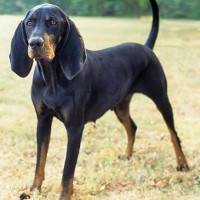
| The Black and Tan Raccoon Dog is a descendant of the Talbot Hound (like all hounds). Its ancestor was used by royalty for its hunting prowess. The Coonhound is a strictly American breed; however, its ancestors are directly descended from the English Foxhound. The Black and Tan Coonhound was developed in the southern United States in the 1700s. They are adept at tracking all types of game, large or small. It is not very popular as a companion dog, but rather as a hunter and tracker. The Poodle is a surprisingly good hunter. It was developed for hunting waterfowl. | ||
 |
||
| Standard of the Black and Tan Coonhound | ||
A little of the Poodle |
||
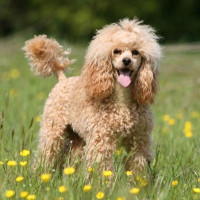
| The Poodle originated in Germany, but French breeders brought it to be the dog we know today. The Poodle's ancestry is debatable; many believe that the Poodle is a mixture of European water dogs, the North African Barbet and Asian herding dogs. It is a very old breed. Illustrations that closely resemble today's Poodle can be found in Egyptian and Roman artifacts. They have also been used as circus dogs over the years. Poodles were rare in the United States until after the Second World War. At one time, the Poodle was the most popular breed in the country. | ||
 |
||
| Standard of the Poodle |
Appearance of the Black and Tan Coonoodle |
| The Black and Tan Coonoodle has a short, dense coat. It is black overall, with tan markings above the eyes, on the sides of the muzzle, on the chest, legs and back of the thighs. He has long ears. He's quite a big dog, but he's also slender. Its tail is long and slightly curved. Poodles come in a variety of colors: blue, black, white, gray, silver, brown, café-au-lait, apricot and cream. The coat is generally curly, stiff and wiry. The Poodle often needs grooming, as its hair grows in different lengths on the body. Poodles are considered medium-sized. They are slim. The Black and Tan Coonoodle will probably be a blend of the characteristics of both parents. It will probably be dark in color with a shaggy coat. It will be fairly tall but slender. It will have a fairly long tail. |
Temperament of the Black and Tan Coonoodle |
| The Black and Tan Coonoodle has been bred to hunt and work with other dogs, so you can expect it to get along fairly well with other dogs. He can be reserved with people. He can be stubborn and needs firm, consistent and patient training. It can take up to three years for the Black and Tan Coonoodle to reach adulthood, so you may have an overgrown puppy on your hands for a few years. They are very easy-going, intelligent and love to track. The Poodle is intelligent, gentle, loyal and can be mischievous if bored. It also seems to have an air of dignity. He's also very playful; some owners say he has a zany side. He is protective of his home and family. He is affectionate with his family but aloof with strangers. He usually warns his family if strangers are present. He has an excellent memory. It can be difficult to break his bad habits. Given this information, it's reasonable to assume that the Black and Tan Coonoodle will be exceptionally intelligent. Owners should ensure that the Coonoodle is kept busy with toys, otherwise he may get into trouble. He can be quite zany in his early years. He's likely to be very affectionate, but a little wary of strangers. |
Needs and activities of the Black and Tan Coonoodle |
| The Black and Tan Coonoodle is likely to be a very energetic and intelligent dog. It will need at least an hour's exercise. Its parent breed, the Black and Tan Coonoodle, is ideal as a walking or jogging companion; however, it's advisable not to let it off its leash when walking with you. It's best to have a fenced yard for the Black and Tan Coonoodle. You should keep chew toys within easy reach for the dog, and provide games that exercise his mind and body. |
Maintenance of the Black and Tan Coonoodle |
| The Black and Tan Coonoodle requires very little maintenance. Simply brush him weekly with a washcloth or bristle brush and he's ready to go. His ears, however, are a point of contention. As they hang downwards, weekly ear cleaning is essential. Never put anything in his ear canal, but you can use a damp washcloth to clean the outer parts of the ear. The Poodle requires more maintenance. Its hair can be trimmed in several ways, and the choice depends on the owner and his or her objective with the dog. The Poodle rarely sheds, so routine clipping is normal maintenance for him. Every three to six weeks is normal. Even with a shorn coat, your Poodle needs to be groomed/batted/trimmed every three weeks to prevent tangling. He needs daily brushing. He also has weepy eyes, so a damp washcloth over the area every day will prevent tear stains. He also has floppy ears, so the inside of his ears will need to be cleaned weekly, as with the Black and Tan Raccoonhound. You can expect the Black and Tan Coonoodle to be high-maintenance. Its coat is bound to be longer, like that of the parent breed Poodle, so regular brushing is important. You should brush your Black and Tan Coonoodle's teeth at least three times a week; however, if you want to prevent gum disease, brush your dog's teeth daily. Clip your dog's nails often; if they click on the ground when he walks, it's time to trim them. |



 English (United Kingdom)

Comments