
 |
Bostie |
|
He is not recognized by the F.C.I. |
Origin |
U.S.A. <> Great Britain -> U.S.A. | |
Translation |
Francis Vandersteen | |
This breed is also known as |
Bostie Terrier
|
A brief presentation of the Bostie |
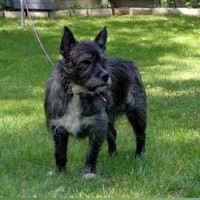
| A Bostie is a determined, energetic and curious companion dog. They require moderate activity and lots of affection from their owners. The average lifespan for small breed dogs is between 10 and 14 years. They generally weigh between 6.5 and 9 kilos and reach between 25.5 and 40.5 centimeters in height. Bosties have a compact Boston Terrier body and Westie facial features and coat, which are generally long, black and white in color and wiry in texture. Not yet recognized by the American Kennel Club, the Bostie makes an excellent addition to an active family. |
History of the Bostie |
| The name Bostie, also known as Boston Westie or Bostie Terrier, is a combination of the name of its parent breed, the Boston Terrier, and the nickname of its other parent breed, the West Highland White Terrier or Westie. The product of these two breeds, the Bostie, began to be bred unofficially in the early to mid-1900s. It has only recently been recognized as a specific cross-breed hybrid, but is not widely recognized or registered by the AKC. |
A little of the Boston Terrier |
||
| The Boston Terrier is a breed that was actually used for pit fighting in its early years. The two breeds that were originally used to create the Boston Terrier were the English Bulldog and the English White Terrier, which is now an extinct breed. French Bulldogs were also introduced into their ancestry at some point. The foundation of this breed was determined after the birth of a specific dog named Hooper's Judge, who weighed around 14 kilos at maturity. The breed was slowly reduced by crossing males with smaller female Boston Terriers. American Bulldog Terrier was the first name given to the breed, but it didn't sit well with many dog lovers. As a result, the name was eventually changed to Boston Terrier to represent their place of origin, which is Boston, Massachusetts. | ||
 |
||
| Standard of the Boston Terrier | ||
A little of the West Highland White Terrier |
||
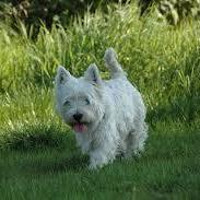
| The Westie originated in Scotland during the reign of King James I, and was bred to hunt foxes, badgers and vermin. The breed was known by other names in the past, such as White Scottish, Little Skye, Cairn and Roseneath Terriers. In fact, it was registered as Roseneath in 1908 by the AKC. The following year, the name was changed to the West Highland White Terrier and has been a popular pet and show dog ever since. | ||
 |
||
| Standard of the West Highland White Terrier |
Appearance of the Bostie |
| Bosties have the body and facial features of the Boston Terrier. The breed is small with a compact torso and muzzle. Bosties average between 6.5 and 9 kilos in weight and grow to between 25.5 and 40.5 centimeters in height. Their coat is long, dense and stiff, just like their Westie ancestors. Bosties are generally black and white, but can also have impressions of other colors common to Boston Terriers, such as brown and brindle. Bosties are tenacious, as evidenced by their determined, lively expressions. They have erect, triangle-shaped ears, dark eyes and a scissor-like jaw. Their relatively slender legs end in round, cat-like paws and support their otherwise robust muscular structure. |
Temperament of the Bostie |
| Bosties are generally happy, social animals that become very attached to their owners. They are outgoing and get on well with children, although they are sometimes shy with adult strangers. In the same spirit, they should be introduced slowly to new dogs. Once a Bostie makes a friend, however, he'll be very affable and playful from then on. The Bostie's beautiful disposition makes them wonderful pets and family companions. At the same time, the Bostie inherits an unshakeable sense of independence from both its parent breeds. As such, they can be difficult to train and relatively demanding, which can be frustrating for owners. Bosties also tend to bark and dig if they become agitated. The best way to counter these instincts is to expose Bosties to diligent training early and consistently. This breed can be sensitive and will quickly become shy or reserved if mistreated. It follows that Bosties do best in loving, reaffirming family environments. |
Needs and activities of the Bostie |
| The Bostie is an optimistic breed that requires moderate exercise and constant human affection. They enjoy short to moderate walks, relaxed escapades in the park and casual recreation with their owners. Bosties have moderate impulses to roam and hunt, so it's best to supervise this breed at all times when outdoors. Bosties will adapt well to apartment living in urban areas if given this type of regular activity and socialization. It's important to note, however, that Bosties are primarily house dogs, so quality indoor den time is just as, if not more, important for this breed. Overall, Bosties will make happy pets if they stay close to their owners and have the opportunity to socialize throughout the day. |
Maintenance of the Bostie |
| Bosties are not completely hypoallergenic, but produce fewer allergens due to the hair-like coat they inherit from their Westie parent. Bosties' long hair tends to mat and tangle, and should be brushed regularly. Owners should also give Bosties their monthly baths and trim their hair around the eyes and ears to avoid infections in these areas. Some Bosties will require regular stripping and plucking to keep their coats in good condition. Like all breeds, Bosties should have their teeth brushed daily and their nails trimmed 1-2 times a month to prevent painful proliferation, tearing or splitting. |



 English (United Kingdom)

Comments