
 |
Boxsky |
|
He is not recognized by the F.C.I. |
Origin |
Germany <> Siberia -> U.S.A. | |
Translation |
Francis Vandersteen | |
This breed is also known as |
Husker
|
A brief presentation of the Boxsky |
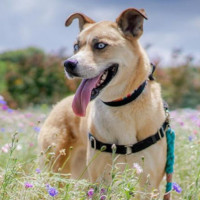
| Highly energetic and hyperactive, the Boxsky requires constant attention from its family to feel adored and loved. This uplifting breed is descended from the Boxer and the Siberian Husky. Its origins are unknown, but it is suspected that the breed has developed in recent years. This powerful breed can become incredibly vocal in order to attract the attention of others. The Boxsky is an exceptional watchdog, always on the lookout for suspicious activity. Their inquisitive nature means they are constantly alert to their surroundings. The coat of this lively dog is mainly short but dense, making it easy to care for. Due to its intense energy levels, the Boxsky should be given immense amounts of play per day. |
History of the Boxsky |
| The Boxsky originated as a cross between the Boxer and the Siberian Husky. Although it is not known how the Boxsky breed was developed, there is a rich history behind both parent breeds. |
A little of the Boxer |
||
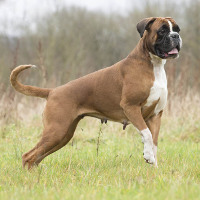
| The Boxer was originally developed in Germany at the end of the 19th century from the Bullenbeisser. The Bullenbeisser was a hunting dog for centuries, often hunting bear, wild boar and deer. The Bullenbeisser would seize and hold its prey until the hunters retrieved it. While documentation is becoming a little hazy on the Boxer, the Brabanter Bullenbeisser is thought to be a direct ancestor of the modern Boxer. In 1894, Robert, Konig and Hopner were directly responsible for stabilizing the Boxer breed and developing a dog show. In 1896, the first dog show was held. In 1897, the Boxer Club was founded. In 1904, the first Boxer breed standard was published and has remained largely unchanged. At the end of the 19th century, the breed was introduced to other parts of Europe. In the 20th century, the Boxer was imported to the United States. In 1904, the Boxer was registered with the American Kennel Club. During the First World War, the Boxer took on many roles in the army. It functioned as a messenger dog, attack dog and pack dog. After the Second World War, the Boxer gained in popularity as soldiers came home with their mascots. | ||
 |
||
| Standard of the Boxer | ||
A little of the Siberian Husky |
||
| The Siberian Husky was a medium-sized working dog native to Siberia, Russia. This boisterous dog belongs to the Spitz genetic family and was bred to pull sleds over long distances efficiently and quickly. The breed was also known to be sneaky escape artists capable of digging under sturdy fences. The Alaska Sweepstake Race of 1909 was one of the first times the Siberian Husky was honored, a dog with incredible endurance, the breed was added to the American Kennel Club's list in 1930 and, at the time of writing, was the 12th most popular breed on the list. | ||
 |
||
| Standard of the Siberian Husky |
Appearance of the Boxsky |
| The Boxsky closely resembles the Boxer in appearance. This dog's body can vary from medium to large. Its stance is one of vigilance and curiosity. Often brown-eyed, the breed can inherit the piercing blue eyes of the Siberian Husky. Its short to medium coat tends to vary between tan, fawn and white with black. The coat is also known to take on a denser feel, common to the Siberian Husky, and is water repellent. Ears can be erect or floppy. The tail tends to be full but with a short coat. The Boxsky's weight varies from 16 to 34 kilos and it stands 51 to 89 centimeters tall. Each specific dog may vary according to litter, size, weight and appearance. |
Temperament of the Boxsky |
| Boxsky energy levels are considered very high due to Siberian Husky traits. As a dog that will bounce off walls if not given attention, this highly energetic breed craves constant exercise. This hyperactive canine breed likes to be active and expects its family to engage it constantly. The Boxsky can be hesitant around strangers if not trained early. The Siberian Husky parent is a cautious dog that protects its family. The Boxsky is no different and can serve as an exceptional guard dog, early training will help this breed tell the difference between a friendly stranger and an intruder. This motivated dog is ideal for families, but not for young children, as its exuberance can be too much for them to handle. This is an incredibly vocal breed that will need consistent but firm instructions on how to effectively reduce the frequency of barking. The Boxsky will need to be socialized as a puppy to be friendly with other dogs as well as other animals. Although intelligent, this breed will benefit from positive reinforcement and rewards such as treats. |
Needs and activities of the Boxsky |
| The Boxsky naturally has a very high energy level that needs to be handled by an experienced dog owner. Not a dog for beginners, the recommended exercise session for a Boxsky should last between 70 and 80 minutes a day, sometimes more. Multiple long walks a day are highly recommended, in addition to intense play. This is not a dog to be left to his own devices all day long. Apartment living is not recommended, as this breed needs space to run and expend its energy. Your Boxsky is known to be an escape artist, so be careful if you have a fenced yard, don't leave him unattended to dig or skip his way in search of adventure. An ideal environment for the Boxsky would be a large house with a large fenced yard in a cool climate. |
Maintenance of the Boxsky |
| The Boxsky is not considered a hypoallergenic breed and sheds a lot. This breed is not recommended for allergy sufferers due to constant coat rashes. Daily brushing with a curry rubber brush will help remove much of the dead hair. A smoother brush and a de-shedding tool will come in handy when shedding is at its most intense. Not a swimmer, this hybrid won't need to be bathed often. Teeth should be brushed at least two or three times a week, and nails should not be neglected. Check them often for tears or cracks. Ears may have wax build-up. What's more, if your Boxsky loves water, make sure you dry his ears thoroughly after a swim. |



 English (United Kingdom)

Comments