 |
Bullador |
|
He is not recognized by the F.C.I. |
Origin |
Great Britain <> Canada -> U.S.A. | |
Translation |
Francis Vandersteen |
A brief presentation of the Bullador |
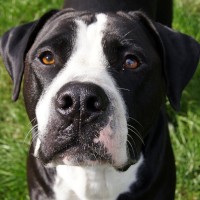
| The Bullador is a hybrid of the English Bulldog and the Labrador Retriever, a medium to large dog with an optimistic, friendly attitude. These dogs can sometimes provide guard and protection dog services, although this is usually due to their size and structure rather than their behavior. On rare occasions, the more aggressive behavior for which the Bulldog was originally bred may manifest itself, particularly if the dog is in severe pain or has suffered a traumatic event. The mix of these two breeds is an intelligent dog that makes them fairly easy to train, but they can also develop a mischievous side if they don't receive enough mental stimulation. |
History of the Bullador |
| The Bullador is a cross between the English Bulldog, a dog originally bred to control and bait bulls, and the Labrador Retriever, a friendly, energetic hunting dog that knows how to retrieve, especially waterfowl and tennis balls. |
A little of the English Bulldog |
||
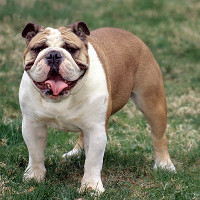
| The English Bulldog is a fairly ancient breed, and its origins are something of a mystery. Some experts believe they are a descendant of a Mastiff and a Pug, while others think the Mastiff line descended from the English Bulldog. Whatever the case, we know that these dogs were used to control, guard and bait bulls. To this end, the Bulldogs of the time were bred to be much more aggressive and tenacious, with an extremely high pain tolerance. This also made them excellent candidates for fighting other dogs and, because of this trait, they were instrumental in the development of the American Pit Bull Terrier and the American Staffordshire Terrier. When these violent "sports" became illegal in 1885, the breed was maintained by Bulldog enthusiasts who chose to breed for a more pleasurable nature, and today's English Bulldog is generally a docile animal capable of adapting to many situations. | ||
 |
||
| Standard of the English Bulldog | ||
A little of the Labrador Retriever |
||
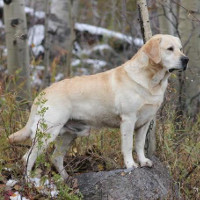
| The Labrador Retriever also has a long and complicated history. While most experts agree that the St. John's dog, a water dog that disappeared in the 1980s, was the foundation of the Labrador Retriever breed, they are divided on whether the Newfoundland dog gave birth to the St. John's dog or was bred from the St. John's dog alongside the Labrador. The St. John's dog, with its short, fat coat, swam in the water, ran on land and worked alongside fishermen on the Newfoundland coast. Like Labradors, they retrieved nets, ropes and even fish for local fishermen. It was in the 1800s that James Harris and Walter Scott, who had both bred St. John's dogs into hunting dogs, met at a shoot. Mr. Harris donated two of his males to Mr. Scott, who then bred them into his own dogs. The resulting dogs were the ancestors of today's modern Labradors. The combination of the two results in a highly intelligent, energetic animal with a pleasant temperament and intense work drive. | ||
 |
||
| Standard of the Labrador Retriever |
Appearance of the Bullador |
| The Bullador is a medium-sized dog with a broad head and large dark brown or hazel eyes. Depending on which breed the Bullador most resembles, the ear may be set high on the head or on the back, and low, either the triangular ears of the Bulldog that fold forward or to the side, or the rounded, hanging ears of the Labrador. The length of the Bulldog's head and muzzle is extremely short compared with most breeds, and the addition of the Labrador usually lengthens this somewhat. The Bullador's legs are probably longer than those of a Bulldog, although the raised hindquarters may still be present. Although both dogs have short, weather-resistant coats, only the Labrador has an insulating undercoat, so Bulladors may have single or double coats, and this may not be apparent until they are several months old. Double-coated dogs will shed more, but they may also be more adaptable to cool, cold weather than their single-coated siblings. |
Temperament of the Bullador |
| The violent history of the English Bulldog has been almost completely appeased in the modern Bulldog and they are now a rather loving and gentle animal, and the Labrador is most often a famous and extroverted breed. The Retriever adds energy and intelligence to the sometimes placid Bulldog, making it more playful and easier to train, and the Bulldog can help reduce the Labrador's mouthiness and vocal behavior. The Bullador generally accepts strangers with some reserve, but early socialization can help mitigate this tendency. They may also be inclined to chase smaller animals, so if they are allowed into the yard alone, it should be a securely fenced yard. This dog may not be as tolerant of extreme heat or cold and should not be left alone outside for long periods. They are generally quite tolerant of children, although any interactions with smaller children should be closely supervised, especially with younger, noisier dogs. |
Needs and activities of the Bullador |
| While the Labrador Retriever is a fairly active breed, the English Bulldog often shows a preference for a more sedentary lifestyle, and the cross between the two is usually somewhere in the middle. These dogs should generally be content with 60 to 80 minutes a day of vigorous activity, although this should be increased if you want your dog to adapt to apartment living. Activities such as tracking, swimming, agility training and retrieving will also help your dog stay in shape and mentally fit. These dogs can adapt to apartment life with constant training and extra exercise, but are generally more at home in a house with a yard. |
Maintenance of the Bullador |
| In most cases, this moderate-loss hybrid should only need a bath every month or two, although regular brushing is essential to remove loose hair and distribute body oils for a clean, healthy coat. The Bullador can inherit the wrinkles and folds of the English Bulldog, which can trap moisture and dirt if not carefully monitored and kept clean and dry. Trapped moisture and dirt can lead to itchy or oily skin, rashes and even mold and fungus growth. Dental hygiene is particularly important if your canine companion has a shortened snout, as this can encourage the growth of bacteria. These dogs drool a little, but usually not as heavily as the purebred English Bulldog. |



 English (United Kingdom)

Comments