
 |
Chinese Crestese |
|
He is not recognized by the F.C.I. |
Origin |
China <> Central Mediterranean -> U.S.A. | |
Translation |
Francis Vandersteen | |
This breed is also known as |
Crested Malt |
A brief presentation of the Chinese Crestese |
| The Chinese Crestese is a wonderful mix of Chinese Crested Dog and Maltese. Since both parent breeds are small dogs, your Chinese Crestese should also be a small dog. In fact, the average Chinese Crestese weighs around 4 kilos and stands around 25.5 centimeters tall. This dog has a long coat that can be any color such as white, cream, gray, brown, black, red and any combination of colors. They are happy dogs but tend to be stubborn, so they can be difficult to train. In addition, they are not very good with small children and should be socialized as puppies to get on well with other pets. |
History of the Chinese Crestese |
| The Chinese Crestese is a combination of a Chinese Crested Dog and a Maltese. The mix is a modern design conceived as a companion dog and does not have a long, well-known history. As such, owners need to look at the history of the breed's parents to understand the history of this hybrid. |
A little of the Chinese Crested Dog |
||
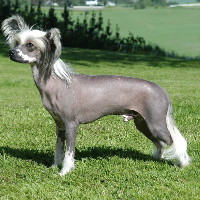
| The history of the Chinese Crested Dog breed is controversial, but many believe it has been around since the 1200s and was used as a bed warmer for the Aztecs. Some think it's a cross between a Chihuahua and a hairless Mexican dog, while others claim the breed originated in Africa in the 1300s and was bought by the Chinese to barter on their trading ships. This is supposedly how the breed managed to become popular worldwide. However, there is evidence that the breed was present in China before the 1200s, so it's not certain. In the 1800s, they found evidence that the Chinese Crested Dog existed in Europe in paintings and photographs as early as the 13th century. The Chinese Crested Dog became popular in the USA when Ida Garrett, who was a breeder, introduced them to the American public. Another story claims that a famous stripper named Gypsy Rose Lee was a breeder who improved the breed. The Chinese Crested Dog was finally accepted by the American Kennel Club in 1991, where it became the 77th most popular dog breed in the USA. | ||
 |
||
| Standard of the Chinese Crested Dog | ||
A little of the Maltese |
||
| The Maltese was one of the oldest known breeds, discovered in 1500 BC when Phoenician sailors visited the island of Malta, where the breed originated. Breeders in Italy added the Poodle and Miniature Spaniel to the lineage and the breed came in many different colors at the time. Today, the Maltese is known for its long, silky white coat and small size. In the 14th century, the breed became popular with wealthy Englishwomen who wore the little dogs on their sleeves. It was only registered by the AKC in 1888, where it is now the 33rd most popular dog breed. | ||
 |
||
| Standard of the Maltese |
Appearance of the Chinese Crestese |
| The Chinese Crestese can have long or short hair, depending on the status of the Chinese Crested Dog type. If the parent was a hairless Chinese Crested Dog, your Chinese Crestese will have a short, single layer of fur, and if your Chinese Crested Dog parent was a long-haired one, it will probably have a long, double-layered coat. They have a Terrier-like face with floppy ears, long legs and a small stature. Their tails are usually long and hairy, and they have a generally friendly, open expression. Most of the time, this breed is multicolored, and the most common shades are white, cream, gray, brown, black and red. |
Temperament of the Chinese Crestese |
| While the Chinese Crestese loves children, they do not tolerate young children well due to their size and nervousness. They enjoy being with other pets, but don't like having to fight for attention. As they have a stubborn streak, they can take a while to train and you need to be patient. Stay consistent and provide plenty of positive reinforcement for best results. Many owners rely on puppy towels for the first few months when training at home. Your Chinese Crestese needs lots of attention and loves to be cuddled to make excellent pets. |
Needs and activities of the Chinese Crestese |
| This breed needs around 30 to 45 minutes of intense activity a day, so you should try to take it for a walk or run every day. Other activities your Chinese Crestese may enjoy include hiking in the park, playing fetch, swimming, the local dog park, agility or competition training and Frisbee. If you have a fenced yard, she'd love to play there for a few hours a day, but they need human companionship, so you should try to spend at least one or two hours a day with her. If they don't get enough exercise, they can become bored or restless, which can lead to behavioral problems. |
Maintenance of the Chinese Crestese |
| Because of your Chinese Crestese's long hair, you'll need to brush it at least every other day with a stiff bristle brush and a metal comb. However, you should use your fingers to detangle the mats to avoid damaging the coat. You can bathe your Chinese Crestese as needed with a mild shampoo, but don't bathe too often or you'll dry out his skin. Brush his teeth several times a week and clean his ears once a week. Be sure to watch for mites, redness and wax build-up. You should also trim his nails if necessary. |



 English (United Kingdom)

Comments