 |
Corgi Schip |
|
He is not recognized by the F.C.I. |
Origin |
Great Britain <> Belgium -> U.S.A. | |
Translation |
Francis Vandersteen |
A brief presentation of the Corgi Schip |
| The Schip Corgi is a hybrid of two small breeds, the Schipperke and the Welsh Corgi Pembroke. The Welsh Corgi family can be of Pembroke or Cardigan lineage, and both are considered different breeds. Both parent breeds are small and protective of their families. The Schipperke was bred for vermin hunting and as a small guard dog, while the Pembroke Welsh Corgi was bred for cattle breeding and as a farm dog. Both parents are intelligent, a trait passed on to the Corgi Schip, but the Schipperke parent adds an independent sequence and a high potential for wanderlust to the hybrid. The Corgi Schip is a recognized hybrid of the Dog Registry of America, Inc. |
History of the Corgi Schip |
| It is assumed that the Corgi Schip was originally developed as a result of the creative dog trend that exploded onto the scene around 20 years ago. The Corgi Pit was developed from its parent breeds: the Welsh Corgi Pembroke and the Schipperke. |
A little of the Welsh Corgi Pembroke |
||
| The Welsh Corgi is divided into two distinct breeds, the Welsh Corgi Pembroke and the Welsh Corgi Cardigan. The two breeds are closely related and seem to vary in size, ear shape and temperament. The Pembroke is slightly smaller with pointed ears and a laid-back personality, while the Cardigan is larger with rounded ears and is much more alert. The Welsh Corgi is an old dog, known to have been in Wales in the 9th or 10th centuries. Small dogs were used to help herd cattle and sheep, and their family origins are somewhat mysterious. The Corgi is most likely the result of several different breeds, although legend also indicates that this was the breed chosen by fairies who gifted them to humans to help protect children and farms. The American Kennel Club first recognized the Welsh Corgi in 1925, and two lines were subsequently classified as separate breeds in 1934. Today, the Welsh Corgi is the long-time favorite of Queen Elizabeth II, who has kept the Corgis since 1933, and the breed's popularity has not waned. | ||
 |
||
| Standard of the Welsh Corgi Pembroke | ||
A little of the Schipperke |
||
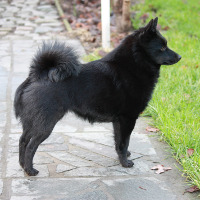
| The Schipperke is thought to be descended from the Belgian Shepherd, but instead of developing as a Shepherd, the Schipperke was bred as a small vermin hunter and watchdog for boats along the canals between Brussels and Antwerp. The name Schipperke translates as "Little Skipper" or "Little Captain" and refers to the small breed's work on the canals, but was not given to the breed until 1888, when the first breeders' club was formed. The Schipperke soon gained in popularity and was imported to the USA, where the American Kennel Club recognized the breed in 1904. Today, this fluffy little black dog is appreciated for its energy, intelligence and devotion to its family. | ||
 |
||
| Standard of the Schipperke |
Appearance of the Corgi Schip |
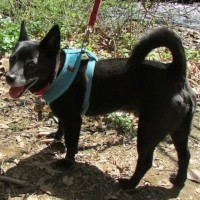
| The Corgi Schip is a small hybrid of the Schipperke and the Welsh Corgi Pembroke. Most Corgi Schip hybrids are black, and some will have white markings on the chest and underside. The hair of a Corgi Schip is of medium length and a little rough to the touch, with longer hair around the ears, nose and legs. The ears are triangular, set high on the head and held erect. The Corgi Schip's eyes are round to oval and dark, with a cheerful, somewhat mischievous expression. The muzzle is proportional to the head, ending in a small black nose and a flat or scissor bite. The Schip Corgi is low to the ground with straight legs and small round feet with black nails. |
Temperament of the Corgi Schip |
| Despite having two working-class parents, the Corgi Schip is an energetic companion dog. The Corgi Schip is affectionate towards its family, including children, and is a moderately sensitive dog that won't tolerate being left alone for long. Your Corgi Schip's behavior towards strangers will depend on which parent breed your hybrid most closely resembles. The Corgi Schip is mainly wary of strangers and barks as a warning. The same applies to dogs and other pets. The Welsh Corgi Pembroke parent matches some of the Schipperke parent's hostility to strangers and other dogs, but early socialization with different people, places, dogs and other animals will help the Corgi Schip adapt much better to different situations. The energy levels of the parent Welsh Corgi Pembroke are lower than those of the Schipperke, but remain moderate to high. Despite high energy levels, the exercise intensity levels of the Corgi Schip are much lower than those of other hybrids, and daily exercise is possible from inside your home. |
Needs and activities of the Corgi Schip |
| The Corgi Schip has a lot of energy and needs daily exercise. The energy levels and exercise needs of the parent breed Welsh Corgi Pembroke are not as high as those of the parent Schipperke and can help to soften your Corgi Schip. If the Corgi Schip gets enough daily exercise, this hybrid is well suited to condo or apartment living. Daily outings are necessary and are just as essential for socialization as for stimulating the Corgi Schip's mind. The Corgi Schip has medium to high energy requirements and needs daily exercise. They are intelligent dogs, but there can be traits of independence and stubbornness, which makes the Corgi Schip a little more difficult to train. Perseverance and patience will be rewarded in the ownership of a happy, eager-to-please canine companion. |
Maintenance of the Corgi Schip |
| The Corgi Schip is not a hypoallergenic dog and can shed moderately to heavily. Requiring daily brushing to avoid tangles and mats, dirt can cling to the coat, complicating brushing if not regularly maintained. Ear cleaning should be part of your Corgi Schip's grooming routine to prevent ear infections. Brush your dog's teeth at least twice a week, and consult the vet if necessary to check gum health. The Corgi Schip is not known for drooling or smelling, and a caring attitude in the maintenance department will ensure this. |



 English (United Kingdom)

Comments