
 |
Cortese |
|
He is not recognized by the F.C.I. |
Origin |
Great Britain <> Central Mediterranean -> U.S.A. | |
Translation |
Francis Vandersteen |
A brief presentation of the Cortese |
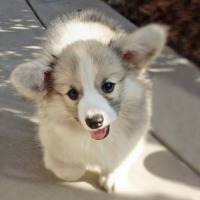
| The Cortese is an adorable cross between the Maltese and the Welsh Corgi Pembroke. Since both breeds are small, your Cortese will also be small. Their coat is long with a thick, silky texture and can be any color. Some of the most common colors are white, black, brown, red, beige and blue. This breed is very affectionate, cheerful, playful and intelligent. Because they're so friendly, they don't make good watchdogs, but are excellent pets. The Cortese loves children and other pets and they are relatively easy to train but can sometimes be a little stubborn. |
History of the Cortese |
| The Cortese is a hybrid of the Welsh Corgi Pembroke and the Maltese. The hybrid is a modern breed and, although standards are not available. |
A little of the Welsh Corgi Pembroke |
||
| The Welsh Corgi has two varieties, the Welsh Corgi Cardigan and the Welsh Corgi Pembroke. The Pembroke is the more common and is the one bred with the Maltese to create the Cortese. This breed is descended from the Schipperke, Spitz, Pomeranian, Swedish Vallhund and Keeshond. The Welsh Corgi Pembroke was born in the 1100s in Pembrokeshire, Wales, hence its name. Little is known of their history, but it is thought that they were used to herd cattle, ponies and sheep. King George VI and Queen Elizabeth II both had Welsh Corgi Pembroke. They were registered with the AKC in 1934 and are the 18th most popular dog breed in the United States. | ||
 |
||
| Standard of the Welsh Corgi Pembroke | ||
A little of the Maltese |
||
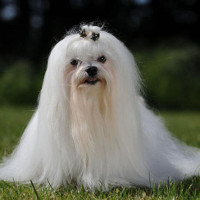
| The Maltese is thought to have existed since antiquity, having been recovered from the island of Malta in 1500 BC by sailors. The breed was mentioned in early writings and appeared in ancient Greek art. The breed was named after the island they come from and is thought to contain Poodle and Miniature Spaniel blood. Maltese are well known for their pure white coat, but they were once available in many colors. They were popular with wealthy women who wore the little dogs in their sleeves, brought by crusaders returning from the Mediterranean. When he arrived in England, he was called the Maltese Terrier, even though he didn't look like a Terrier and wasn't related. When it arrived in the United States, it was called the Maltese Lion Dog because of its lion-like coat. The Maltese was officially recognized and registered by the American Kennel Club (AKC) in 1888 and is the 33rd most popular dog breed in the USA. | ||
 |
||
| Standard of the Maltese |
Appearance of the Cortese |
| Your Cortese will be a small dog with a long coat, a fluffy tail that curves over the body, very short, stocky legs and a long torso. They generally measure between 23 and 30.5 centimeters in height and can weigh from 2.5 to 12 kilos. Their coat is usually brown, beige or red with white markings, but can be any color. Their large, hairy ears can be erect or pendulous, depending on parentage. They are always alert, with a friendly, open expression. Their eyes are dark with black rims and resemble those of a fox. |
Temperament of the Cortese |
| The Cortese is an excellent family dog because it loves to be with people. They enjoy other pets, but are best socialized when young. They're eager to learn and easy to train, although they can have a bit of a stubborn streak. However, if you use positive reinforcement, training your Cortese should be a breeze. They love children, but you should supervise them with young children under 5. The Cortese is an affectionate and cuddly pet who loves to sit on your lap or at your feet while you watch TV, and sleep with you at night. |
Needs and activities of the Cortese |
| Although your Cortese would be perfectly happy to stay in the house all day, it needs vigorous exercise for at least 60 to 90 minutes a day to prevent obesity. These dogs tend to become overweight if they don't get enough exercise. Some of their favorite activities include agility training, discipline training, herding, swimming and running. They also enjoy walking, hiking and going to the dog park. Another reason to make sure your Cortese gets enough exercise is to keep it from getting bored. Behavioral problems such as chewing, barking and digging are common in dogs who don't get enough exercise. |
Maintenance of the Cortese |
| You should brush your Cortese at least three or four times a week with a stiff bristle brush and a metal comb to avoid tangles and excessive shedding. You can bathe them if necessary, but not too often, as this can dry out their skin. Some owners have their Cortese professionally groomed several times a year to facilitate brushing. We recommend brushing your dog's teeth several times a week to prevent dental problems, and trimming its nails if necessary. In addition, you should clean their ears once a week with a soft cloth or cotton balls and watch for mites, wax build-up and redness. |



 English (United Kingdom)

Comments