 |
Doberdor |
|
He is not recognized by the F.C.I. |
Origin |
Germany <> Canada -> U.S.A. | |
Translation |
Francis Vandersteen |
A brief presentation of the Doberdor |
| Courageous, protective, loyal and the perfect family companion describes the Doberdor, a creative hybrid breed that is a cross between the Dobermann and the Labrador Retriever. These large-breed dogs often have a very strong, elegant appearance, especially if they adopt more Dobermann traits. These hybrids tend to require a lot of physical activity and, as such, are suitable for families with a more active lifestyle. |
History of the Doberdor |
| There isn't much information on the Doberdor breed itself, but we can learn more about the parent breeds to understand what to expect from the hybrid breed. |
A little of the Dobermann |
||
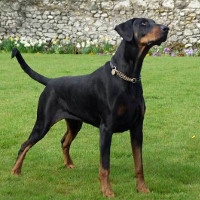
| The Dobermann is a large, intelligent and powerful dog that originated in the 1800s in Apolda, Germany. The breed was developed by a tax collector named Karl Dobermann, who created the Dobermann by mixing the breeds he had at the kennel where he also worked, including dogs like the Rottweiler and German Pinscher. The original purpose of this serious breed was to protect households and people. Over the years, however, they have also become popular as police and military dogs. On the island of Guam, in the War Dog Cemetery, stands a life-size bronze replica of the Dobermann, aptly named "Always Faithful". | ||
 |
||
| Standard of the Dobermann | ||
A little of the Labrador Retriever |
||
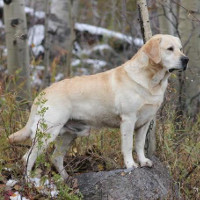
| The Labrador Retriever is an energetic, fun-loving dog originally bred for the sole purpose of hunting, tracking and retrieving waterfowl. These dogs originated in Newfoundland, Canada, in the 17th century and were often called "water dogs" due to their love of swimming and retrieving. Now one of the most popular dogs selected for guide dogs and as search and rescue dogs, they joined the American Kennel Club in 1917. | ||
 |
||
| Standard of the Labrador Retriever |
Appearance of the Doberdor |
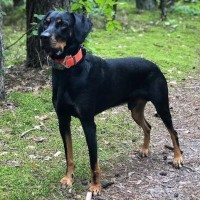
| The Doberdor is a hybrid that can measure from 63.5 to 71 centimeters in height. They tend to have coat colors very similar to those of their Dobermann parent. Coat colors often range from black, blue, red and fawn, with unique rust markings present notably on the chest, muzzle, neck, above the eyes, legs and tip of the tail. Doberdors tend to have short, smooth to dense coats (denser if they resemble Labradors), and coats can be water-resistant, a trait seen in Labradors. Ears tend to be droopy and pendant-shaped, the muzzle is generally short and broad, and eyes are often brown and alert. Tails are long, thick and strong, and some owners may choose to dock the tail, although this is not recommended or even forbidden in some countries. Overall, the Doberdor is a well-built, muscular breed that can be quite strong. |
Temperament of the Doberdor |
| Like their parent breed Dobermann, your Doberdor may inherit the protective trait. This makes them excellent watchdogs because of their guarding abilities and loyalty to the family. The Doberdor is also an intelligent, playful breed; they are social dogs and will love to play and interact with their owners and other dogs. Highly intelligent, these dogs can become quite stubborn if not properly trained. For this reason, Doberdors are best suited to experienced dog owners. However, if you have the time and patience to commit to regular obedience classes, you'll enjoy the challenge of owning a Doberdor. This hybrid makes an excellent family dog and will be a great addition to families with children and other pets, but as with any dog, socialization and training are necessary to achieve this friendly behavior. |
Needs and activities of the Doberdor |
| The Doberdor is an active hybrid requiring at least 2 to 3 long walks a day. These dogs are best suited to homes with large backyards, where they'll have plenty of room to run and stretch their legs. They are not recommended for apartment or city living, or as members of busy families. Doberdors love to play fetch and retrieve toys, and are always ready to swim and run, all hallmarks of Labradors. |
Maintenance of the Doberdor |
| If your Doberdor inherits the elegant, shorthaired coat of its Dobermann side, grooming and maintenance requirements are very low, as Dobermanns don't tend to shed much. However, if your Doberdor inherits the dense coat of its Labrador parent, you can expect to see more shedding. They may also need a bath if they inherit Labrador traits, as Labradors tend to have oily skin. Expect to bathe your Doberdor at least a few times a month. Brushing should be done weekly with a pin or a smoother brush, either of which will work well. As with all dogs, teeth brushing, nail trimming and ear cleaning should be carried out every 4 to 6 weeks to prevent disease or other medical problems, with teeth cleaning done much more often. |



 English (United Kingdom)

Comments