 |
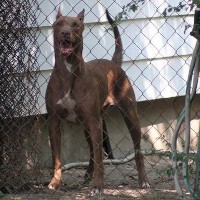
Doberman Pit |
|
He is not recognized by the F.C.I. |
Origin |
Germany <> U.S.A. -> U.S.A. | |
Translation |
Francis Vandersteen |
A brief presentation of the Doberman Pit |
| Often described as lively and intuitive, the Doberman Pit is a cross between a Dobermann and an American Pit Bull Terrier. Appearance and temperament can vary within each litter, although owners of this hybrid say they often have the facial appearance of the American Pit Bull Terrier and the body style of the Dobermann. Not a dog for the novice owner, this dog needs a knowledgeable hand, ready to train with kindness and consistency. |
History of the Doberman Pit |
| The Doberman Pit's history book hasn't yet been written, but we can turn to its parent breeds. |
A little of the Dobermann |
||
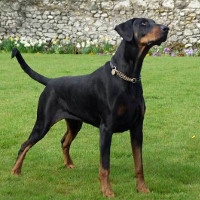
| The Dobermann was developed in 1890 by Karl Friedrich Louis Dobermann. He is thought to have mixed the Black and Tan Manchester Terrier, the Weimar Pointer, the German Shepherd and the German Pinscher, among others. With a history of bravery and perseverance, these dogs were originally guardians and even fought in World War II as scouts, messengers and sentries. The Dobermann Club of America was formed in 1921 and the breed was registered with the American Kennel Club in 1908, even before their wartime work began. | ||
 |
||
| Standard of the Dobermann | ||
A little of the American Pit Bull Terrier |
||
| The Bull and Terrier breeds were developed in England in the early 19th century for the sport of bull and bear baiting. In 1835, these sports became illegal and dog fighting took their place. This led to aggression in dogs, although, fortunately, also in these dogs was the reluctance to bite people. These traits earned him a reputation for being strong and protective, yet gentle. When immigrants to America arrived with these dogs, the breed began working on farms. Tasks included hunting wild game, protecting property from animals and serving as companions for family members. Dog breeding at this time focused on increasing the dog's size. These dogs were named American Pit Bull Terriers by the United Kennel Club in 1898. The breed was recognized by the American Kennel Club in the early 1930s as the American Staffordshire Terrier, to separate the dog from its fighting past. | ||
 |
||
| Presentation of the American Pit Bull Terrier |
Appearance of the Doberman Pit |
| The Doberman Pit is a very muscular dog. Often seen with the body shape and stance of the Dobermann parent, they are compact and agile. Its front legs are completely straight and muscular, and its hind legs are equally straight with well arched feet. The parental influence of the American Pit Bull Terrier gives this hybrid a broad head and thick neck. Robust, its appearance is one of packed physical power balanced by a gentle gait. Its eyes are dark and expressive. |
Temperament of the Doberman Pit |
| The Doberman Pit is a confident, courageous dog that loves people, although it may need training when young to accept strangers. This intuitive hybrid can be stubborn like its American Pit Bull Terrier parent, but will respond well to leadership given with consistency and clear instructions. Known for being loyal and unwavering in their devotion, the Doberman Pit can have a gentle heart hiding beneath its tough persona. The right person, willing to train and give affection, will enable this hybrid to excel as a companion. |
Needs and activities of the Doberman Pit |
| As a high-energy dog, the Doberman Pit needs to be walked two or three times a day. A well-fenced backyard is the ideal place for him to expend his energy between walks around the neighborhood. This hybrid will enjoy fetch games and will also like to try Frisbee. Not wishing to be left alone for long periods, those who own the Doberman Pit should be at home often, or at the very least, let him accompany you on every outing. An urban or rural environment is preferable, as apartment life can seem confining to the Doberman Pit. |
Maintenance of the Doberman Pit |
| Maintaining the Doberman Pit is easy and straightforward. Get him used to the grooming routine as a puppy, and he'll be happy to cooperate and enjoy the special bonding time too. A good brushing once a week with the smooth brush should remove any loose hairs. Moulting season may require you to attend to the coat several times a week. The Doberman Pit's nails are likely to be hard, so trimming them regularly will make the job easier. This dog doesn't have a strong dog smell, so bathing shouldn't be done more than necessary. The parent American Pit Bull Terrier can sometimes have skin sensitivities, so be sure to use only approved veterinary products on the skin. |



 English (United Kingdom)

Comments