
 |
Doxie-Pit |
|
He is not recognized by the F.C.I. |
Origin |
Germany <> U.S.A. -> U.S.A. | |
Translation |
Francis Vandersteen | |
This breed is also known as |
Pitwee
|
A brief presentation of the Doxie-Pit |
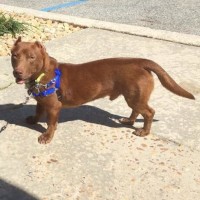
| Not much is known yet about the Doxie-Pit, which is a hybrid mix between the Dachshund and the American Pit Bull Terrier. The American Pit Bull Terrier brings height and weight, while the Dachshund adds an elongated, short-legged body type. The breed's high intelligence and loyal nature require an experienced dog owner who can devote time and love to training with a firm but gentle hand. The Dixie-Pit is somewhat strange in appearance, having the big head of a Pitbull and the body of a Dachshund, but despite their strange appearance, these hybrids are adorable and affectionate companions. |
History of the Doxie-Pit |
| The Doxie-Pit is a specific modern crossbreed that gained notoriety around 2015 with a Doxie-Pit named Rami who was available for adoption. The strange appearance of the Doxie-Pit sparked curiosity about the hybrid, but little else is known about the mix. Owners need to examine the backgrounds, personality traits and potential health risks of both breeds to better understand their Doxie-Pit's potential disposition. |
A little of the Dachshund |
||
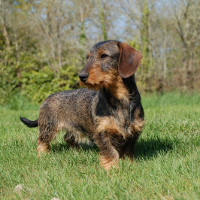
| Known as a keen hunter, the Dachshund originated in Germany and served its purpose well in England and Germany in the 1800s. Bred to have powerful paws to fight their way into animal dens, these dogs generally hunted in packs. Not so popular in the USA until after the World Wars, the Dachshund eventually made its way to North America, where they became popular family companions. They are also favored in Australia, India, France and the Netherlands. | ||
 |
||
| Standard of the Dachshund | ||
A little of the American Pit Bull Terrier |
||
| The American Pit Bull Terrier has a long history with a sad beginning. The American Pitbull Terrier also shares its name with the American Staffordshire Terrier, which was a bull-fighting dog crossed between the Old English Bull and Terrier and the English Terrier to create a Staffordshire Bull Terrier. The breed was imported to the U.S. in the 19th century for arena fighting and bred to outperform its English Staffordshire cousin over time. The American Kennel Club first recognized the American Staffordshire Terrier in 1936. Although blood sports have long been banned in the USA, these loyal, loving dogs are still forced into illegal blood sports and have acquired a bad reputation for their cruelty. Despite their reputation, these dogs are very loyal, affectionate and make excellent family dogs. | ||
 |
||
| Presentation of the American Pit Bull Terrier |
Appearance of the Doxie-Pit |
| The Doxie-Pit is a strange cross between the American Pit Bull Terrier and the Dachshund. The American Pit Bull Terrier can be seen in all colors, but the resulting hybrid is most often a two-tone combination with white. Many Doxie-Pits will have distinctive facial markings, such as glasses or markings above the eyes. The Doxie-Pit's head is large and broad, with ears smaller than those of a Dachshund. The muzzle is of medium length and slightly shorter than the head. The dark eyes are set low and wide apart. The head of a Doxie-Pit is unmistakably Pitbull-like, while the body is Dachshund-like, with short legs and an elongated body. The skin of a Doxie-Pit is taut and the hair short and hard, demonstrating the powerful muscular structure of this hybrid. A Doxie-Pit's tail is set low but carried above the level of the back when active. |
Temperament of the Doxie-Pit |
| The Doxie-Pit is a feisty dog that loves people. Wherever their people are, the Doxie-Pit wants to be too. The Doxie-Pit gets its people-loving traits from its American Pit Bull Terrier parent. When it comes to children, the Doxie-Pit has patience and great energy for running and playing, but prevents children and adults from rough play, teasing or tail-pulling. The Doxie-Pit is a social dog that will often greet strangers with energy. Be careful with people who are shy or fearful of dogs, as this breed is sensitive to human emotions. The Doxie-Pit comes from two purebred dogs that can be aggressive towards other dogs and animals. Good socialization and training from an early age will help the Doxie-Pit to become more familiar with other animals. Although the Dachshund is a calm dog, the Doxie-Pit has a high energy level and needs moderate to high-intensity exercise. What's more, this hybrid can be stubborn, making it more difficult to train. The Doxie-Pit needs firm, confident and calm training from an experienced dog owner and is not well suited to novice dog owners. |
Needs and activities of the Doxie-Pit |
| The Doxie-Pit is a very active hybrid and gets most of its high energy from its high-intensity American Pit Bull Terrier parent, which is active in bursts of energy. The Dachshund parent will calm energy levels slightly, but a fenced yard or dog park are daily requirements for this breed, which needs to expend some of its energy. If exercised regularly, the Doxie-Pit can adapt well to apartment living, but don't leave it alone for long. The Doxie-Pit cannot tolerate being left alone and will develop destructive behaviors if not properly exercised and stimulated. The Doxie-Pit loves to play tug-of-war as well as run. Training can be difficult, as both parent breeds have stubborn streaks. Incorporating task-oriented training and exercise with your Doxie-Pit will feel more like playtime, and he'll respond much better to training. The Doxie-Pit is also an all-weather dog, but does slightly better in warmer climates than colder ones. |
Maintenance of the Doxie-Pit |
| Despite the Doxie-Pit's short, hard coat, this hybrid is known to shed moderately. Brushing the Doxie-Pit once a week will help considerably to remove dead and loose hairs from the coat and keep the coat looking its best. All dogs need to brush their teeth to prevent tartar build-up, and the Doxie-Pit should be brushed at least twice a week. Good dental hygiene will also help prevent tooth and gum decay and bacterial infections. While you're brushing your Doxie-Pit's coat and teeth, also check his ears and use a vet-approved solution to gently remove any dirt, wax or debris from your dog's ears. Only bathe your Doxie-Pit when necessary, and most of the time, a room-temperature cloth applied after brushing will help keep your Doxie-Pit clean. The American Pit Bull Terrier skin is very sensitive, so it's important to keep it healthy and clean. |



 English (United Kingdom)

Comments