
 |
Elk-a-Bee |
|
He is not recognized by the F.C.I. |
Origin |
Norway <> Great Britain -> U.S.A. | |
Translation |
Francis Vandersteen |
A brief presentation of the Elk-a-Bee |
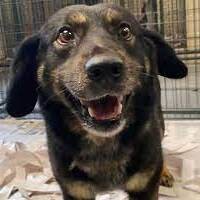
| The Elk-a-Bee is a mix of the parent breeds Norwegian Grey Elkhound and Beagle. It is a medium to large dog. He'll have a short, smooth coat, but, unfortunately, he'll probably shed a good deal. He may "blow" two or three times a year, depending on his Norwegian parentage Gray Norwegian Elkhound. He'll be a hunter, and it's not recommended to let him roam free unless he's in a fenced area. It is gentle and loyal, but can also be stubborn. For this reason, it is recommended that the Elk-a-Bee attend obedience classes. He's an excellent watchdog and a loving protector of his family. |
History of the Elk-a-Bee |
| There isn't much information on the Elk-a-Bee breed itself, but we can learn more about the parent breeds to understand what to expect from the hybrid breed. The Elk-a-Bee is recognized by the DRA (Dog Registry Association). |
A little of the Norwegian elkhound grey |
||
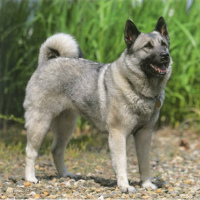
| The Norwegian Gray Elkhound traces its origins back to Viking times. It's possible that its history can be traced back even further. Dogs with similar skeletons have been found dating back to 5000 BC. The Norwegian Grey Elkhound has an important place in Viking history, as well as in the history of the country of Norway. It was used to guard herds, cattle and houses. He was also accustomed to hunting bear and moose. He would stalk his prey and hold it until the hunter could arrive to complete the kill. He would alert the hunter by barking, which also served to pin down the prey out of fear. The Norwegian Hunters' Association introduced the breed to the world at a dog show in 1877. | ||
 |
||
| Standard of the Norwegian elkhound grey | ||
A little of the Beagle |
||
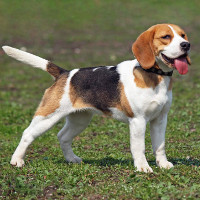
| The Beagle has a more uncertain origin. The breed as we know it today only really developed in the 19th century. Roman artifacts show a dog very similar to the Beagle. William the Conqueror brought now-extinct Talbot dogs to England in 1066. These dogs are thought to be the ancestors of the Beagle and Foxhound. Glove Beagles (a smaller version of the Beagle) were popular as early as the time of Henry VII in 1509. Elizabeth I kept packs of Pocket Beagles, which were only 23 centimeters high. They weren't very fast, however, so they weren't good hunters. In the mid-1800s, Phillip Honeywood established a pack of Beagles in England, and these are thought to be the direct ancestors of today's Beagle. Shortly afterwards, Beagles were imported to America, where they became an excellent hunting companion. | ||
 |
||
| Standard of the Beagle |
Appearance of the Elk-a-Bee |
| The Elk-a-Bee will be a combination of the two parent breeds, the Norwegian Gray Elkhound and the Beagle. The gray Norwegian Elkhound is generally medium gray with black-tipped guard hairs. Its coat can also be accented with silver. On his back, the "saddle" area, there may be a darker gray coloration. His ears and tail will often have black tips. His chest is a lighter gray. The Beagle can be a variety of colors, however, a white-tipped tail is a trademark of the breed. This was so that hunters could find the dog in the brush. The most common coloration of a Beagle is a tricolor: brown and white with a black "saddle" on the dog's back. He'll usually have white on his legs, chest, face and neck. The breed standard says that most colors are acceptable for a Beagle. The Elk-a-Bee is generally larger than the Beagle and is often seen with erect ears that are large like those of the gray Norwegian Elkhound. Its coloring can often resemble that of the Beagle in that it is tricolored. Its eyes and nose are very Beagle-like, and its expression is alert and happy. |
Temperament of the Elk-a-Bee |
| The parent Norwegian Gray Elkhound is a playful, intelligent breed. It is quite independent and can regard its humans as its equals, as opposed to a pack leader. The Gray Norwegian Elkhound likes to be with you in the middle of every activity. It can be difficult to train, so obedience classes or "puppy kindergarten" classes can help, especially if you're a novice dog owner. The Norwegian Gray Elkhound is a natural watchdog, and fiercely protective of his family. He is extremely attached to his family. It should never be left alone for long periods. It is recommended that the Norwegian Grey Elkhound be socialized early so that it knows what is expected of it. The Beagle parent is gentle, kind and playful. They do, however, have a naughty streak. They are highly intelligent and mainly hunters. Beagle training will be somewhat difficult. Food rewards are a good idea for working with the Beagle. Obedience classes are also recommended for the Beagle, especially for new owners. He needs early socialization so he knows what's expected of him. Your Elk-a-Bee will flourish with consistent training and instruction given with a firm but caring hand. Make sure you establish yourself as a leader from the very beginning of the relationship. |
Needs and activities of the Elk-a-Bee |
| The Elk-a-Bee is a fairly active dog. It's recommended that he gets enough exercise to ensure he maintains a healthy weight. He may tend to put on weight if not exposed to regular exercise. He'll do best in a home with a yard so he can run and play freely. He's a hunter at heart, so if you take him outside his yard, make sure he's on a leash. However, he'll want to be inside with his family at night. He may wander off in search of potential prey. He'll have a fairly high energy level, which a brisk walk or an afternoon at the dog park should lower. It's important to remember that both of your Elk-a-Bee's parent breeds are prone to weight gain without proper exercise. |
Maintenance of the Elk-a-Bee |
| The Gray Norwegian Elkhound has a double coat that resists weather and dirt. The coat is short, thick and smooth. The undercoat is dense, woolly and soft. Although the Gray Norwegian Elkhound doesn't shed much on a regular basis, at least twice a year it will "blow its coat," which is a massive shedding that's not good for allergy sufferers. Weekly brushing will help relieve much of the shedding. The Norwegian Grey Elkhound is a fairly clean breed and has no doggy odor. It only needs to be bathed when necessary, and its natural oils will help keep its coat shiny and healthy-looking. It's important to use a high-quality dog shampoo on the Gray Norwegian Elkhound. Your vet can recommend a good shampoo. The Beagle has a smooth, dense, water-resistant double coat. They are medium excretors. Weekly brushing with a medium bristle brush or hunting glove loosens and removes dead hair. Although the Beagle is prone to shedding, short hairs are often imperceptible, compared with a Poodle, for example. Spring shedding is much heavier than other seasonal sheds, as the Beagle's coat thickens over winter. The Beagle is relatively clean, so unless it finds a muddy hole, you shouldn't have to bathe it often. You will need to clean its ears regularly. A damp bath cloth wiped gently into the ears will suffice. Check his ears regularly for redness or odor, which could indicate an infection. Your Elk-a-Bee will need weekly brushing with a pin brush to keep his coat free of loose fur. Bathing is often not necessary. However, his teeth should be cleaned several times a week and nails trimmed every two weeks, unless your hybrid wears them down with activity. |



 English (United Kingdom)

Comments