 |
English Bull Dane |
|
He is not recognized by the F.C.I. |
Origin |
Great Britain <> Germany -> U.S.A. | |
Translation |
Francis Vandersteen |
A brief presentation of the English Bull Dane |
| Loyal and intelligent, the English Bull Dane is a hybrid breed developed from the Bulldog and the Great Dane. The breed's history is largely unknown, but it is suspected that it was developed as a result of the trend towards cross-breeding dogs. Hybrid breeds are often modified to create a healthier breed. This responsive, alert dog is known to be affectionate with its family. He'd rather stay by your side than chase squirrels. This breed is not known for being a nuisance barker, and only indulges in occasional barking. Its short but dense coat allows for simple grooming routines. The Bulldog has moderate energy levels that will require daily exercise. |
History of the English Bull Dane |
| There is no documented history of the English Bull Dane. The breed was developed from its parent breeds, the Bulldog and the Great Dane. |
A little of the English Bulldog |
||
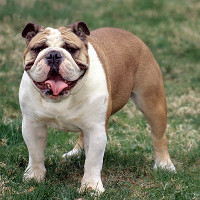
| The Bulldog is thought to be descended from ancient Asian mastiffs. Nomads traveled with the breed throughout Europe. In the process of modifying the Mastiff, the Bulldog was developed with a short muzzle and broad lower jaw. Originally, the breed was used to clamp its teeth on a bull's nose during baiting. The breed was also bred to have a high pain tolerance. In 1835, bull-baiting was banned in England. Once the Bulldog was imported to America and Germany, breeders sought to create a gentle breed for an efficient companion dog. The Bulldog was developed to have a gentle, lovable personality that is perpetuated in today's dogs. | ||
 |
||
| Standard of the English Bulldog | ||
A little of the Great Dane |
||
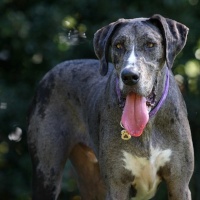
| Although the exact origin of the Great Dane is unknown, traces of the breed can be traced back to 3000 BC in Babylonian temples. The Great Dane is thought to have been spread throughout the world by the Assyrians as a result of trade. The Great Dane is thought to have developed from the following ancestors: the Irish Wolfhound, the English Mastiff and the Irish Greyhound. Originally called the Wild Boar, the Great Dane was used to hunt wild boar, and had its ears cropped to prevent the boar from tearing them. In the 16th century, the breed inherited the name English Dogges, which was later replaced by Kammerhunde in Germany. German breeders modified the breed to create a docile, gentle giant. In 1889, the Great Dane Club of America was founded. | ||
 |
||
| Standard of the Great Dane |
Appearance of the English Bull Dane |
| The English Bull Dane is most likely to take on the general height of the Great Dane. Due to the lack of official breed standards, its appearance may inherit the dominant traits of either the Bulldog or the Great Dane. Generally, the face may resemble the Bulldog but with a slightly longer muzzle. Its strong, athletic build can be attributed to the structure of the Great Dane. Its coat varies in color and can inherit white, black and brown with occasional patches. Eyes are generally light or dark brown. Their parallel legs are straight and powerful. Their giant legs are also inherited from the Great Dane. The tail is fine, short-haired and hangs directly over the body. |
Temperament of the English Bull Dane |
| The English Bull Dane is a gentle, down-to-earth breed that wants to please its family. This discreet dog prefers to spend the day with you rather than hunting. Its voice is occasional, and it's not a nuisance. Whereas the Great Dane is not good with newcomers, the English Bull Dane loves and accepts new people. It welcomes young children and other pets as a friendly breed. Their moderate energy levels mean they are less likely to engage in property destruction if left alone for a few hours. Although this loyal breed accepts new people, it's still possible for him to be wary of others. Early training and socialization are recommended to prevent any potential aggression. Positive reinforcement is recommended to ensure his safety in his environment. His calm, responsive nature makes him a wonderful companion. |
Needs and activities of the English Bull Dane |
| Your English Bull Dane has moderate energy levels that will require meeting daily exercise requirements. He will benefit from fetching, walking and running to ensure he stays healthy. Around two walks a day are recommended to ensure he meets his minimum requirements. Since your adorable dog isn't considered the most active, he'd be more than happy to accompany you to your sofa for a lazy day. Apartment life is acceptable as long as he can exercise outdoors to enrich his mind. Your English Bull Dane would do best in an urban home with a fenced-in yard and a warm climate. |
Maintenance of the English Bull Dane |
| The English Bull Dane is not considered a hypoallergenic hybrid breed and sheds moderately. Daily brushing for 10 to 15 minutes with a curry rubber brush will suffice to remove dead hairs. Bathing should be limited to every 6 to 8 weeks to avoid overproduction of oils in the skin. Ears should be wiped and cleaned weekly to avoid earwax debris. Teeth should be brushed daily to prevent tartar build-up. Nails should be trimmed or filed every 2 to 3 weeks. This breed is known to drool and may have a moderate odor on the skin. |



 English (United Kingdom)

Comments