
 |
English Bull Walker |
|
He is not recognized by the F.C.I. |
Origin |
Great Britain <> U.S.A. -> U.S.A. | |
Translation |
Francis Vandersteen |
A brief presentation of the English Bull Walker |
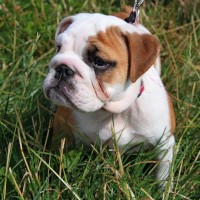
| Tender-hearted, friendly and protective, the English Bull Walker is a lovable hybrid breed developed from the English Bulldog and the Treeing Walker Coonhound. Although the breed's history is largely unknown, it is suspected that the English Bulldog was crossed with the Treeing Walker due to the absence of medical diseases in this very healthy dog. This adorable hybrid is described as a protector of families and willing to go the extra mile. The English Bull Walker weighs an average of 22.5 to 32 kilos and measures 38 to 63.5 centimeters. Its main purpose is to provide excellent company. Its short, smooth coat makes it easy to groom. The English Bull Walker contains high levels of energy and requires interesting daily activity. |
History of the English Bull Walker |
| The English Bull Walker does not have a well-documented history, as it is still in the early days of the hybrid. It is suspected that this dog was developed as a result of the trend towards cross-breeding dogs over the past two decades. The parent breeds of the English Bull Walker both have a rich history that helps us understand the hybrid breed. |
A little of the English Bulldog |
||
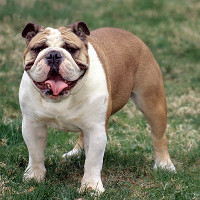
| The English Bulldog can be traced back to the ancient Mastiff. The breed itself was developed in England as early as the 1500s. The English Bulldog was bred to be aggressive and to win against bull-baiting. His physique was modified to allow for greater pain tolerance and successful victory. His short, flat nose allowed him to breathe while holding his muzzle. In 1835, England banned bull-baiting and the breed was left without a purpose. Breeders quickly worked to modify the breed again and eliminate aggression as a trait. In 1860, the English Bulldog appeared in the first dog show in Birmingham, England. In 1890, the AKC officially recognized the English Bulldog. | ||
 |
||
| Standard of the English Bulldog | ||
A little of the Treeing Walker Coonhound |
||
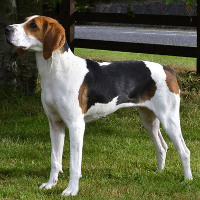
| The Treeing Walker Coonhound was a descendant of the English Foxhound. In 1742, Thomas Walker imported the breed to Virginia. By the 1800s, the breed was known as the "Tennessee Lead" and was crossed with the Walker Hound. The breed was known as a powerful dog that was good at hunting game. In 1946, the Treeing Walker Coonhound was recognized as its own breed. The Treeing Walker Coonhound was bred to be an efficient hunter of squirrels and possums. The breed got its name from its ability to climb trees to catch prey. | ||
 |
||
| Presentation of the Treeing Walker Coonhound |
Appearance of the English Bull Walker |
| The English Bull Walker strongly resembles the Treeing Walker Coonhound in stance and build. Its lean, muscular body means it can be transported quickly in the field. The head is medium-sized, with parallel ears on the sides of the head. The eyes are generally dark brown and round. Legs are powerful and set directly against the body. The tail is medium-sized and hangs low over the body. His expression is reserved but enthusiastic. Its short, smooth, fine coat can be a combination of red, fawn, brindle and tricolor. |
Temperament of the English Bull Walker |
| The English Bull Walker is a truly social dog, protective and affectionate with its family. It's a peaceful breed with a relatively calm personality. However, your friendly dog will show you affection to let you know he loves being with you. Its good-humored personality makes it an excellent pet for new owners and young children. Because of its protective nature, early training and socialization is highly recommended so that it can distinguish between a friendly stranger and an unwelcome intruder. The English Bull Walker enjoys spending time with other dogs, but may need training to welcome other animals into his life. Positive reinforcement and firm commands will encourage your dog to learn new techniques. Make sure your dog receives entertainment throughout the day to avoid boredom, which can encourage property destruction. |
Needs and activities of the English Bull Walker |
| The English Bull Walker has high energy levels and will require around 45 to 60 minutes of intense play per day. Your dog will enjoy activities such as swimming, running, walking and agility. Two walks a day will help maintain daily health and prevent obesity. An ideal environment for your English Bull Walker would be a large rural home with a fenced yard and a warm climate. Apartment living is not recommended due to the lack of space required for your dog. It's essential to keep your dog active and engaged in an activity to avoid destruction of property. Give your hybrid some attention and activity, and he'll be very happy. |
Maintenance of the English Bull Walker |
| The English Bull Walker is not considered a hypoallergenic breed and sheds a lot. To reduce shedding, it's important to brush its smooth coat with a rubber curry brush for 10 to 15 minutes a day. Your dog should be bathed every 6 to 8 weeks. This breed is not known for drooling or strong odors. Nails should be trimmed or filed every 2 to 3 weeks. Ears should be wiped and cleaned weekly to prevent wax build-up. Teeth should be brushed daily to prevent tartar build-up. |



 English (United Kingdom)

Comments