 |
Flandoodle |
|
He is not recognized by the F.C.I. |
Origin |
Belgium - France <> France -> U.S.A. | |
Translation |
Francis Vandersteen | |
This breed is also known as |
Bouvipoo
|
A brief presentation of the Flandoodle |
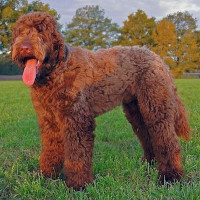
| The Flandoodle is a large hybrid breed that is a cross between the Bouvier des Flandres and the Standard Poodle. They make excellent pets and are also known as good watchdogs, as they are protective, loyal and alert. They generally weigh around 32 kilos on average and stand around 63.5 centimeters tall. They have a medium to long, thick, curly coat that can be any color. The most common colors are brown, black, white, gray, beige, red and blue. Although good with other animals and children with early socialization, they should be supervised in the presence of young children under five. |
History of the Flandoodle |
| To understand this seemingly rare but adorable hybrid breed, it's crucial to understand its origins. Knowing the parents of a mixed breed, both in type and in size and temperament, can shed light on what you can expect from a specific litter of mixed puppies. The Flandoodle is a cross between the Standard Poodle and the Bouvier de Flandres. Size, physical appearance and temperament are primarily based on these two breeds. After all, a hybrid breed is designed to bring out the best qualities of both parent breeds. |
A little of the Flanders Cattle Dog |
||
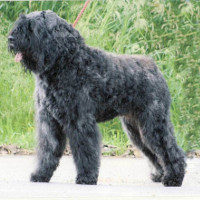
| The Flanders Cattle Dog began life in Belgium in the 1600s, raising cattle and pulling carts. Some think the breed is a mix of Spaniels, sheepdogs and Great Danes, while others claim they are a mix of Griffon and Beauceron. In those days, they were bred purely for function, so the Flanders Cattle Dog appearance varied a little. At first, they were called Toucheur de Boeuf, meaning cattle dog, Koehond, meaning cow dog, or Vuilbaard, meaning dirty beard. A veterinarian named Adolphe Reul was a proud breeder who made the Flanders Cattle Dog popular at the time, even though there was no standard until 1912. Due to the destruction of the First World War, the number of dogs declined dramatically, but a survivor named Nic de Sottegem revived and their popularity increased after their appearance at the Antwerp Olympics in 1920. In 1931, the American Kennel Club recognized the breed and it is now the 83rd most popular breed in America. | ||
 |
||
| Standard of the Flanders Cattle Dog | ||
A little of the Poodle |
||
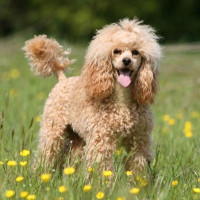
| The Poodle is one of the oldest dog breeds ever recognized and has existed since antiquity, originally in Germany, but now being perfected in France. They are thought to be a mix of French, Russian, German, Portuguese, Spanish and Hungarian water dogs, although the North African Barbet is also part of the mix according to some. Others claim that there are other mixed breeds, such as Asian sheepdogs and other breeds that were wild during this period. Smaller versions of the Poodle were created in the 1400s by breeding small Poodles with each other. At the time, the Poodle was mainly used for duck and truffle hunting, but became popular as circus and show dogs. The AKC officially recognized them in 1887, where they are now the 7th most popular dog breed. | ||
 |
||
| Standard of the Poodle |
Appearance of the Flandoodle |
| The Flandoodle is a large dog measuring between 56 and 71 centimeters and weighing around 25 to 38.5 kilos. Their coats are curly and thick, generally medium to long in length, and while no dog is 100% hypoallergenic, this breed comes close and generally poses no allergy problems. Flandoodles can be any color, but are generally brown, black, white, gray, beige, red and blue. They can be skinny or stocky, with long, muscular legs, a big head and a hairy face with a beard. Their long tails are usually docked, and their hairy ears are pendulous. |
Temperament of the Flandoodle |
| Your Flandoodle is affectionate, loyal and gentle for the most part, but needs to be well socialized when young. They like to be part of family activities and enjoy playing with other animals, but may be inclined to chase smaller animals like rabbits and guinea pigs. They should also be supervised in the presence of children under five. Although they are intelligent and quick learners, they can be a little stubborn during training, so you need to be patient and use positive reinforcement rather than physical punishment. They can get lonely if left home alone for long periods, so they need to have enough to keep them occupied while you're away. |
Needs and activities of the Flandoodle |
| Flandoodles love activity and need at least 60 to 90 minutes of vigorous exercise a day. They love to hunt and would appreciate a daily visit to the park to chase squirrels and rabbits if you don't have a fenced yard for him to play in. What's more, having him run alongside you while you jog or bike can also be an advantageous choice for both of you. This breed is also good for agility training, Frisbee, fetch, flyball and swimming. If your Flandoodle doesn't get as much exercise as it needs, it's likely to develop behavioral problems such as excessive barking, chewing on objects and digging. |
Maintenance of the Flandoodle |
| You'll need to brush your Flandoodle daily to avoid tangles and mats. If its coat is particularly curly, you may want to have it professionally groomed every few months to keep it manageable. They don't shed much, but it's important to bathe him if he gets dirty, using a mild shampoo and conditioner specially recommended for Poodles. Be sure to clean his ears once a week, and watch for redness and mites. You should also brush his teeth several times a week to prevent dental problems. There are special toothbrushes and toothpaste for dogs that you should use. |



 English (United Kingdom)

Comments