
 |
Frenchie-Pei |
|
He is not recognized by the F.C.I. |
Origin |
France <> China -> U.S.A. | |
Translation |
Francis Vandersteen |
A brief presentation of the Frenchie-Pei |
| The independent Frenchie-Pei is a stoic, loyal companion dog. They are medium-sized, but don't require much exercise. Frenchie-Peis have an average lifespan of 8 to 11 years, weigh 13.5 to 20.5 kilos and stand 38 to 43 centimeters tall. They have a short, smooth, dense coat that comes in variations of apricot, blue, black, brown, chocolate, lilac, red, cream, white and fawn with possible sable and brindle patterns, as well as various markings on face and body. This hybrid was probably born in the late 1900s and is rapidly gaining popularity in the USA due to its calm demeanor. However, it is not stabilized and can vary considerably in adult size, appearance and personality, even within the same litter. |
History of the Frenchie-Pei |
| The Frenchie-Pei takes its name from its parent breeds: the French Bulldog and the Shar Pei. |
A little of the French Bulldog |
||
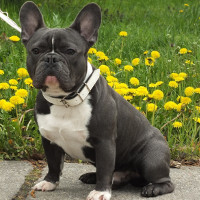
| The English Industrial Revolution replaced many workers with machines. By the 1850s and 1860s, lacemakers were out of work. English lacemakers began moving to France to find work. They brought their dogs, which were small, miniature Bulldogs. Eventually bred with the native French Bulldog, today's French Bulldog was born. In 1885, a breeding program for American French Bulldogs was launched. Once in America, the breed became popular with society women. The breed was shown at the Westminster Kennel Club dog show in 1896. The only winners in the French Bulldog group were those with "pink ears", not breed members with "erect bat ears". The ladies of the society disagreed with the judge's decision. They formed the French Bulldog Club of America, which went on to create the breed standard. The "erect bat ear" was the correct type. In the early 20th century, the breed was owned by the Rockefeller family and the J.P. Morgan family. The American Kennel Club recognized the breed in 1898. By 1906, the French Bulldog was the 5th most popular dog breed in America. | ||
 |
||
| Standard of the French Bulldog | ||
A little of the Shar Pei |
||
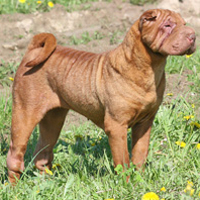
| The Shar Pei originated in China. The exact origin is difficult to determine due to obscure breeding records. Many think it's a relative of the Chow Chow, while others believe it's closely related to the Thai Ridgeback. Whatever the case, it is widely believed that the Shar Pei was already present during the Han dynasty in 200 BC. Shar Pei were used as farm and guard dogs, as well as hunters and fighters. Many died during the Communist revolution in China, but the few Shar Pei that remained were bred in British Hong Kong and Taiwan. In the 1970s, Hong Kong businessman Matgo Law wrote an article urging Americans to save the Shar Pei from extinction. Since then, the population has increased dramatically in North America and was recognized by the AKC in 1992. The Frenchie-Pei is a relatively new hybrid, but is rapidly gaining in popularity. It is likely to have originated in the late 1900s, when the Shar Pei population was rebounding in North America. | ||
 |
||
| Standard of the Shar Pei |
Appearance of the Frenchie-Pei |
| Frenchie-Peis resemble large French Bulldogs, with a muscular build and numerous folds on face and body. When they're puppies, some say they resemble baby hippos because of the shape of their broad, flat muzzles. At maturity, Frenchie-Pei are medium-sized and weigh between 13.5 and 20.5 kilos. They generally grow to between 38 and 43 centimetres in height. Their coats are short and smooth, and come in combinations of apricot, blue, black, brown, chocolate, lilac, red, cream, white and fawn, with possible sable or brindle patterns and various markings on face and body. They generally have Frenchie "bat" ears and large, dark, friendly eyes. Their muzzle is relatively short and their face and body are covered with excess skin and wrinkles, a vestige of the Chinese Shar Pei lineage of the Frenchie-Pei. |
Temperament of the Frenchie-Pei |
| Frenchie-Pei puppies are relaxed, observant companions. They like to sit back and enjoy the company of others, especially their owners. In fact, this breed is known to be extremely loyal, just like its Chinese relative Shar Pei. Yet the Frenchie-Pei can be a little aloof with strangers and other dogs, but are not generally aggressive. At the same time, Frenchie-Pei are sometimes playful and always extremely affectionate towards family members. They enjoy lounging around the house and "guarding" their belongings, such as chew toys and crates. The Frenchie-Pei rarely barks, but can sniff due to its short muzzle and well-documented respiratory problems. They are extremely intelligent and tend to be fairly easy to train. Because of their relatively low energy and independent personalities, this breed can easily live in apartments and urban environments. Busy households may appreciate the fact that these dogs don't need constant attention. Nevertheless, a large Frenchie-Pei family will take care of its need for occasional affirmation. |
Needs and activities of the Frenchie-Pei |
| Frenchie-Peis are relatively calm animals that don't need much exercise. On average, they need only 15 to 30 minutes of daily activity. They can enjoy a short walk or romp around indoors, but mostly prefer to relax around the house. However, they do show a little courage when excited by a newcomer or mealtime. This breed also enjoys playing with chew toys and will engage with other friendly, furry friends. Frenchie-Pei are extremely sensitive to heat, so it's important for owners to monitor their pets' temperature, especially if it's a particularly hot day. As a result, the Frenchie-Pei does best in temperate to cool climates. Although this breed is independent and cold, it will never spurn affection and will regularly snuggle up to the humans it loves best. |
Maintenance of the Frenchie-Pei |
| Frenchie-Peis are not hypoallergenic and are not suitable for owners with allergies. Because of their short coats and minimal shedding, they don't require much grooming. The Frenchie-Pei should be bathed from time to time, with particular attention to keeping the ears clean of wax build-up and debris to avoid infection. Owners must also be conscious of cleaning between the folds of their pet's face and body to avoid irritation and the progression of skin diseases. Beyond that, owners should brush their Frenchie-Pei's teeth daily, as well as trim its nails once a month. |



 English (United Kingdom)

Comments