
 |
Malinois Greyhound |
|
He is not recognized by the F.C.I. |
Origin |
Belgium <> Great Britain -> U.S.A. | |
Translation |
Francis Vandersteen |
A brief presentation of the Malinois Greyhound |
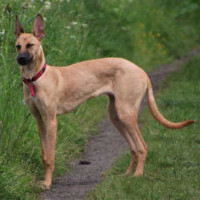
| As a hybrid breed, the Malinois Greyhound is an equal blend of the Belgian Shepherd Malinois and the Greyhound. Such an interesting combination results in a tall, lean, extremely athletic and intelligent dog. Although the characteristics of the Belgian Shepherd Malinois and the Greyhound are somewhat similar, the differences seen in the Malinois Greyhound are mainly in the ears and body type. The Greyhound has a distinctive “S”-shaped body with a large chest and tucked-in waist and a narrow face, all of which enable it to be incredibly fast and streamlined. The Belgian Malinois Shepherd, on the other hand, is more muscular and, while very agile and athletic, has larger legs and a more robust build. The combination of these two breeds results in the Malinois Greyhound, which is a large dog with a balance between being extremely active and relaxed, as well as intelligent and affectionate. Unlike the Malinois itself, the Malinois Greyhound is an excellent household companion and tends to lean more towards the Greyhound side, meaning it is generally of medium energy and generally an excellent choice for families with young children or other pets. |
History of the Malinois Greyhound |
| The Greyhound and Belgian Shepherd Malinois have been around long enough to have a rich history that mentions the reasoning behind the breed's creation, as well as what the breed is used for today. Because the Malinois Greyhound is a more recent breed, it doesn't carry the same weight in its history as its parents. So, to understand why this unique hybrid was created and what it can be used for today, we need to take a look at the history of its parents. |
A little of the Belgian Malinois Shepherd |
||
| While the Greyhound was well known for its speed, the Belgian Malinois Shepherd was popular for its agility, high intelligence and breeding skills. The breed was originally bred in Belgium, and takes its name from the city of Mechelen. Although the Belgian Malinois Sheepdog was most likely popular long before the 1800s for breeding and guarding farms, it wasn't until 1891 that the breed became extremely popular and divided into types with individual names. When sheep breeding became a little less popular in the modern world, Malinois needed a new line of work. That's when these athletic, fiercely loyal dogs became police companions. Because of their high intelligence and eager-to-please mentality, Belgian Shepherd Malinois excelled in police work, and were even used periodically during the First World War. Despite the Malinois' many talents, the breed actually disappeared completely from America in 1939. It was only some twenty years later, after the Second World War, that more dogs were imported and began working with the police again. Today, the Malinois is still used as a police dog and can be an excellent companion for the good family. | ||
 |
||
| Standard of the Belgian Malinois Shepherd | ||
A little of the Greyhound |
||
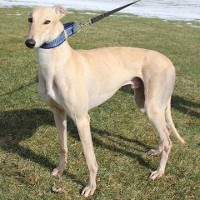
| The Greyhound is considered one of the oldest breeds of dog. Breeds like the Greyhound have been around for centuries and have even been written about in Roman poetry and histories because of their fascinating, elegant body style. Although no one really knows why the breed was created in the first place, there's no doubt that their incredible speed and dog-like nose were most likely developed to make a fast, intelligent hunting dog. Regardless of what the Greyhound was made for, there's no doubt that it's a beautiful and impressive animal. Because the breed is so unique in terms of its “S”-shaped body style and incredible sprinting ability, the Greyhound's DNA has changed very little over the years, and what we know today is most likely very similar to what the ancients knew and loved years ago. Greyhounds were brought to the New World around the 16th century by Spanish explorers, and these impressive breeds have been used for show and racing in Europe and the USA ever since. The Greyhound was recognized by the American Kennel Club in 1885 and has been a relatively well-known show and companion dog ever since. | ||
 |
||
| Standard of the Greyhound |
Appearance of the Malinois Greyhound |
| Thanks to the interesting body types of the Greyhound and Belgian Shepherd Malinois, the Malinois Greyhound tends to have a very slim, agile body with a long, lean face. Its eyes are large and round, with high or slightly folded ears, taken after the parent breed with the strongest genes. A narrow head and scissor bite make up the structure of the Malinois Greyhound's face, and combined with its slim body, deep chest and long tail, this breed is very streamlined and athletic. It can also be more muscular and fleshy like the Malinois, but this can vary considerably even within the same litter. The Malinois Greyhound's coat is short and tends to shed often, requiring daily brushing to keep shedding to a minimum. The Malinois Greyhound can come in a number of different colors and prefers warmer weather due to its shorter coat. |
Temperament of the Malinois Greyhound |
| The Malinois Greyhound is an excellent combination of companion and working dog, thanks to the compatibility of its parents. Although the Greyhound is extremely fast, it is above all an affectionate, playful and calm companion dog. This breed is perfectly happy to lie down in the house and enjoy its owners' company without making a fuss, and does wonderfully well with small children and other pets. The only downside to the Greyhound half is that the breed can be rather independent, so training can be difficult. Fortunately, the Belgian Malinois Shepherd is very eager to please, which makes training easier. So, combining these two, we can expect that, on the whole, the Malinois Greyhound is easy to train, but can have a few stubborn spells from time to time. On top of that, the Malinois is energetic enough that the Malinois Greyhound is playful and energetic with a very loyal and affectionate personality. He won't be a big barker unless something suspicious is going on, which makes him a good breed to have in a small house or apartment with neighbors nearby. |
Needs and activities of the Malinois Greyhound |
| Because the Greyhound doesn't need much physical activity to be happy, it balances very well the Malinois, which has very high energy levels. As a result, the Malinois Greyhound is a dog that will need daily exercise, but will also do well in smaller homes as long as it has space to exercise. Activities such as a long walk and a workout are ideal for keeping the Greyhound well-behaved and tired. As a result, such a breed is ideal for anyone with a busier lifestyle who wants a dog that will play with them and jog, but won't require hours of physical activity either. Just bear in mind that physical activity alone won't exhaust the Malinois Greyhound. Both parent breeds used in this hybrid combination are highly intelligent and, as a result, the Malinois Greyhound will need mental stimulation to stay wise and non-destructive. |
Maintenance of the Malinois Greyhound |
| The Malinois Greyhound is a very low-maintenance breed. Brushing should only take place a few times a week to remove any dirt or loose fur that may be on the body. Both parent breeds are seasonal shedders, so you can expect a lot of the Malinois Greyhound's fur to end up on furniture and floors, but with a few grooming sessions with a smoother brush and comb, the shedding can be managed. The Malinois Greyhound should only be bathed every few months, unless it becomes particularly dirty, as this breed doesn't have a bad odor. In addition to brushing and bathing, be sure to clean your dog's ears often and trim his nails every few weeks to keep his paws healthy and snag-free. |



 English (United Kingdom)

Comments