
 |
Miniature Bulldog |
|
He is not recognized by the F.C.I. |
Origin |
China <> Great Britain -> U.S.A. | |
Translation |
Francis Vandersteen |
A brief presentation of the Miniature Bulldog |
| The Miniature Bulldog is a specific cross between the English Bulldog, a friendly companion dog that was originally developed to bait, guard and even control bulls, and the Pug, a good-natured little dog that has had a place at one royal court or another since around 1600 BC. This crossbreed is an affectionate little dog that doesn't require much time grooming and generally gets along with people of all ages. They are able to live happily in an apartment or larger home, although due to their shortened muzzle, they can also be more sensitive than most to extremely low or extremely high temperatures. |
History of the Miniature Bulldog |
| The Miniature Bulldog is a hybrid animal, a deliberate cross between the Pug, a small dog that has been a companion of royalty in Asia for thousands of years, and the English Bulldog, a companion dog that was originally developed to bait and control bulls in England. |
A little of the English Bulldog |
||
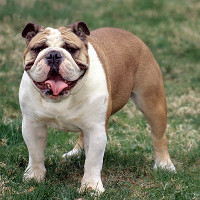
| The ancestry of the English Bulldog is also somewhat mysterious, although many suspect that they were originally the offspring of a Mastiff and a smaller dog, perhaps even the Pug. Initially, the English Bulldog was used to help control, bait and even herd bulls and, as such, they were bred to be far more aggressive and tenacious than today's English Bulldog. These traits, combined with an extremely high pain tolerance, made them excellent candidates for the rather barbaric blood sport of pit fighting, where they not only took part in the fights themselves, but also lent their genetics to well-known breeds that were developed for fighting, such as the American Pit Bull Terrier and the American Staffordshire Terrier. Only a few hobbyists continued to breed English Bulldogs after blood sports were banned in England in 1885, but they chose to concentrate on developing a more family-oriented dog and specifically bred English Bulldogs for the more docile, agreeable natures for which they are known today. | ||
 |
||
| Standard of the English Bulldog | ||
A little of the Pug |
||
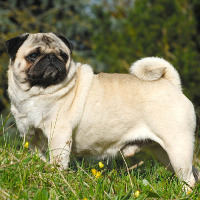
| The Pug is an extremely ancient breed, recorded as the prized possessions and cherished companions of Chinese royalty since the Shang dynasty, which reigned from around 1600 to 1046 B.C. They were prized enough to be presented as gifts to esteemed dignitaries and visiting royal families, enabling them to be distributed worldwide. They also enjoyed enormous popularity in England, notably at the court of King William III and his wife Queen Mary II in the 17th century, and were one of the many breeds bred and presented by Queen Victoria during her reign in the 19th century. | ||
 |
||
| Standard of the Pug |
Appearance of the Miniature Bulldog |
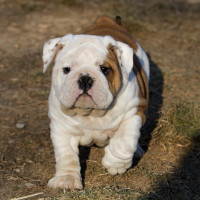
| The Miniature Bulldog is, as its name suggests, a fairly small dog that is generally characterized by a broad skull, short legs and a particularly thick body, although the female Miniature Bulldog is often a slightly more svelte animal than the male. Like both parent breeds, this hybrid often has a shortened muzzle that can sometimes lead to breathing difficulties, especially if the dog is exposed to extreme weather conditions. Their eyes sit low on the skull and are generally large, dark and round, with a gentle expression. They also have small, thin ears that can hang in a rose or bud shape. This crossbreed also sports a short, easy-care coat of short, glossy, soft fur that sheds moderately, but rarely tangles. Although black and fawn is the most common color, this coat can also come in many other colors, including brindle, red and white. |
Temperament of the Miniature Bulldog |
| This hybrid tends to have a fairly dignified temperament, although it can certainly have an entertaining clownish side on occasion. They tend to be fairly peaceful with the world around them and get on well with all kinds of new people and animals, although a few males can display some territorial or dominance-related aggression, particularly when dealing with other male dogs. They are generally very patient with children, but interactions must be closely supervised to avoid misunderstandings or rough behavior on the part of either dog or child. Due to the nature of the Bulldog, this dog can sometimes display overprotective behaviors, but this can often be mitigated by ensuring that your dog is extensively socialized and familiarized, preferably when young. Pugs are notoriously difficult to train, and Bulldogs can also have problems with this, especially if it's wet, rainy or cold outside. Although they can be a little slow and stubborn when it comes to training in general, they're generally pretty good at retaining the information they pick up. |
Needs and activities of the Miniature Bulldog |
| The Miniature Bulldog can be energetic when young, but tends to calm down a little as it gets older. This hybrid is less likely than most to ask for a walk, and some may even tend to be downright lazy, but it's important to make sure your dog gets about half an hour's exercise a day, to avoid obesity, which both the Bulldog and the Pug are prone to. Precautions should be taken when exercising dogs with shortened snouts like the Miniature Bulldog, as this hybrid is more sensitive to hot and cold temperatures. |
Maintenance of the Miniature Bulldog |
| Grooming requirements for this dog are fairly straightforward due to its short, smooth coat. Bathing is an infrequent requirement, once every few months, or if the dog gets into something dirty or smelly. The Miniature Bulldog may also be more prone to developing allergies and skin conditions than other dogs, which may require extra bathing, possibly with medicated shampoos. Short coats require brushing with a bristle brush, smooth brush or grooming glove about once a week, both to remove dead hairs and to distribute the dog's natural oils properly. Dogs with extremely short muzzles or small mouths are also more likely than other dogs to develop dental problems, so dental hygiene needs to be monitored regularly. |



 English (United Kingdom)

Comments