
 |
Mini Poxer |
|
He is not recognized by the F.C.I. |
Origin |
Australia <> China -> U.S.A. | |
Translation |
Francis Vandersteen |
A brief presentation of the Mini Poxer |
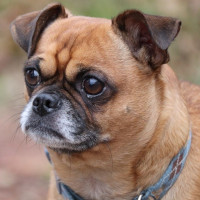
| The Mini Poxer is a hybrid between the well-known and beloved Pug and the lesser-known Miniature Fox Terrier. The resulting hybrid is a small dog with medium energy and lots of love for his family. However, these hybrids can be stubborn and difficult to train, making them less suitable for new dog owners. Unlike most Terrier mixes, the Mini Poxer loves and needs plenty of human companionship for healthy development. Owners can expect to spend a lot of time with this spirited, happy dog. |
History of the Mini Poxer |
| The Mini Poxer is not a well-known hybrid, and its lineage can be confused with the Toy Fox Terrier. The Mini Poxer is a specific cross between the Pug and the Miniature Fox Terrier. There is little documentation on the Mini Poxer and no established standard for size, appearance or disposition. Owners wishing to learn more about their Mini Poxers can consult the respective histories of the two parent breeds to find out more about their dogs. |
A little of the Miniature Fox Terrier |
||
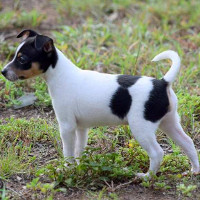
| The Miniature Fox Terrier has developed in Australia over the past 200 years. It is a close cousin of England's larger Fox Terrier and somewhat interchangeable with the Toy Fox Terrier of the USA. In fact, the breed is not recognized by either American or Australian kennel clubs. The Miniature Fox Terrier was developed to help farmers clear their fields and barns of small vermin, and to share their homes at night as companions. They have a gentle Terrier disposition and are often considered a little Toy and a little Terrier. The Miniature Fox Terrier is affectionately known as the “Little Foxie” in Australia, but is relatively unknown outside the island continent. | ||
 |
||
| Presentation of the Miniature Fox Terrier | ||
A little of the Pug |
||
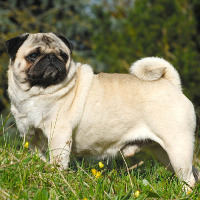
| The Pug, on the other hand, is exceptionally well known the world over, having been a favorite companion for hundreds of years. The breed is of Mastiff lineage, but considerably smaller in size than most other Mastiffs today. The Pug originated in eastern China, but was introduced to Europe through trade in the 1500s. Its large, round head with prominent dark eyes and flat face were an instant attraction, and the breed quickly usurped the much-loved companions of toy Spaniels in courts all over Europe. Pug standardization occurred in England during the 1800s, and the dog made its way to the United States in the second half of the 19th century, where the American Kennel Club recognized the Pug in 1885. | ||
 |
||
| Standard of the Pug |
Appearance of the Mini Poxer |
| It's impossible to predict the Mini Poxer's appearance, given how different the two parent breeds are. However, certain physical traits may have a higher probability than others. Regardless of the dominant appearance of the parents, owners can expect the Mini Poxer to be a short, sturdy hybrid with a fine coat of short hair. The Mini Poxer's head is round on top and the muzzle is short and broad, but not flat. The prominent dark eyes are set wide apart, and the ears stand up with a slight fold but are not oversized. The Mini Poxer's body is square and the legs are straight and sturdy. The Mini Poxer's tail is short but can also curl slightly over the back without a brush. The Mini Poxer may have extra skin around the head and neck, like the Pug, or may have slightly longer hair on its ruff, like the Miniature Fox Terrier. |
Temperament of the Mini Poxer |
| The Mini Poxer is an active, courageous hybrid with average energy levels that enjoys the company of its family. The Pug parent enhances the Mini Poxer's affection, and its tolerance of children and robust body can also handle interactions with children. However, this hybrid is not as active as other Terrier breeds and may not capture a child's interest for long. The Mini Poxer is an excellent alarm dog and barks at the approach of strangers, but quickly warms up once the threat has been assessed. The Mini Poxer may not be as friendly with other dogs or small animals without appropriate socialization at an early age. They are also a little stubborn, which makes training a little difficult. The Mini Poxer is not the best choice for a novice dog owner and needs firm but sustained training. |
Needs and activities of the Mini Poxer |
| The Mini Poxer is a hybrid of two breeds with very different exercise needs. The resulting designer dog has average energy levels and moderate exercise needs. Their short, sturdy legs move quickly, but they don't cover as much ground as other small dogs and only need a few minutes of exercise a few times a day to lead a healthy life. Most exercise needs can be met within the household. These small dogs do not tolerate extreme temperatures, especially the cold. Their short muzzle and flat face also make breathing difficult, so extreme climates are not recommended either. Given the size and energy requirements of this small companion dog, the Mini Poxer can easily adapt to life in an apartment. |
Maintenance of the Mini Poxer |
| The Mini Poxer is not a hypoallergenic dog, and although its coat is short, this dog is considered a moderate to heavy excreter. Weekly brushing will reduce the amount of dead and loose hair, as well as any potential odor. Dirt does not adhere well to the coat and is easily removed with a bristle brush, so frequent bathing is not necessary. Owners should also try to avoid routine bathing as the Mini Poxer's skin is sensitive, and they should check its skin for any cuts, abrasions or other conditions during grooming. The Mini Poxer's skin is looser than that of other Miniature Fox Terrier hybrids, so special attention to the skin is essential, as dirt and debris can become lodged in skin folds. The Mini Poxer's eyes are prominent and can be easily injured. Frequent eye checks are therefore recommended. |



 English (United Kingdom)

Comments