
 |
Minnie Jack |
|
He is not recognized by the F.C.I. |
Origin |
Germany <> Great Britain -> U.S.A. | |
Translation |
Francis Vandersteen |
A brief presentation of the Minnie Jack |
| The curious, athletic and energetic Minnie Jack is a specific cross between the Jack Russel Terrier and the Miniature Pinscher. These hybrids are highly energetic dogs that will require much more exercise than the average small dog. In fact, some owners describe the Minnie Jack as a big dog trapped in a small dog's body. In terms of grooming, the Minnie Jack is low-maintenance and requires very little extra care for the coat. These hybrids do well with other dogs of their size, but may not be suitable for homes with young children or other pets. The Minnie Jack is a curious vocal companion well suited to homes where they will have plenty of space to run and play. |
History of the Minnie Jack |
| The curious Minnie Jack is a new hybrid created by crossing the Miniature Pinscher with the Jack Russell Terrier. As these hybrids have only recently appeared, there isn't much information on the history of these dogs. Currently, the Minnie Jack is recognized by the American Canine Hybrid Club, the Designer Breed Registry, the Designer Dogs Kennel Club, the Dog Registry of America and the International Designer Canine Registry. Based on its recognition by various hybrid clubs, we can assume that the breed originated in the 21st century, possibly in the United States. |
A little of the Miniature Pinscher |
||
| The parent Miniature Pinscher breed is thought to have originated in Germany, most likely between the 1600s and 1800s. Although these thoroughbreds resemble the big, fearless Dobermann Pinscher, they actually share no known common ancestry with them. Instead, it is thought that the Miniature Pinscher may have been created by crossing the Italian Greyhound, Dachshund and Shorthaired Terrier. The Miniature Pinscher was used to hunt small vermin. The American Kennel Club listed the Miniature Pinscher in 1925. | ||
 |
||
| Standard of the Miniature Pinscher | ||
A little of the Jack Russell Terrier |
||
| The Jack Russell Terrier was a volunteer working-class dog that originated in England in the 1800's. It is commonly believed that the Jack Russell Terrier was created by a man named John Russell, who crossed his Terrier dog with the Fox Terrier and the Black and Tan Terrier. Despite their small size, both parent breeds are excellent little hunters. The Jack Russell Terrier was often used to chase foxes from dens. The American Kennel Club lists the Jack Russell Terrier as the Parson Russell Terrier, registered in 1997. | ||
 |
||
| Standard of the Jack Russell Terrier |
Appearance of the Minnie Jack |
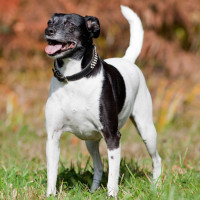
| The Minnie Jack is a lean, strong, compact little dog with a very athletic physique. These hybrids often have a short coat that can be flat or dense, depending on which parent they take most. Their coat can be quite rough and stiff if they inherit more Terrier genes. In terms of coat color, the Minnie Jack is rarely considered a solid color. Coats are often bicolored or tricolored and can range from white to black with tan markings and can include red and fawn. In terms of general appearance, a Minnie Jack will have a medium-length muzzle and bright, oval-shaped eyes that are often only dark brown. Ears may be fully erect or semi-flexible. Legs can be long and almost feline. Alert and ready for action, the Minnie Jack is an attractive, lively little dog. |
Temperament of the Minnie Jack |
| The Minnie Jack is an excellent companion for other dogs. These little hybrids are quite brave and bossy, but will enjoy the company of another dog friend. The Minnie Jack may not be suitable for a household with young children and smaller pets. This is because they may not tolerate children carrying them or pulling on their tails. Some Minnie Jacks may also acquire the typical Jack Russell Terrier character. As such, they may find it great fun to chase small animals or irritate the house cat. When you meet a new stranger, you can expect your Minnie Jack to bark a lot, especially if he inherits the Miniature Pinscher's predisposition to do so. Minnie Jacks are rarely aggressive or protective when a stranger approaches, they're simply alert dogs who like to let their owners know when someone is near. |
Needs and activities of the Minnie Jack |
| The Minnie Jack is a friendly, playful and fearless little dog that's always full of energy. Due to their high energy requirements, these hybrids, although small, may not be well suited to apartments and prefer to live in homes where they have plenty of space to run and play. The Minnie Jack will need a minimum of 60 minutes of physical activity a day to expend its pent-up energy and courage, puppies or young adults may require up to 75 minutes or more. These hybrids are extremely athletic and will enjoy a variety of sports and games. This can include long runs, numerous visits to dog parks, hiking, swimming, fetch games or destroying their toys. It's important to keep in mind that a bored Minnie Jack will show signs of anxiety considered excessive barking and destructive behavior. If you notice your Minnie Jack rummaging through garbage cans or chewing pillows, there's a good chance he's bored by a lack of mental stimulation. |
Maintenance of the Minnie Jack |
| The Minnie Jack is a low-maintenance dog when it comes to grooming. These hybrids are seasonal shedders, not very slobbery and not hypoallergenic. They may require weekly brushing if they retain the dense, stiff coat of their parent breed, the Jack Russell Terrier. If they inherit the smooth, short coat of the Miniature Pinscher, you can expect to brush them once every 2 weeks. Minnie Jacks only need to be bathed when necessary. Other important grooming requirements include brushing teeth once a week or as often as possible. It's crucial never to neglect your dog's teeth, as tartar and plaque build-up can lead to infections, tooth decay and pain. Ears should also be cleaned and checked regularly, as some dogs can be prone to yeast infections or wax build-up. |



 English (United Kingdom)

Comments