 |
Neahond |
|
He is not recognized by the F.C.I. |
Origin |
Italy <> Germany -> U.S.A. | |
Translation |
Francis Vandersteen |
A brief presentation of the Neahond |
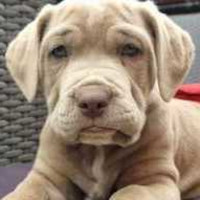
| The Neahond is a strange cross between a giant breed, the Neapolitan Mastiff, and a small breed, the German Spitz / Keeshond. They can vary considerably in size and coat type due to their parental differences. Their coats can be short to medium, but are generally thick and dense. They are good with children and other pets, but because of their size, they need to be supervised with young children. These dogs are not ideal for first-time dog owners or those who have never had large dogs before, as they can be difficult to train and can be dangerous due to their size. |
History of the Neahond |
| Because the Neahond is such a new breed, they don't yet have a history to share. Therefore, it's important to look at the histories of the parent breeds. |
A little of the Neapolitan Mastiff |
||
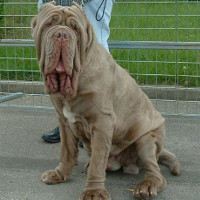
| The Mastiff is one of the oldest breeds, and the Neapolitan Mastiff has been around since antiquity. Records date back to the 15th century when these massive dogs were found guarding and protecting temples and other structures in Rome. Descended from the Roman War Dog and the British Mastiff in Italy, they were known as “big dogs for little men” because of their size and protection. These giants made imposing guard dogs, but they proved affectionate and gentle with people and quickly became popular as pets. They were recognized in 2004 by the American Kennel Club as the 99th most popular dog breed. | ||
 |
||
| Standard of the Neapolitan Mastiff | ||
A little of the German Spitz / Keeshond |
||
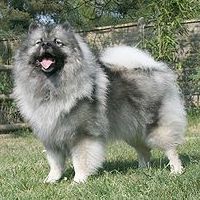
| The German Spitz / Keeshond originated in the Netherlands in the 1700s from the Samoyed, Pomeranian, Norwegian Elkhound, Finnish Spitz and Chow Chow. They were formerly known as Dutch Barge Dogs because they were generally used to guard canal barges and family farms. The breed was given the name German Spitz / Keeshond by the Dutch patriot leader Kees de Gyselaer and his dog, Kees. At the time, it was known as the “people's dog”. However, when the party was overrun by the opposition, many of these dogs were destroyed. Fortunately, a woman named Mrs. Wingfield-Digby introduced the breed to the UK, where it became popular. The German Spitz / Keeshond was then accepted by the American Kennel Club in 1930 and became the 92nd most popular dog breed in the USA. | ||
 |
||
| Standard of the German Spitz / Keeshond |
Appearance of the Neahond |
| This is a strange mix of breeds, as the Neapolitan Mastiff is a giant breed and the German Spitz / Keeshond is a small breed. However, they mix well and are generally larger, weighing from 36 to 59 kilos at maturity. Their coats are dense, short to medium, hard, straight, thick and rough with color combinations such as black and brown, black and gray, blue and gray, silver and blue, black and white, blue and black, or brown and blue. Other colors may include brindle or sable. The Neahond has floppy ears on a large, square head, a stocky body, massive, strong legs and a long, hairy tail. They have brown or amber eyes and blue, isabella, black or brown noses. |
Temperament of the Neahond |
| The Neahond loves people and other pets, but must be socialized and trained early and correctly. These are large to giant dogs, so they may need more guidance than other dogs to prevent them from accidentally injuring pets or smaller children. Obedience training is recommended for new dog owners or those who don't have enough time to train their dog properly. These breeds can be stubborn and need extra reminders before they understand what you're trying to teach them. They tend to push their limits. However, they make excellent watchdogs because of their large size and bravery. |
Needs and activities of the Neahond |
| Neahonds need plenty of exercise, but not as much as other dogs. On average, they should get around 45 to 60 minutes of physical activity every day to stay healthy. Dogs that don't get enough exercise tend to become overweight, anxious and have behavioral problems. Some of your Neahond's favorite activities may include retrieving play, agility competitions, hiking, chasing wildlife in a fenced area, playing with other dogs at the dog park and long walks. They also love to swim and hunt, so you may be able to take them to a park for that. They do best with a large fenced-in yard where they can play for several hours a day. |
Maintenance of the Neahond |
| The amount of maintenance your Neahond needs depends on the thickness of its coat. If your dog has a short coat, you may only need to brush it a few times a week with a rubber glove or smooth brush. However, if she has a longer coat, you may need to brush her three or four times a week with a pin brush and comb. The aim is to keep the skin healthy and avoid excessive shedding. You should also trim your Neahond's nails about once a month to prevent them from cracking or curling. You may need to bathe your Neahond from time to time to keep his coat clean, but check with your vet what type of dog shampoo to use. |



 English (United Kingdom)

Comments