 |
Neo Daniff |
|
He is not recognized by the F.C.I. |
Origin |
Italy <> Germany -> U.S.A. | |
Translation |
Francis Vandersteen |
A brief presentation of the Neo Daniff |
| The Neo Daniff is a giant mix of the Neapolitan Mastiff and the Great Dane, both of which are giant dogs. They will weigh well over 68 kilos when fully grown, and can stand around 91.5 centimeters tall. They are excellent watchdogs because of their size, but they are also very friendly with everyone, including children and other pets. They enjoy spending time with their families and love to be cuddled, but need to be supervised with young children because they are so big. Neo Daniffs are easy to train, eager to please and very obedient. |
History of the Neo Daniff |
| Like many specific cross-breed dogs, the Neo Daniff has a mysterious past. Although we know that these gentle giants are slowly but steadily gaining in popularity, no one knows when the breed made its debut. However, as the International Designer Canine Registry only began registering the breed in 2009, it's safe to assume that the Great Dane and Neapolitan Mastiff mix is one of the more recent hybrid breeds, and that their intentional crossing has become popular over the last 10-15 years. |
A little of the Neapolitan Mastiff |
||
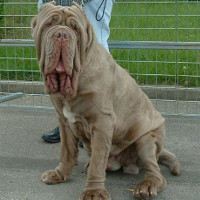
| Neapolitan Mastiffs have been around since ancient times, originally used in Italy as guard dogs. These giant dogs are descended from the British Mastiff and Roman war dogs. With their drooping skin and giant features, they make an imposing guard for any household and were used to guard farms and estates. They almost became extinct after the Second World War, but in 1946 they were reintroduced by a journalist named Piero Scanziana, who took a keen interest in the breed. The American Kennel Club only recognized the Neapolitan Mastiff in 2004, making it the 99th most popular dog breed. | ||
 |
||
| Standard of the Neapolitan Mastiff | ||
A little of the Great Dane |
||
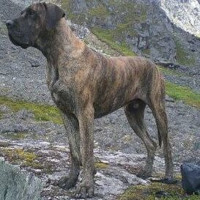
| The Great Dane originated in Germany in 3000 B.C. as a watchdog and hunter. They are thought to be the ancestors of the Irish Greyhound, Old English Mastiff and Wolfhound. There are drawings of dogs that looked like Great Danes found in the Babylonian temples built in 2000 BC, and written accounts of similar dogs in Chinese literature from 1121 BC, so they may have been around longer. They were brought to many parts of the world by Assyrians who traded their dogs with the Greeks and Romans. They were first called Boar Hounds because they were bred to hunt wild boar, but were then changed to English Dogges in the 1500s. The Germans then changed their name back to Kammerhunde, meaning chamber dog. Once again, their name was changed in the 1700s to Dogue, which was then changed to Great Danish Dogs and eventually to German Mastiff. In 1887, the breed was recognized by the American Kennel Club and is the 14th most popular dog breed in America. | ||
 |
||
| Standard of the Great Dane |
Appearance of the Neo Daniff |
| Your Neo Daniff may have brown or amber eyes, and its nose may be blue, black, brown or isabella, depending on the color of its coat. Their coats are short and smooth, relatively short and fine in many colors such as brindle, sable, fawn, red, black, blue, brown and white. They are rarely all one color, but the colors are usually complementary, such as brown and fawn or black and cream. They are huge, reaching heights of up to 91.5 centimetres and weighing almost 68 kilos. They have long, muscular legs, a large rectangular body and big, floppy ears on a large, square head. |
Temperament of the Neo Daniff |
| Although the Neo Daniff looks fierce and scary, they're just big, lovable animals who love to cuddle. But, they're protective of their family, including the other pets in the house. They're smart, quick and obedient learners, but can be stubborn at times. Training should be positive reinforcement rather than physical punishment, as they can become aggressive. This breed is an excellent choice for any family and will suit everyone. They get on well with other dogs, so a trip to the dog park is often a good activity to keep them socialized. |
Needs and activities of the Neo Daniff |
| The Neo Daniff doesn't do too well in a small apartment, as it needs space to move around. Having a fenced yard is a good thing so your dog can get out and run around for a while every day. Your Neo Daniff would appreciate a few long walks every day and perhaps a trip to the dog park to play with other dogs. Some other activities your Neo Daniff might enjoy are hiking, swimming, agility and obedience training, playing fetch or flyball, and simply running around in a safe area. It's important that your dog gets enough exercise or he may become anxious or bored. |
Maintenance of the Neo Daniff |
| The Neo Daniff has a short coat and doesn't need too much brushing, but should be brushed with a rubber curry glove or smooth brush a few times a week. This will prevent excessive shedding and improve circulation to keep skin and coat healthy. Your Neo Daniff should let his ears be cleaned a few times a month with cotton balls or a soft cloth. At this stage, you should also check for irregularities such as excessive earwax, dryness or redness. To prevent periodontal problems and cavities, you should brush your dog's teeth with a toothpaste specially designed for dogs. You should also trim your dog's nails about once a month. If there are folds in the skin or on the face, make sure you keep them clean and dry. Bacteria and yeast can accumulate, leading to skin problems. |



 English (United Kingdom)

Comments