 |
Olde Staff Bulldogge |
|
He is not recognized by the F.C.I. |
Origin |
U.S.A. <> Great Britain -> U.S.A. | |
Translation |
Francis Vandersteen |
A brief presentation of the Olde Staff Bulldogge |
| Although little information is available on the Olde Staff Bulldogge, you can turn to the parent breeds to get a good idea of the traits the hybrid will inherit. Also known as the Am Staff, the American Staffordshire Terrier is a gentle, affectionate dog that will be easy to train. A dog of the breed that will bring protection and love to its humans. The American Staffordshire Terrier is active and will need plenty of activity to keep body and mind healthy. The Olde English Bulldog is outgoing and protective of its people. This muscular breed has a stable temperament and a strong desire to please its humans. Olde Staff Bulldogge owners agree that this is a friendly, perceptive and gentle dog. |
History of the Olde Staff Bulldogge |
| The Olde Staff Bulldogge is a relatively new hybrid, although the two breeds that make up the hybrid have a long history. |
A little of the American Staffordshire Terrier |
||
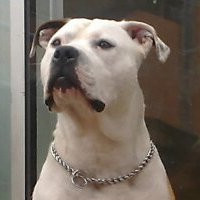
| Before the 19th century, the Bulldog and an unknown Terrier, perhaps Fox or English, mixed to create the ancestor of the modern American Staffordshire Terrier. At first, these dogs were bred to bait bulls for the butcher and to participate in blood sports. Because of their strength and spirit, the breed was brought to America, where they continued to fight and began to be called Pit Bulls and Yankee Terriers. As Americans preferred slightly larger dogs than those from England, breeders chose this when breeding. In 1936, the breed was accepted by the American Kennel Club and in 1972, its name was changed to American Staffordshire Terrier to note the distinction between the breed and the smaller Staffordshire Bull Terrier. | ||
 |
||
| Standard of the American Staffordshire Terrier | ||
A little of the Olde English Bulldogge |
||
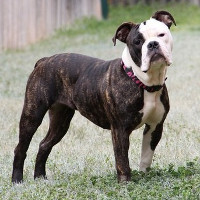
| Between 1600 and 1700, the Olde English Bulldogge was born in England, becoming the ancestor of many of the Bull breeds we see today. Like the American Staffordshire Terrier, the Olde English Bulldogge was bred for bull baiting, participating in the sport until it was outlawed. Once the sport was no longer permitted, the breed's numbers declined sharply. While breeders decided to rebuild the breed, the decision was made to try to minimize its aggressiveness. The dogs that still existed were crossed with the Pug, resulting in a significant decline in the breed until it was decided to rebuild the breed, mitigating the aggressiveness of the original Olde English Bulldogge. The remaining dogs of the breed were crossed with the Pug, among other dogs, resulting in today's Olde English Bulldogges. | ||
 |
||
| Presentation of the Olde English Bulldogge |
Appearance of the Olde Staff Bulldogge |
| There's not a lot of information available on the appearance of the Olde Staff Bulldogge, although we can consider the hybrid's parent breeds to get an idea of the traits their offspring may inherit. Based on the appearance of the Olde English Bulldogge and the American Staffordshire Terrier, you can expect your Olde Staff Bulldogge to be well-muscled, robust and relatively low to the ground. He will have a medium to large head and a broad muzzle. His ears may be set high or hanging. The Olde Staff Bulldogge's neck is likely to be thick and strong, while its legs will be short and thick. |
Temperament of the Olde Staff Bulldogge |
| Although little information is available on the temperament of the Olde Staff Bulldogge, you can consult the temperament of the hybrid's parent breeds to determine what you may see in your Olde Staff Bulldogge. Both the American Staffordshire Terrier and the Olde English Bulldogge will look tough and ready to fight, although both breeds are generally gentle and kind, making it highly likely that the hybrid will be too. The Olde Staff Bulldog is likely to be loyal and loving to his family, while also being a capable intervener in the face of a legitimate threat. Early socialization and consistent training will help ensure that the Olde Staff Bulldog responds to commands and behaves well with other dogs. Both parent breeds seek to please their humans, making it highly likely that the hybrid will do so too. |
Needs and activities of the Olde Staff Bulldogge |
| There's not much information on the activity requirements of the Olde Staff Bulldogge, although the activity levels of its parent breeds give an idea of what to expect. The American Staffordshire Terrier is an active breed that does best when given a job to do. A dog of this breed will appreciate task-oriented training, while being active through play. The breed doesn't need much space, so living in an apartment won't be a problem, as long as he's able to get the exercise he needs. The Olde English Bulldogge is robust and possesses great strength and stamina, the breed will enjoy taking long walks as well as playing outside in a yard. Your Olde Staff Bulldogge will be a competent companion who will enjoy keeping you company while you garden, and will be delighted to dig a hole or two. |
Maintenance of the Olde Staff Bulldogge |
| The Olde Staff Bulldogge will be easy to care for, inheriting a short coat from both its parent breeds that should be brushed once a week. It's also a good idea to wipe its face daily with a damp cloth. Any skin folds your Old Staff Bulldogge inherits should be wiped regularly to ensure that any debris it picks up is removed. While you're cleaning his folds, you can check for inflammation, sores or parasites. Be sure to dry the skin folds once they've been cleaned. Your Olde Staff Bulldogge's teeth should be brushed several times a week to keep them healthy, and its nails trimmed if necessary. Regular ear checks are also recommended, during which you can remove dirt and wax with a cloth. |



 English (United Kingdom)

Comments