
 |
Peke-Italian |
|
He is not recognized by the F.C.I. |
Origin |
China <> Italy -> U.S.A. | |
Translation |
Francis Vandersteen |
A brief presentation of the Peke-Italian |
| Although fairly established among hybrid dogs, Peke-Italians are not very popular or recognized by the American Kennel Club. They are a cross between two toy breeds: a Little Italian Greyhound and a Pekingese, and are known for being loyal, alert animals that don't require much exercise. They're also smart and dexterous enough to learn tricks and commands. Beyond that, Peke-Italians vary considerably in color but generally weigh between 3 and 6.5 kilos and reach heights of 25.5 to 38 centimeters. They often take on a brown coloring and black mask that make them look like miniature German Shepherds. |
History of the Peke-Italian |
| A Peke-Italian is a hybrid of two delightful toy breeds not yet recognized by the American Kennel Club. The parents are the Pekingese and the Little Italian Greyhound. |
A little of the Pekingese |
||
| The Pekingese originated in ancient China and was once cherished for its power to banish evil spirits from its owners' homes. Much of the Pekingese's history is unknown due to incomplete breeding records over the centuries, however, historians do know that Pekingese were introduced to the outside world in the mid-1800s. In fact, Empress Dowager Cixi, China's de facto ruler in the 1860s, began offering Pekingese to foreign officials and diplomats at this time. It was at this point in history that Pekingese migrated to Europe and North America and were welcomed as pets. The breed was recognized shortly after its arrival in the USA by the AKC in 1909. | ||
 |
||
| Standard of the Pekingese | ||
A little of the Little Italian Greyhound |
||
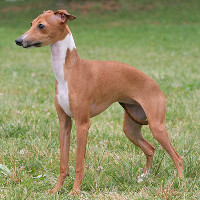
| The Little Italian Greyhound originated in the Mediterranean region around 2000 years ago, where it lived as a house dog for centuries. In the 16th century, Western European traders adopted these dogs and migrated the breed west to the UK, where they became very popular. Little Italian Greyhounds faced extinction in the country after World War I, but American breeders set about resurrecting the breed, gaining AKC recognition in the late 1880s. | ||
 |
||
| Standard of the Little Italian Greyhound |
Appearance of the Peke-Italian |
| The combination of an Little Italian Greyhound and a Pekingese resembles a miniature German Shepherd. It is small with erect ears, long, slender legs, a tapered muzzle and a dark nose. Their eyes are dark and oval, and their legs are arched and well padded. At maturity, these dogs weigh between 3 and 6.5 kilos and reach heights of 25.5 to 38 centimeters. Peke-Italians also have a dense, soft, medium-length coat, which comes in many color combinations common to the Little Italian Greyhound and the Pekingese. The most common coloring, however, is brown with a black mask and markings giving the little dog a miniature German Shepherd look. Peke-Italians also have a medium-length tail and an alert expression that captures the heart of all who see it. |
Temperament of the Peke-Italian |
| Since Peke-Italians are not stabilized, they can inherit any combination of traits from their parent breeds. Nevertheless, in general, this breed is affectionate, but nervous. It loves its owners and becomes very attached to family members. It's also an extremely sensitive breed that prefers a regular day-to-day schedule. If owners are unable to provide this kind of environment, Little Italian Greyhounds can become temperamental or destructive at home. Even so, Peke-Italians make excellent pocket dogs and travel pets, never leaving their owners' side. This level of protection means that the breed is wary of strangers and barks when it deems it necessary. When a Peke-Italian is at ease, however, it's an excellent playmate for children and a cuddler for humans and other dogs. Ultimately, this puppy loves to be loved, but also needs stability in its home environment. |
Needs and activities of the Peke-Italian |
| Peke-Italians are a small breed that, despite their alertness, require only light exercise. They benefit from a short walk or romp indoors for around 15 to 30 minutes a day. Otherwise, Peke-Italians love to learn and perform tricks as a form of mental stimulation. They are similar to Poodles in that Peke-Italian hybrids are known for their ability to entertain. Because they don't require a large yard or much exercise, Peke-Italians are well suited to owners who live in apartments or urban environments. Beyond that, Peke-Italians do well in any climate, making them easy-care companions. |
Maintenance of the Peke-Italian |
| Peke-Italians have medium-length, dense coats that shed moderately and require weekly brushing and monthly bathing. Feathering around the ears, feet and tail is common, and owners should trim these areas themselves or take their dog to a professional groomer. Peke-Italians should also have their teeth cleaned daily and their nails trimmed at least once a month. This hybrid's ears stick up straight and are prone to collecting wax and debris. As such, owners should check and clean their Peke-Italian's ears regularly to avoid infection or discomfort. Note that Peke-Italians are not hypoallergenic and are not suitable for owners with allergies. |



 English (United Kingdom)

Comments