
 |
Pit Pei |
|
He is not recognized by the F.C.I. |
Origin |
U.S.A. <> China -> U.S.A. | |
Translation |
Francis Vandersteen | |
This breed is also known as |
Sharpull Terrier
|
A brief presentation of the Pit Pei |
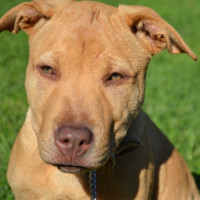
| The Pit Pei is a new designer dog breed created from a Shar Pei and an American Pit Bull Terrier. These parent breeds are both different and similar. They can both be stubborn and need experienced owners, but they look different on the outside. For this reason, we can identify certain qualities that the Pit Pei is destined to develop, while others may be factors that are difficult to predict. These dogs have a thick coat, which means they prefer colder temperatures and shouldn't be over-exercised in hot weather. Being medium-sized, they are best suited to large homes with yards. However, they can adapt to apartment living as long as they receive the required amount of daily exercise. |
History of the Pit Pei |
| Hybrid dogs are the combination of two purebreds. The history of the Pit Pei begins with the creation of the Shar Pei and the American Pit Bull Terrier. |
A little of the American Pit Bull Terrier |
||
| American Pit Bull Terriers were developed in England, where they were known as Staffordshire Bull Terriers. These dogs were a cross between several types of English Terrier and Bulldog dogs. The exact type of Terrier dog used to create this breed is not known for certain, although it is thought that the Black and Tan Terrier, Fox Terrier and White English Terrier were part of the mix. These dogs were originally used by butchers and hunters to manage bulls and hold game. They also have a darker past involving blood sports such as bear and bull baiting. However, once these practices were banned in England in the 1800s, the breed was used in dog fighting. They made their way to the USA in the mid-1800s, hence their current name, among others. Fortunately, today they lead a much gentler life than their ancestors. | ||
 |
||
| Presentation of the American Pit Bull Terrier | ||
A little of the Shar Pei |
||
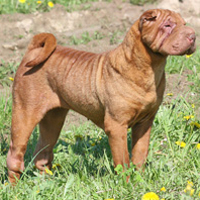
| The origin of the Shar Pei is something of a mystery. Images of these dogs have been found on ancient pottery, suggesting that the breed may have existed since around 206 BC. They are thought to be descendants of the Chow Chow, as the two breeds have distinct purple tongues. The breed's name translates as a sandy coat. These dogs were quite versatile and were often used by the Chinese on farms, for tracking, hunting, herding, protecting livestock, as ratter dogs and as guard dogs around the home and family members. Unfortunately, these dogs also have a history of dog fighting, in which they were skilled because their coats and skins made it difficult to seize opposing dogs. The Shar Pei population dwindled throughout the communist revolution but was saved by a Hong Kong businessman named Matgo Law. He obtained some of the dogs and featured them in an American magazine to help publicize the breed, and it has been a popular choice of dog ever since. | ||
 |
||
| Standard of the Shar Pei |
Appearance of the Pit Pei |
| Since Pit Peis are hybrid breeds, they have no specific physical standards. These dogs may resemble a cross between the Shar Pei and the American Pit Bull Terrier, or they may look more like one than the other. A Shar Pei's coat is extremely harsh, with fur that is never wavy or soft. Instead, the Shar Pei's coat is described as short, smooth and stiff, and must be solid in color. The American Pit Bull Terrier has a differently textured coat that can be patterned. The overall result of mixing these breeds will be a medium-sized dog with a medium-length coat and small legs. The eyes will be dark, as will the muzzle, which are characteristics adopted from the Shar Pei parent. The American Pit Bull Terrier can also be seen in these dogs in their stocky frame and strong jaw. Some dogs of this hybrid breed may be different from others. |
Temperament of the Pit Pei |
| Shar Pei and American Pit Bull Terrier mixes take on personality traits from both parent breeds. Because of the two breeds used to make the Pit Pei, these dogs can be noisy and like to bark, and so may not be ideally suited to owners who live in apartments. The Shar Pei and American Pit Bull Terrier are known to be stubborn, which means the Pit Pei should be paired with a strong owner who has some experience with dogs. These dogs respond better to positive reinforcement. Since both the American Pit Bull Terrier and the Shar Pei were originally bred as fighting dogs, offspring of these breeds that are not properly bred can be aggressive towards other dogs. Both parent breeds are generally unsuitable for children, so we can expect similar behavior from the Pit Pei. Shar Pei's are quite independent and often choose to bond with just one person, whereas the American Pit Bull Terrier is more affectionate with all its inhabitants. |
Needs and activities of the Pit Pei |
| Pit Pei dogs have parents who put on weight easily. For this reason, owners of these dogs must be careful not to overfeed their pets. Making sure they get enough exercise will also prevent them from becoming obese. These dogs enjoy all forms of exercise, but particularly like to accompany their owners on walks. However, you'll need to be careful with their thick coats when exercising them in hot weather. They'll need frequent breaks and plenty of water to keep them from overheating. These dogs are only suited to living in apartments if they get enough exercise, as they prefer to live in open homes with a yard. |
Maintenance of the Pit Pei |
| As this designer breed generally adopts the short, fine hair of the American Pit Bull Terrier, they won't have very high grooming requirements and will only need weekly coat care. During shedding seasons, you may want to increase brushing frequency to help control shedding. They'll need to carefully clean the folds of their skin during bathing. In fact, the folds should be checked daily for any accumulation of moisture or dirt. Other needs of these dogs include brushing teeth, trimming nails and cleaning ears. Your dog's teeth need to be cleaned and maintained, just like yours, and should be brushed at least two to three times a week. Their nails should also be trimmed regularly. Depending on how fast your dog's nails grow, they should be trimmed once a month or every other month. Your dog's ears should be wiped weekly to prevent the development of ear infections. |



 English (United Kingdom)

Comments