
 |
Poochin |
|
He is not recognized by the F.C.I. |
Origin |
France <> China -> U.S.A. | |
Translation |
Francis Vandersteen | |
This breed is also known as |
Chinpoo
|
A brief presentation of the Poochin |
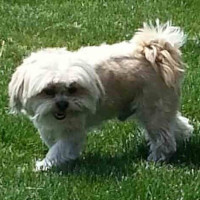
| The Poochin has many variations of names linked to its lineage, and is recognized by four competitive breed associations. The pure-bred Poodle and Japanese Spaniel make up the adorable ball of fur known as the Poochin. This designer dog is an excellent companion with a cheerful disposition and calm manner. The Poochin doesn't require much physical activity and benefits from a good turn, making it an ideal dog for older and less active people who want the perfect companion. What's more, the Poochin can be suitable for allergy sufferers, thanks to the hypoallergenic qualities of the Poodle parent. |
History of the Poochin |
| The Poochin is a popular designer mix due to the great popularity of both parents' breeds and the Poodle's well-known hypoallergenic qualities. The Poochin has no detailed history or hybrid standard and can look and behave like either parent. Owners should review the histories and traits of both parents because of this variation. |
A little of the Poodle |
||
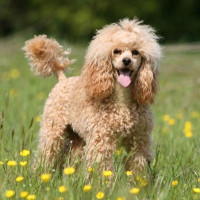
| The Poodle is a German breed that many believe was the first waterfowl hunting dog. The exact origins of the Poodle are unknown, and evidence suggests that the breed's history goes back thousands of years. Whatever the previous history, the Poodle clearly traces its lineage back to the 1400s in Germany, which is also the same period when the Toy and Miniature variations were introduced. While the Standard and even Miniature varieties were used in Europe for duck hunting and truffle sniffing, respectively, the Toy variants served as companions. Over time, the image of the Poodle became more aristocratic, and people kept the dogs as companions, despite their working qualities. The Poodle was a rare breed in the USA until the end of World War II, but the breed's popularity revived in the 1950s and the Poodle, recognized by the American Kennel Club in 1887, enjoyed two decades as the most popular breed in the USA. | ||
 |
||
| Standard of the Poodle |
A little of the Japanese Spaniel |
| The Japanese Spaniel, despite its name, is a dog of the Chinese imperial court. The toy-sized companion was a favorite and often presented to foreign emissaries when they visited the Chinese emperor. Many of the dogs made their way to Japan as gifts, and were so beloved that the Japanese considered them “Chins” rather than “Inu”, i.e. a being distinct from the dog. Over time, the little dog became known as the Japanese Chin in reference to its revered status. The Japanese Chin remained largely unknown to the rest of the world until the 19th century, when Japan began trading with the West. The Japanese Chin, which also passed for the Japanese Spaniel, enjoyed instant popularity after its introduction to the West, and the American Kennel Club recognized the breed in 1888. |
 |
| Standard of the Japanese Spaniel |
Appearance of the Poochin |
| The Poochin is a designer hybrid between the Japanese Spaniel and the Poodle. Most hybrids are crossed with the Poodle Toy variation to maintain small size, and the Poochin may resemble either parent. However, the Poochin's head is round with a broad muzzle and small to medium nose. The eyes are dark and the ears fold back with moderate plumage. Although the Poochin is small and doesn't weigh much, its body is robust with straight legs and a tail that often curls over the back. The Poochin's hair is of medium length and slightly wavy. Although not common, the Poochin can be larger and weigh more if crossed with Miniature or Standard Poodle variants. |
Temperament of the Poochin |
| The Poochin is an excellent family companion dog, especially for singles and the elderly who may not have much time or ability to devote to rigorous exercise. However low the Poochin's energy and intensity requirements, this hybrid still needs daily physical and mental stimulation to lead a happy, healthy life, free from anxiety and behavioral problems, as well as prevention against weight gain. Walks around the house or visits to the mailbox are perfect daily exercises that owners can give their Poochin to support a healthy life. The Poochin also loves children and doesn't bark often. Like any other dog, the Poochin also needs early and consistent socialization with people, children, places and things. Consistent socialization will also improve the Poochin's already accepting nature towards strangers. The Poochin also does very well with other cats and dogs, although some dogs can put the Poochin on the defensive and force owners to socialize their dogs early. |
Needs and activities of the Poochin |
| The Poochin has low energy requirements and prefers a warm lap over an outdoor adventure. As such, this hybrid adapts very easily to apartment living and can get most of its daily exercise needs by following its owner around the apartment. The Poochin likes more temperate climates, but still prefers the warmth of indoor life. Playing ball indoors for a few minutes a day can considerably improve the daily life of the Poochin, who just wants to please his family. |
Maintenance of the Poochin |
| Depending on its coat, the Poochin can be a little more difficult to groom and maintain. This is because the Poodle's coat is dense and upright. Owners should brush their Poochin several times a week to avoid tangles. Despite the difficulties associated with maintaining a healthy coat, the Poochin is not known for shedding much and may have hypoallergenic qualities based on the bloodlines of the Poodle parents. The Poochin may require more baths than other dogs, as its hair doesn't release dirt as well when brushed. However, always use a hypoallergenic dog shampoo to avoid skin problems, and towel-dry hair and skin. |



 English (United Kingdom)

Comments