
 |
Powderpap |
|
He is not recognized by the F.C.I. |
Origin |
China <> France and Belgium -> U.S.A. | |
Translation |
Francis Vandersteen |
A brief presentation of the Powderpap |
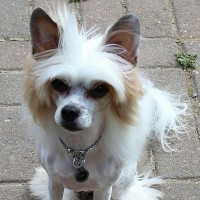
| The Powderpap is an equal hybrid of the Continental Toy Spaniel and Chinese Crested Dog breeds. As a small dog, the Powderpap is an excellent companion for anyone looking for a lively but small dog to brighten up their life. While it may not be a large dog, the Powderpap can be a high-maintenance animal as both its parent breeds are fairly high-maintenance, it may have a single coat like the Chinese Crested Dog or a double coat like the Continental Toy Spaniel depending on which genes are stronger. Although the Powderpap is considered hypoallergenic due to the low shedding level of the Chinese Crested Dog, the style variations, double or single coat, will require a lot of maintenance to continue to look its best, so be prepared for this commitment if you're considering the Powderpap. In terms of personality, the Powderpap seems to be like the Chinese Crested Dog breed. It's alert, playful and almost cat-like in its nature, loving to be with its human and spending lots of time cuddling. Although the Powderpap enjoys a good nap, he's still an active dog who likes to get out and about, so he'll do well in an apartment as long as he has somewhere to exercise. With a generous lifespan, a desire to please and great loyalty to his human, the Powderpap is a soulmate for everyone, whatever their level of experience. |
History of the Powderpap |
| The Powderpap is a relatively new hybrid breed, created in the USA over the last century. For this reason, the Powderpap doesn't have a very well-detailed origin story, leaving many gaps in the how and why of its creation. So, to get a better idea of what makes the Powderpap so unique and why it exists, we need to take a look at its parent breeds. The Continental Toy Spaniel and the Chinese Crested Dog have been around for a long time, so there's plenty of information on what makes them so great. |
A little of the Chinese Crested Dog |
||
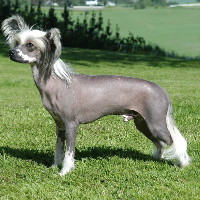
| The Chinese Crested Dog is a hairless breed of dog first seen in China during the 13th century. The hairless nature is due to a natural genetic mutation and, surprisingly, there are quite a few cases of this happening to dogs all over the world. Fortunately, no one really cares about the lack of hair when it comes to the Chinese Crested Dog, as it's a lively, alert and affectionate dog. This breed toured the world due to its use as a commercial commodity and finally entered the United States towards the end of the 19th century. With its unique appearance and friendly personality, it didn't take long for it to get noticed. In fact, the breed's later acceptance into the American Kennel Club is attributed to a 19th-century journalist who first noticed the dogs. Her name was Ida Garrett and she continued to breed, show and write about them for many, many years. Thanks to her dedication, the Chinese Crested Dog was accepted by the American Kennel Club in 1991 and has been a loyal show dog and family companion ever since. | ||
 |
||
| Standard of the Chinese Crested Dog |
A little of the Continental Toy Spaniel |
| The Continental Toy Spaniel has a rich history. In the 16th, 17th and 18th centuries, these pretty little dogs were an integral part of the family environment, even making portraits of them as the main part of the picture. While the breed was a favorite of royal families and noble houses around the world, the Continental Toy Spaniel was particularly popular in the homes of the French royal family. During the French Revolution, the Continental Toy nearly disappeared despite its popularity, but it made a comeback in the 19th century with ever-increasing grace, just like its namesake, the Papillon. Since then, the Continental Toy Spaniel has been used all over the world in shows and as a loyal companion dog that loves exercise and has an intelligent, inquisitive mind. It ranks 35th out of 155 different breeds listed in the American Kennel Club. |
 |
| Standard of the Continental Toy Spaniel |
Appearance of the Powderpap |
| Because the Powderpap has the Chinese Crested Dog as its ancestor, its appearance can vary greatly. Sometimes, its coat can be the very short version, combined with the feathers around the ears and face of the Continental Toy Spaniel. At other times, it may be the longer-haired version of the Chinese Crested Dog mixed with the Continental Toy Spaniel, requiring a lot of extra care and maintenance. Whatever the coat type, the Powderpap will always have longer hair around the feet, tail, ears and muzzle. It's a small dog that grows to 33 centimeters and weighs around 5.5 kilos as an adult. The Powderpap has round, brown eyes that stick out just enough to give it a slightly comical, overly excited air about everything. A small muzzle with a black nose and large, usually erect ears complete the Powderpap's overall, average appearance. This can change, even within the same litter, as this is a hybrid breed. |
Temperament of the Powderpap |
| Like the Chinese Crested Dog, the Powderpap is a breed that's almost more cat than dog. It loves to snuggle, hang out in the back of high places like the sofa and has a medium-to-high energy level that will keep you on your toes. Although this breed loves to play and can be energetic, more often than not, he'll be happiest on your lap or lying at your feet while you work. The Powderpap doesn't bark often and is eager to please its master, which makes training easier. Because of its intelligence, the Powderpap understands things like potty training very easily, so it's the ideal option for new dog owners who don't want a challenge. This breed is very affectionate and loves to play, so it gets on well with children and other pets. However, it can sometimes be a little sensitive due to its small size, so supervision is always a good idea in social situations. If you're looking for a dog that adapts well, has a natural curiosity, is friendly and trains easily, the Powderpap may be the breed for you. |
Needs and activities of the Powderpap |
| The Chinese Crested Dog and Continental Toy Spaniel have a moderate amount of energy, the Continental Toy Spaniel even more so. For this reason, the Powderpap is an active, alert and playful breed that, although able to live in an apartment, will need a moderate amount of daily exercise to stay out of trouble. Games such as agility training, obedience training, retrieving and interactive walking are all activities in which the Powderpap will excel. Although this breed has a decent amount of energy, fortunately, you'll be able to wear him down fairly quickly with some thorough playtime and after that, he'll be more than happy to sit on your lap or at your feet for a long nap. |
Maintenance of the Powderpap |
| The Powderpap is a medium- to high-maintenance dog breed. While the Chinese Crested Dog sheds very little, the Continental Toy Spaniel sheds seasonally, and because both breeds have long, silky coats, brushing is often necessary to keep the coat clean and neat. Mats can be a problem for dogs with longer coats, whether double- or single-layered. A quick brush with a comb and pin brush at least three times a week should be enough to keep the coat clean and tangle-free, detangling may be necessary if the dog's coat becomes particularly matted. However, you can choose to avoid this altogether and opt to have your Powderpap resemble the Chinese Crested Dog, if he doesn't already have this style of coat. If you choose to go this route, be sure to put sunscreen on Powderpap's skin when you go out, as he may be more susceptible to sunburn or skin allergies thanks to the Chinese Crested Dog side. Bathing should only take place every few weeks or so, unless your dog's light-colored coat is particularly dirty. In addition to bathing and basic brushing, be sure to trim your dog's nails every few weeks to keep paws healthy and scratching to a minimum. |



 English (United Kingdom)

Comments