
 |
Pug Pit |
|
He is not recognized by the F.C.I. |
Origin |
China <> U.S.A. -> U.S.A. | |
Translation |
Francis Vandersteen |
A brief presentation of the Pug Pit |
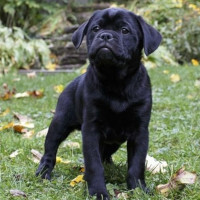
| The Pug Pit is a gentle, playful dog that is very affectionate with its family and with strangers too. He's happy in an apartment or house with a fenced-in yard. He is small and stocky. He will have a short, smooth coat. He doesn't shed often at all. He comes in a variety of colors, the exact coloration depending on the dominant parental breed. He doesn't bark often, which makes him very attractive to those living in apartment complexes. He is very intelligent and loves to play with his human family. He will be a medium-sized dog when mature. |
History of the Pug Pit |
| The Pug Pit is a hybrid breed. Although there isn't much information on the exact origins of the Pug Pit, we can study the origins of the parent breeds to better understand the history of the hybrid. |
A little of the Pug |
||
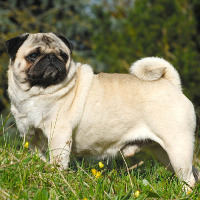
| The Pug was discovered around 200 BC in China and was treated like a king by the Chinese emperors. In fact, during the Han Dynasty, the Pug was even guarded by soldiers because they were so important to the royal families. This little companion dog was bred from the French Mastiff, Bulldog and Pekingese. They were called Mopshond when they were brought to Europe. With names like Mops in Germany, Doguillo in Spain, Carlin in France and Caganlino in Italy, they had many aliases. They finally arrived in England in the late 1800s when the British took over the Chinese imperial palace. In Victorian times, the Pug was featured on paintings, figurines and old-fashioned postcards. After the Civil War, the Pug was introduced to the United States, where it became very popular, and in 1885 was recognized by the American Kennel Club. | ||
 |
||
| Standard of the Pug |
A little of the American Pit Bull Terrier |
| The American Pit Bull Terrier originated in England in the 19th century. It was used, unfortunately, for bull and bear baiting sports. Once these horrible forms of entertainment were deemed illegal in 1835, American Pit Bull Terriers were used in dog fighting. As American Pit Bull Terriers were imported to America, their purpose changed. They were used to guard farms and herd livestock. They also hunted wild boar, something for which the American Pit Bull Terrier is still used today. |
 |
| Presentation of the American Pit Bull Terrier |
Appearance of the Pug Pit |
| The Pug Pit is a much smaller version of the parent breed American Pit Bull Terrier. At most, it will weigh 13.5 kilos when fully grown. They come in a variety of colors: red, black or blue. Exact coloring depends on the dominant parent breed. It may be cream-colored or brindle-colored. It can be red or fawn, any number of colors depending on its exact parentage. His nose can be black, brown, red or blue. It may have button ears and its tail may curl like that of the parent breed Pug. His coat will be short and smooth. It will have muscular legs and hindquarters, and may also look a little chubby, a trait it may inherit from its parent breed Pug. He may have black markings around the eyes, nose and mouth. |
Temperament of the Pug Pit |
| The Pug Pit is a gentle, affectionate dog. Happy and curious, they are also fearless and eager to explore the world around them. He is very intelligent and gentle. He's surprisingly social, but can also be stubborn at times. It's important to maintain a leadership role with the Pug Pit. If you allow him to think he's the “alpha” in your relationship, he'll take over. He's very protective of his family and may not be too kind to strangers. He's always alert and can be sensitive to how family members interact, so if adults have a disagreement or a parent has to reprimand a child, the dog may not react positively. |
Needs and activities of the Pug Pit |
| The Pug Pit is a moderately active dog. It needs daily exercise not only to stay healthy, but also to keep it out of mischief. The parent Pug tends to put on weight when not properly exercised, the parent Pit will get bored and can become destructive if not given enough opportunity to play and burn off energy. The Pug Pit will enjoy a trip to the dog park, and he may have the opportunity to take a brisk walk with you around the neighborhood. Keep toys on hand to encourage mental activity. He'll also spend time in a fenced-in area of your garden. However, bear in mind that the parental Pug breed is often brachycephalic, because the Pug Pit can inherit this trait, so make sure you never allow him to become overheated or over-exercised. |
Maintenance of the Pug Pit |
| The Pug Pit is a very low-maintenance breed. This fact makes it ideal for owners who are a little away from home, or for those who simply don't want to devote much time to grooming. He will have short, stiff hair, which can be brushed once a week to ensure that his natural oils keep his coat shiny and healthy-looking. He won't shed often, mainly in spring. Brush his teeth two or three times a week to prevent tartar build-up and bad breath. However, to prevent tooth decay, brush daily. Bathe only when necessary. It's important to start a grooming routine at a young age to get him used to the process, remember, the Pit parent breed is often sensitive to touch. Also, trim his nails every two to three weeks if he's not wearing them out on his own. As a general rule, if you hear his nails clicking on the tiled floor, it's time to trim his nails. |



 English (United Kingdom)

Comments