 |
Rattle |
|
He is not recognized by the F.C.I. |
Origin |
U.S.A. <> France -> U.S.A. | |
Translation |
Francis Vandersteen |
A brief presentation of the Rattle |
| The Rattle is a hybrid of the Rat Terrier and the Poodle. This medium-sized breed averages between 11.5 and 22.5 kilos in weight and 25.5 to 58.5 centimeters in height, depending on the traits it inherits from its parent breeds. The Rattle tends to be intelligent, curious and happy, and will demonstrate talents in tricks, obedience and even as a guard dog. You can anticipate that your Rattle will be easy to train and will demand a lot of attention. The Rattle will love being in an active household where he has regular opportunities to join in the action. |
History of the Rattle |
| The Rattle is a relatively new hybrid, although the two breeds that make up the hybrid have a long history. |
A little of the Rat Terrier |
||
| The Rat Terrier was bred in the 1800s in the USA by crossing European Terriers that prevailed at the time, these included Bull Terriers, English White Terriers and Manchester Terriers. Whippets, Beagles and Greyhounds were also incorporated into the breed. The result is a small, fast dog with a good temperament and the ability to scent. The breed became a versatile farm dog capable of hunting above and below ground. By the 1900s, the breed was considered one of the most common working dogs on a farm. The breed earned the name “Teddy's Terriers” because Theodore Roosevelt had the dogs at the White House during his term as president. Demand grew not only for the dogs' ability, but also for their intelligence and behavior. While demand for the breed declined as farm dogs were no longer needed, the breed was recalled and recognized by the American Kennel Club in 2013. | ||
 |
||
| Presentation of the Rat Terrier |
A little of the Poodle |
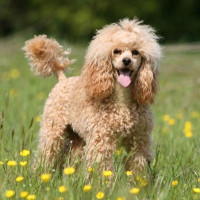
| The Poodle is a much older breed-in fact, it's one of the oldest breeds developed. The breed is thought to have started in Germany and developed into the distinct breed we know today in France. The breed is the result of a combination of several European dogs to include Russian, Spanish, Portuguese, German, Hungarian and French water dogs, and the North African Barbet is also thought to be part of the Poodle's ancestry. Others believe that the Poodle is a descendant of Asian sheepdogs, becoming the German Water Dog as it was brought over with the Ostrogoth and German Goth tribes. Yet others believe the breed descends from the Asian steppes. These dogs, perhaps, came with the Moors in the 8th century. Smaller, toy and miniature versions of the Poodle are thought to have been developed in the 1400s by breeding smaller Poodles with each other, in order to impress the Parisian bourgeoisie. Standard Poodles were used by the French for duck hunting, while miniature Poodles were useful for discovering truffles. The Toy Poodle was popular as a companion, mainly for the wealthy. The American Kennel Club registered its first Poodle in 1888. |
 |
| Standard of the Poodle |
Appearance of the Rattle |
| The Rattle will inherit traits from both its parent breeds, as with all mixed breeds, you can expect it to inherit more physical characteristics from the American Rat Terrier or Poodle, or to be a fairly even mix of the two. When considering the size of the Rattle, it's important to note that there are three different types of Poodle, and which is the parent breed will have an impact on the ultimate size of the hybrid. Hybrid dogs will generally be sturdy and strong with a slightly rounded head. Their ears may be triangular in shape and stand straight or be floppy. The muzzle is of medium length. The Rattle's coat can vary according to the traits it inherits from its parents. It can be short and straight, like the Rat Terrier, or longer and wavy or curly, like the Poodle. |
Temperament of the Rattle |
| The Rattle will inherit its behavioral traits from its parent breeds, the Rat Terrier and the Poodle. Each offspring will inherit different traits from its parent breeds. Most Rattle are playful and have personality to spare. Typically highly intelligent, the hybrid will be alert and very vocal. Your Rattle is likely to be loyal to its humans, wanting to play and spend time with you and the family. Hybrid dogs are very active and love attention and affection. It's important that you keep your Rattle busy, because when he's bored, he tends to be destructive. He'll probably be curious and want to be involved in everything that's going on at home. |
Needs and activities of the Rattle |
| The Rattle is a somewhat active dog who likes to keep busy. A fenced yard is a plus, but not necessary as long as your dog gets out of the house or apartment to play and exercise outdoors. The Rattle will appreciate the opportunity to hunt, run and walk, as well as take trips to the dog park. Hybrid dogs like to chase things, so if he's not in a fenced-in area, you'll want to keep your Rattle on a leash. In addition to physical activity, the Rattle will also require mental stimulation, which can be provided through certain toys, training and activities. |
Maintenance of the Rattle |
| The care of your Rattle will depend on the coat it inherits. If he inherits a coat similar to that of the Poodle, he won't shed much, but his coat will be more difficult to maintain, requiring daily brushing to resolve tangles and remove dirt and debris from his coat. Trips to the groomer for clipping will also be necessary on occasion. If your Rattle inherits a coat closer to that of the Rat Terrier, he'll be easier to brush, although you can expect him to shed more than if his coat resembled that of the Poodle. Whatever its coat, the Rattle should only be bathed when necessary, and its nails trimmed as required. It's also advisable to check his ears once a week and wipe them clean to avoid potential infection. As with all dogs, you'll want to brush his teeth several times a week to ensure long-term dental health. |



 English (United Kingdom)

Comments