 |
Redbone Coonoodle |
|
He is not recognized by the F.C.I. |
Origin |
U.S.A. <> France -> U.S.A. | |
Translation |
Francis Vandersteen |
A brief presentation of the Redbone Coonoodle |
| The Redbone Coonoodle is a cross between a Redbone Coonhound and a Poodle. Both parent breeds are intelligent and loyal, so you can expect your Redbone Coonoodle to be the same. A hybrid dog will be playful and eager to please its humans. While the Poodle is easy to train, the Redbone Coonhound can be stubborn, making training difficult. The Redbone Coonoodle generally gets on well with other pets, especially if it has grown up with them. As both parent breeds do well as guard dogs, we can expect the Redbone Coonoodle hybrid to do so too. |
History of the Redbone Coonoodle |
| The Redbone Coonoodle is a relatively new hybrid, although the two breeds that make up the hybrid have a long history. |
A little of the Redbone Coonhound |
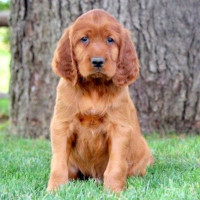
||
| The Redbone Coonhound was developed in America and is a descendant of Foxhounds and Bloodhounds. Red Foxhounds were imported to the USA with Scottish immigrants in the late 1700s, before the Civil War, Red Irish Foxhounds arrived with settlers from Ireland. In the late 1700s, raccoon hunters were looking for a faster dog that could find and tree raccoons faster than the region's current breeds. Efforts to produce such a dog led to the Redbone Coonhound. While the breed's first dogs had black on their backs, as red was found to be preferred, black was bred out of the breed. George Birdsong, a well-known fox hunter and dog breeder, successfully refined the breed in the 1840s. Some believe the breed takes its name from its color, but it's more likely that the breed is named after a breed promoter named Peter Redbone. The breed was finally recognized by the American Kennel Club in 2009. | ||
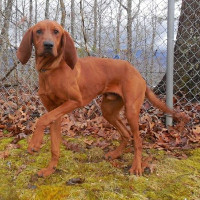 |
||
| Presentation of the Redbone Coonhound |
A little of the Poodle |
| The Poodle is considered one of the oldest breeds ever developed. While the Poodle is thought to have originated in Germany, the breed became what we know today in France and is a combination of several European dogs, including Russian, Spanish, Portuguese, German, Hungarian and French water dogs. Other dogs thought to be the breed's ancestors include the North African Barbet, and it has also been considered that the Poodle is a descendant of Asian sheepdogs brought over with the German Ostrogoth and Goth tribes. Another theory is that the Poodle has ancestors from the Asian steppes and that these dogs, along with the Moors in the 8th century, arrived in Portugal after the defeat of the North African Berbers. Statues and drawings of dogs that resemble the Poodle have been found among Roman artifacts and Egyptian tombs from the first century BC. Gypsies trained Poodles to be circus dogs and perform tricks. In 1888, the American Kennel Club recognized the breed. |
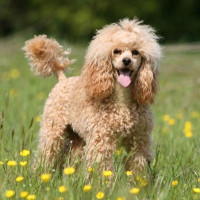 |
| Standard of the Poodle |
Appearance of the Redbone Coonoodle |
| The Redbone Coonoodle will inherit traits from both its parent breeds; as with all mixed breeds, you can anticipate that it may inherit more physical characteristics from either parent breed, or a relatively equal combination of traits from each breed. Depending on the size of its parent breeds, the Redbone Coonoodle will probably be medium to large in size, with a solid build. As both parent breeds have long necks, the Redbone Coonoodle can also be expected to have a long neck. While the Redbone Coonhound has short hair, the Poodle has medium-length stiff hair, the Redbone Coonoodle's coat can range from short to medium. It will have a long muzzle and dark eyes that show intelligence. |
Temperament of the Redbone Coonoodle |
| The Redbone Coonhound will inherit its behavioral traits from its parent breeds, the Redbone Coonhound and the Poodle. Both parent breeds are intelligent, so it's very likely that the hybrid will be too. It can be deduced from the traits of the parent breeds that the Redbone Coonhound will be eager to please its humans and this, along with its intelligence, will help it in its training, although it's important to note that the Redbone Coonhound can be independent and stubborn, sometimes struggling with obedience. The hybrid will generally be playful and affectionate with its humans. Both parent breeds do well with other pets, but the Redbone Coonhound may think small animals like cats are prey and chase them, so it's best for the dog to be raised with the cat. |
Needs and activities of the Redbone Coonoodle |
| You can expect your Redbone Coonhound to be an active dog, while the Poodle has average activity and energy levels, the Redbone Coonhound has plenty of energy. Your Redbone Coonhound will need daily exercise and, depending on the traits it inherits, may be ready for all kinds of active pursuits, including swimming, hiking and hunting. Redbone Coonhounds enjoy taking part in agility and obedience trials and tracking, and often work in search and rescue, offering these opportunities to the hybrid. Due to traits that could be inherited from the Redbone Coonhound, your dog should be kept on a leash or in a fenced area as he may run after something he smells. Although the hybrid does well in an apartment or house with a yard, as long as it gets daily exercise, the hybrid may inherit the howling that is common in the Redbone Coonhound, which can disturb neighbors. |
Maintenance of the Redbone Coonoodle |
| The care of your Redbone Coonoodle will depend on the coat it inherits. The Redbone Coonhound is a moderately shedding breed that will require weekly brushing, while the Poodle will shed little but will need daily brushing and grooming every three to six weeks. If your Redbone Coonoodle inherits the coat of the Redbone Coonhound, regular bathing will be important as it can develop a musty odor. Your Redbone Coonoodle's ears should be cleaned and dried regularly to avoid infection. Your dog's nails are likely to grow rapidly and may need trimming if necessary. Regular brushing of the teeth is also important, two or three times a week, to prevent tartar build-up. |



 English (United Kingdom)

Comments