
 |
Scorkie |
|
He is not recognized by the F.C.I. |
Origin |
Scotland <> Great Britain -> U.S.A. | |
Translation |
Francis Vandersteen |
A brief presentation of the Scorkie |
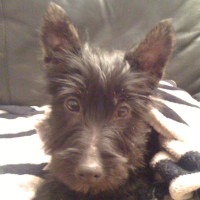
| The Scorkie is a design mix between the Scottish Terrier and the Yorkshire Terrier. The Scorkie is recognized by three breed registries, including the Dog Registry of America. The American Canine Hybrid Club recognizes the hybrid as the Scorkie, while the International Designer Canine Registry recognizes the dog as the Scorkie Terrier. The Scorkie is a small Terrier dog with a charming old-man temperament. He is affectionate with his family but needs a lot of mental stimulation to stay healthy and avoid developing negative behaviors, such as digging. |
History of the Scorkie |
| The Scorkie is a popular Terrier mix between the Scottish Terrier and the Yorkshire Terrier. The resulting hybrid is a small Terrier with a big personality; however, little is currently known about the breeding programs, and no history of the hybrid is yet available. The approximate date of the intentional mating of the two purebred Terriers is also currently unknown. Owners who wish to understand the potential characteristics of their Scorkie can examine the history of both parents to get an idea. |
A little of the Scottish Terrier |
||
| The Scottish Terrier is, as its name suggests, a Terrier from Scotland. This little black Terrier was bred on Scottish farms to help control vermin, and has existed undocumented by history for hundreds of years. The Scottie belongs to the Skye Terrier group, known for their coarse or medium-length coats. The Scottish Terrier moved to southern Britain during the Industrial Revolution, when workers moved from farms to factories. The Scottie helped solve rat problems in urban areas and was a favorite companion of Scottish industrial workers. The American Kennel recognized the breed in 1885, and the little Scottish Terrier still enjoys great popularity as a companion dog today. | ||
 |
||
| Standard of the Scottish Terrier |
A little of the Yorkshire Terrier |
| The Yorkshire Terrier is another Terrier of Scottish origin that settled in urban areas during the Industrial Revolution. The Yorkshire developed during the Victorian era and settled in Yorkshire with Scottish and British coal miners. The Yorkshire Terrier, also known as the Yorkie, is a small Terrier weighing between 1.5 and 3 kilos. The Yorkie arrived in the United States in the late 1800s and began to be exhibited as early as 1878. The American Kennel Club also recognized the Yorkie in 1885. |
 |
| Standard of the Yorkshire Terrier |
Appearance of the Scorkie |
| The Scorkie is a cross between the wire-haired Scottish Terrier and the silky-haired Yorkshire Terrier, both breeds from Scotland. The resulting hybrid may resemble either parent, and is sure to be compact and low to the ground. The Scorkie's coat is generally long, and can range in color from solid black to gray and tan, depending on which of its parents is most represented in the breed. The Scorkie's head is square-shaped, with a long muzzle and long, beard-like hair. The eyes are large, round and brown, and the Scorkie's ears are triangular and erect. The Scorkie has short legs, and its body is low to the ground. The Scorkie's tail is carried high and is often docked. |
Temperament of the Scorkie |
| The Scorkie is a loyal, affectionate dog that can become a one-man companion. They can be independent-minded, and require firm, gentle training from an early age to rid them of their stubbornness. The Scorkie is well suited to bachelors and the elderly, but can also be affectionate with older, calm children. They are alarm barkers and will alert their master to the approach of strangers, but otherwise the Scorkie is curious and friendly towards new people once the threat has been assessed. The Scorkie's energy level is low, but it needs daily exercise to maintain a healthy body and mind. |
Needs and activities of the Scorkie |
| The Scorkie is a low-energy dog, but still needs daily exercise. The intensity of exercise doesn't need to be very high, and the Scorkie won't be a good jogging partner given its short legs. He is able to do most of his daily activities indoors, walking around the house or apartment or on his daily potty breaks. The Scorkie, although native to a cold climate in Scotland, does not tolerate extreme temperatures and prefers a controlled indoor climate. Their small size and need for activity mean they adapt well to apartment and city living, but they also need mental stimulation to prevent the onset of negative behaviors, such as digging and chewing. |
Maintenance of the Scorkie |
| The Scorkie is a hypoallergenic dog with a low tendency to shed or drool. Weekly or twice-weekly brushing helps prevent tangles from forming in the coat, and removes dead or loose hairs that get stuck in the double coat. Scorkies have sensitive skin and can develop allergic dermatitis if their natural oils are removed during bathing. Owners should avoid bathing if possible, and use a pimpled or bristle brush to help distribute the natural oils on the skin. Weekly brushing will also help remove any dirt or debris that may get caught in the bristles during travel. |



 English (United Kingdom)

Comments