 |
Sharberian Husky |
|
He is not recognized by the F.C.I. |
Origin |
China <> Siberia -> U.S.A. | |
Translation |
Francis Vandersteen |
A brief presentation of the Sharberian Husky |
| The Sharberian Husky is a designer dog and a cross between a Shar Pei and a Siberian Husky. They are intelligent, affectionate dogs that make excellent pets. They can be quite stubborn and strong-willed and are recommended for people with some dog experience. They are best suited to families with older children, but can get along with other dogs, especially if socialized early. They need a firm hand when it comes to training, but respond to praise and positive reinforcement. They are quite wary of strangers and can look quite imposing, making them excellent watchdogs. The most common colors are cream, tan, brown, white and black, and their coats are short to medium in length. |
History of the Sharberian Husky |
| The Sharberian Husky is a hybrid breed of Siberian Husky and Shar Pei. |
A little of the Shar Pei |
||
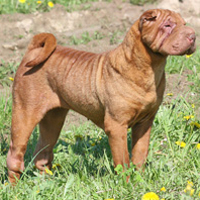
| The Shar Pei is thought to have existed in China since ancient times, when it was used as a guard dog and later as a fighting dog. With its deep wrinkles and blue-black tongue, the Shar Pei is instantly recognizable. Statues resembling them have been dated to the Han dynasty, 200 BC. The breed almost became extinct after the creation of the People's Republic of China. Owning a dog was considered a “decadent bourgeois luxury” and dog breeding was banned. Those who owned dogs had to pay a heavy tax that only the very rich could afford. Matgo Law, of Down-Homes Kennels in Hong Kong, is credited with saving the breed after asking American breeders to take some of the dogs. They agreed and, in 1973, a number of Shar Pei arrived in the USA. The breed was accepted into the American Kennel Club's Miscellaneous Class in 1988, and recognized by the AKC in 1991. | ||
 |
||
| Standard of the Shar Pei |
A little of the Siberian Husky |
| With its wolf-like appearance and piercing eyes, the Siberian Husky was bred as a sled dog and is known for its incredible stamina. Believed to have originated with the Chukchi, a tribe of Siberian nomads, it is one of the oldest dog breeds. The breed is part of the Spitz family and shares a close genetic relationship with the Alaskan Malamute and the Alaskan Husky. When they arrived in Alaska in 1908, they were used as sled dogs during the gold rush. They then took part in the All-Alaska Sweepstakes, a 650-kilometer sled dog race in which they still excel today. They were hailed in 1925 when 150 sled dogs carried a life-saving antitoxin 1,085 kilometers across Alaska in a record five and a half days. It was for a diphtheria epidemic in Nome, Alaska, and their heroic journey was later dubbed the “Great Race of Mercy”. A statue of the Balto lead dog stands in New York's Central Park. The Siberian Club of America was founded in 1938 and the Siberian Husky was recognized by the American Kennel Club in 1930. |
 |
| Standard of the Siberian Husky |
Appearance of the Sharberian Husky |
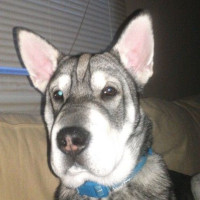
| The Sharberian Husky is a large hybrid breed and is a cross between a Shar Pei and a Siberian Husky. Common colors are cream, tan, brown, white and black. They weigh between 18 and 27 kilos and measure up to 69 centimeters. The Sharberian Husky may have a short or medium coat, depending on the parental breed from which it draws most inspiration. The Siberian Husky has a very thick, medium-length double coat, while the Shar Pei has a short, rough coat. The two related breeds have other distinctive features, such as the Shar Pei's deep wrinkles and blue-black tongue, or the Siberian Husky's piercing blue eyes. The Sharberian Husky has pointed ears that can stand up or fold back at the tip. |
Temperament of the Sharberian Husky |
| Sharberian Huskies are intelligent, affectionate and active family dogs that are best suited to experienced owners. They can be quite independent and strong-willed, and will need a confident owner ready to commit to such a dog. They are best suited to families with older children. Families with several dogs will need to ensure that the Sharberian Husky is socialized and trained from an early age. They can be a little aggressive with other dogs, but can also be taught to play with them. Although their size and appearance can be a little intimidating, they are not suspicious of strangers, but are vigilant watchdogs. The exuberance of the Siberian Husky is tempered by the calmer nature of the Shar Pei. They can be excellent escape artists, so make sure your garden is surrounded by a solid fence. Your pet's ability to stay at home alone will depend on which breed it's most like. The Siberian Husky needs a lot of attention and may howl if it doesn't get it, while the Shar Pei can be left alone for short periods without too much damage. |
Needs and activities of the Sharberian Husky |
| The Sharberian Husky is an active, playful dog that will need plenty of exercise to stay in shape. Long walks are recommended, but take care if your dog has a short Shar Pei nose, which can lead to breathing difficulties. These dogs snore a lot and can get too hot, so exercise them for shorter periods and when it's cooler. Sharberian Huskies are not suited to apartment dwellers and are best suited to homes with fenced gardens and plenty of activity, otherwise they can become very destructive. As they are intelligent, they love stimulating activities like sledding and other dog sports. |
Maintenance of the Sharberian Husky |
| Regular brushing will be necessary for a Sharberian Husky to remove any loose hair, as they are known to shed quite a lot. But apart from that, your dog won't need much grooming. If your dog has the Siberian Husky's thick double coat, it shouldn't be trimmed, as the coat provides natural insulation in both winter and summer. The Chinese Shar Pei's short, rough coat doesn't require much grooming, apart from brushing once a week. It's a naturally clean dog that doesn't need regular bathing. These dogs can develop skin problems, so use only recommended veterinary shampoos. Try to brush your dog's teeth every day to prevent dental problems, and trim his nails if they don't wear down naturally. |



 English (United Kingdom)

Comments