 |
Sheltie Inu |
|
He is not recognized by the F.C.I. |
Origin |
Great Britain <> Japan -> U.S.A. | |
Translation |
Francis Vandersteen |
A brief presentation of the Sheltie Inu |
| The Sheltie Inu is a small designer dog, a deliberate hybrid of the Shiba, an extremely ancient breed of Japanese hunting dog, and the Shetland Sheepdog, a herding animal developed on a group of islands off the Scottish coast known as the Shetland Islands. Although these dogs are generally highly intelligent, their trainability can vary considerably depending on the breed they are based on, and they can be very easy or very difficult to train, or anything in between. Although a fairly small dog, its activity level and tendency to bark excessively can make apartment living somewhat uncomfortable, but it can sometimes adapt if given extra exercise and attention throughout the day. |
History of the Sheltie Inu |
| The Sheltie Inu is an intentional crossbreed, the combination of an extremely popular and ancient breed of small hunting dog from Japan, the Shiba, and the Shetland Sheepdog, a small sheepdog that was developed on the Shetland Islands off the coast of Scotland. |
A little of the Shetland Sheepdog |
||
| The Shetland Sheepdog is also a small island dog, developed on a very different island for a very different purpose. The Sheltie was born on the Shetland Islands, off the coast of Scotland, as a herding animal to help control the exceptionally small livestock that grew on the island. This lively little dog is the product of centuries of development and, although its history is somewhat obscure, it is assumed that many different breeds were involved in its initial development, including the Scotch Collie, King Charles Spaniel, Icelandic Sheepdog, Border Collie and a now-extinct mystery dog known as the Greenland Yakki. When tourism developed on the islands in the 1800s, farmers began selling the small dogs to island visitors, even breeding them with smaller dogs such as Corgis, Papillons and Pomeranians to decrease their size and increase the cuteness factor. Over time, the dogs became less fit for their original purpose and breeders reintroduced more Collie genetics into the breed, and today's Sheltie is capable of being both an accomplished herding animal and a loyal, affectionate household companion. | ||
 |
||
| Standard of the Shetland Sheepdog |
A little of the Shiba |
| The Shiba, also known as the Shiba Ken, is the smallest of the six hunting dog breeds native to the Japanese islands, all of which share similarities in structure, appearance and temperament. While the Shiba may have been used occasionally to hunt big game such as wild boar and deer, it was more often used to find and flush out small game and birds. The bombings of World War II and outbreaks of canine distemper shortly after the war decimated the Shiba population. In the 1950s, breeding programs were set up to save the breed by mixing several strains of Shiba dogs. |
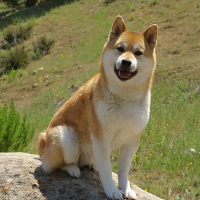 |
| Standard of the Shiba |
Appearance of the Sheltie Inu |
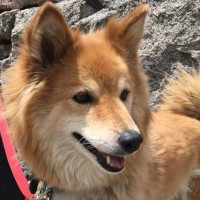
| The Sheltie Inu is a fairly small but solidly built dog, with a back that is generally a little longer than its height. Those inspired by the Shiba have a more compact, well-developed musculature, while those more representative of the Sheltie have a slightly longer, leaner appearance. They generally have a broad, wedge-shaped head, a slightly long muzzle with a rounded nose and a strong, well-developed lower jaw, and triangular ears that are held straight or three-quarters straight, although the eyes can vary between the slightly triangular shape of the Shiba and the more almond-shaped of the Shetland Sheepdog. Although most Sheltie Inu have dark brown eyes, some may inherit the blue eyes or partial color of the Shetland Sheepdog, especially those Sheltie Inu who have merle or a parent or close relative with merle. |
Temperament of the Sheltie Inu |
| The Sheltie Inu is an extremely intelligent, alert animal that may require further socialization, attention and training to become a confident, well-adjusted dog. It's essential to keep this dog's mind occupied, especially if you're away, as it's likely to develop negative traits such as separation anxiety, inopportune barking or destructive chewing if neglected. The Shiba's parent breed can be quite difficult to train due to dominance issues and a general aversion to what it's told to do, but the Shetland Sheepdog is an extremely eager to learn and exceptionally easy to train, and the Sheltie Inu could take its cue from either of its parent breeds in this respect. They prefer to spend their time entertaining and being entertained by their family, and often make loving and affectionate companions for adults or families with older children, but they may not be tolerant of small children, especially those who are noisy or fast-moving. They are very alert little dogs and also make very good watchdogs, but excessive barking can be a problem and will need to be controlled from an early age. |
Needs and activities of the Sheltie Inu |
| This dog may be quite small, but it's also very active and athletic, and needs at least one hour of vigorous activity a day. It's important to take weather conditions into account, especially for Sheltie Inus, who can be sensitive to heat due to their long, dense coat inherited from the Sheltie breed. These dogs can adapt to apartment living if they get plenty of extra exercise, but in most cases they'll be much happier in a larger home, preferably with a fenced-in yard. |
Maintenance of the Sheltie Inu |
| Although this hybrid doesn't require frequent bathing due to its naturally dirt-resistant coat and low odor problems, it does require regular brushing sessions to keep its double-layered coat healthy and shiny. Those with the Shiba's shorter coat are not prone to tangling, and you can be satisfied with brushing them once or twice a week, mainly to control shedding. Dogs that have inherited the longer, more tangle-prone coat characteristic of the Shetland Sheepdog will need to be brushed and combed at least several times a week, if not daily. It's important to make sure you brush all hairs when grooming these dogs, as they can tend to mat and tangle, especially behind the ears and under the armpits. Nails and teeth also need regular care; trim nails every couple of months and brush teeth several times a week. |



 English (United Kingdom)

Comments