Sheltidoodle

He is not recognized by the F.C.I.

Origin
Great Britain <> France -> U.S.A.
Translation
Francis Vandersteen

A brief presentation of the Sheltidoodle

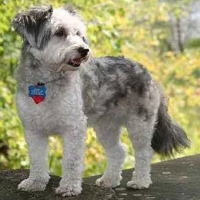
The Sheltidoodle, also known as the Sheltipoo, is one of the many designer dogs that have been developed over the last few decades. It is a deliberate hybrid of the Shetland Sheepdog, a small but robust herding dog developed on the Shetland Islands off the coast of Scotland, and a versatile German duckhound that we know today as the Poodle. This hybrid is an extremely intelligent and sensitive dog that is affectionate and receptive towards its family, but reserved and polite with strangers. Their slight protective instinct makes them excellent watchdogs, and they do very well with polite, easy-going children, but some Sheltidoodles can become somewhat hyper-reactive, making them less suitable for noisy or boisterous homes.

History of the Sheltidoodle

The Sheltidoodle is a deliberate cross between the Shetland Sheepdog, a small herding dog developed to look after the smaller-than-average livestock on Scotland's Shetland Islands, and the versatile, intelligent Poodle.


A little of the Shetland Sheepdog

        
Despite their appearance, Shetland Sheepdogs are not simply miniaturized Rough Collies, and they have a long and enigmatic ancestry. Although there have been contributions to the breed from Rough Collies and Smooth Collies, Shetland Sheepdogs are a very distinct breed that includes contributions from many breeds. Although the record of their development is obscure at best, it is assumed that other breeds have made significant contributions to the Shetland breed, including Scotch Collie, Icelandic Sheepdogs, King Charles Spaniels, Border Collies and Pomeranians. Most sources also claim that an extinct breed of dog, known as the Greenland Yakki, played an important role in the development of the Shetland Sheepdog, as did an unknown variety of Spitz dog from the Nordic region. Originally developed on the island of Shetland, these dogs were called Toonies by the locals, who employed them as farm dogs to help manage the island's small livestock. Tourists visiting the island in the 1800s recognized their value as pets and purchased large numbers of these little dogs, spreading them around the world.
Standard of the Shetland Sheepdog


A little of the Poodle

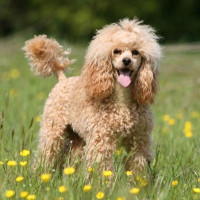
The Poodle, often called the French Poodle, is another breed that isn't quite what it seems at first glance; a canine that has been commonly associated with dog shows, circus rings and extravagance is in fact an athletic animal that was developed as a hunting dog in Germany rather than France, and was employed to find and retrieve game, particularly waterfowl, for hunters, a practical and non-extravagant companion. Its name and distinctive haircut would reflect this original purpose, as the Poodle is a shortened version of the name given to it in Germany, Pudlehund being a combination of the German words “pudle”, meaning to dabble, and “hund”, or dog, and the unusual haircut may have been designed to reduce resistance and tangling, while leaving vital organs and joints protected by a thick layer of hair. Although their exceptional intelligence and trainability have enabled them to play many roles, including circus dog, therapy animal and favored companion chosen by individuals ranging from street performers to kings, queens and presidents, standard-sized and sometimes miniature Poodles are still used today in their original function, although they are usually clipped short all over to avoid tangling in grass. The standard-sized Poodle is most often used in this crossbreed, however, some breeders may use miniature or toy Poodles, which is likely to affect the size, temperament and health problems of the hybrid.
Standard of the Poodle

Appearance of the Sheltidoodle

The Sheltidoodle is a medium-sized dog derived from two dogs whose appearance can be very different, resulting in great variation between dogs, even within the same litter. Both parent breeds are rather well built, with long, straight legs and deep chests, which will also be the case with their offspring. The head and face of the Shetland Sheepdog are quite divergent from those of the Poodle, and the hybrid may take its inspiration from the Sheltie, with a wedge-shaped head and a long, tapering muzzle rounded at the tip, or from the Poodle with a narrower, domed head and a straight, fine muzzle; it may even take on characteristics of both parents. Its eyes are generally medium-sized and oval or almond-shaped, and although most are dark brown, some Shelties can pass on blue or two-tone eyes, especially if they have merle coloration, and they can inherit the straight, triangular ears of the Shetland Sheepdog, the longer floppy ears of the Poodle, or an intermediate color.

Temperament of the Sheltidoodle

The Sheltidoodle is generally a well-behaved animal, particularly attentive and receptive. These characteristics, combined with its high intelligence, make it an extremely easy animal to train, provided you use gentle training techniques. However, they are prone to separation anxiety and boredom if given insufficient mental stimulation or left alone for too long. They generally react to strangers in a polite but reserved manner, with mild but sensitive protective instincts. Early and thorough socialization helps prevent their naturally reserved nature from turning into excessive vigilance or unwarranted shyness, but some dogs can still develop hypersensitivity to touch, fast movements or loud noises, so they may not be the best choice for very young or particularly active children. They are generally peaceful with other animals, including other dogs, although some may give in to the urge, inherent in shepherd breeds and their offspring, to chase and herd other animals.

Needs and activities of the Sheltidoodle

The Sheltidoodle is a fairly fast and energetic breed, and while the Poodle is not as relentlessly active as some Retriever breeds, they are still athletic dogs that need daily physical activity to remain healthy and stable. While one hour of physical activity a day should meet your Sheltidoodle's exercise needs, it's important to exercise his intellect on a daily basis. You can combine physical and mental training with these dogs by practicing activities such as canine acrobatic dance, agility classes, retrieving and field trials, herding activities, as well as obedience and advanced exercises. Although this dog can adapt to life in an apartment, it will need extra exercise every day and early training to avoid excessive vocalization. Most Sheltidoodles will be much happier in a larger home with a garden to run around in.

Maintenance of the Sheltidoodle

One of the biggest differences between the two related breeds is the difference between their coats. The Sheltie has a double-layered coat, composed of an extremely dense undercoat that pushes an outer coat of long, straight hair all over the body, except on the face and lower legs, where the hair is short and lies flat against the skin. The Poodle, on the other hand, has a single layer of curly hair all over its body, which sheds very little but never stops growing. While the Sheltidoodle generally has a curly or wavy coat, the coat may be single- or double-layered, and the actual structure of the coat may resemble either of the parent breeds. Dogs that have inherited the double-layered coat of the Sheltie breed shed more and require more frequent brushing than their single-layered counterparts, while those that have inherited the ever-growing coat of the Poodle will need to be clipped or trimmed regularly and washed more frequently than those whose coat structure is coarser than that of the Shetland Sheepdog.

Comments

Latest page updates

  • Telomian

    Telomian He is not recognized by the F.C.I. Origin Malaysia Translation Francis Vandersteen A brief presentation of the Telomian The Telomian is a very rare breed of dog, and the only one native to Malaysia to have been bred outside the country. They were originally bred by the indigenous people of Malaysia to combat parasites such as snakes, rats,...
  • King Wheaten -- Cavalier King Charles Spaniel X Irish Soft Coated Wheaten Terrier

    King Wheaten He is not recognized by the F.C.I. Origin Great Britain <> Ireland -> U.S.A. Translation Francis Vandersteen A brief presentation of the King Wheaten The King Wheaten is a small dog with a heart this big and a playful disposition. Borrowing the energy and soft-coated waves of the Irish Soft Coated Wheaten Terrier and the size and...
  • Spanierd -- English Springer Spaniel X German Shepherd

    Spanierd He is not recognized by the F.C.I. Origin Great Britain <> Germany -> U.S.A. Translation Francis Vandersteen A brief presentation of the Spanierd The Spanierd is a hybrid dog. Its parent breeds are the English Springer Spaniel and the German Shepherd. They have an affable personality. He's known for entertaining family and friends with his...
  • Alaskan Goldenmute -- Alaskan Malamute X Golden Retriever

    Alaskan Goldenmute He is not recognized by the F.C.I. Origin U.S.A. <> Great Britain -> U.S.A. Translation Francis Vandersteen This breed is also known as Alaskan GoldenGoldenmuteAlaskan Gold Retriever     A brief presentation of the Alaskan Goldenmute The Alaskan Goldenmute is a descendant of two great dog breeds: the Alaskan Malamute and the Golden...
  • French pointing dog Pyrenean type

    French pointing dog Pyrenean type FCI standard Nº 134 Origin France Translation Mrs. Peggy Davis Group Group 7 Pointing Dogs Section Section 1.1 Continental Pointing Dogs « Braque » Type Working With working trial Acceptance on a definitive basis by the FCI Tuesday 18 January 1955 Publication of the official valid standard Tuesday 01 August 2023 Last...
  • French pointing dog Gascogne type

    French pointing dog Gascogne type FCI standard Nº 133 Origin France Translation Mrs. Peggy Davis Group Group 7 Pointing Dogs Section Section 1.1 Continental Pointing Dogs « Braque » Type Working With working trial Acceptance on a definitive basis by the FCI Monday 17 January 1955 Publication of the official valid standard Tuesday 01 August 2023 Last...
  • Vucciriscu

    Vucciriscu He is not recognized by the F.C.I. Origin Sicily Translation Francis Vandersteen En français, cette race se dit Vucciriscu Diese Norm ist in deutscher Sprache sichtbar Vucciriscu En español, esta raza se dice Vucciriscu In het Nederlands, wordt dit ras gezegd Vucciriscu This breed is also known as Sicilian Vucciriscu Sicilian Butcher...

© 2026 Groupe Milouchouchou ASBL. Tous droits réservés. En savoir plus

Protected by Copyright01
We use cookies

We use cookies on our website. Some of them are essential for the operation of the site, while others help us to improve this site and the user experience (tracking cookies). You can decide for yourself whether you want to allow cookies or not. Please note that if you reject them, you may not be able to use all the functionalities of the site.

Ok