
 |
Gaddi Kutta |
|
He is not recognized by the F.C.I. |
Origin |
India | |
Translation |
Francis Vandersteen | |
This breed is also known as |
Indian Gaddi
|
A brief presentation of the Gaddi Kutta |
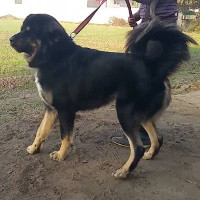
| The Gaddi Kutta is a mastiff-type mountain dog found in northern India, particularly in the western Himalayas and in the states of Himachal Pradesh and Uttarakhand. The first refers to the breed's skills, the second to its origins. Originally bred for hunting, the Gaddi Kutta is widely used by local shepherds, mainly Gaddis from the South Asian tribe of the same name, and is reputed to be strong enough to fend off snow leopard attacks and herd sheep and goats back to their enclosures. |
History of the Gaddi Kutta |
| Some famous Gaddi Kutta bloodlines include the bujus line, the spiti working line or the Manali agroline. The Gaddi Kutta takes its name from the Gaddi tribe of South Asia, while the word Kutta means Dog in Hindi-Urdu. Although the exact origin of the Himalayan Sheepdog has not been well documented, it is thought to have a rich heritage in northern India. The breed is also thought to have existed since ancient times in these regions. Local tribes used the dogs as guard dogs or herdsmen because of their known aggressiveness and agility. The Himalayan sheepdog was most often used to guard livestock and protect them from predatory animals. Throughout their history, the breed has also been used to hunt big game, particularly in the region's difficult terrain. Today, this breed is only common within the borders of India. |
Appearance of the Gaddi Kutta |
| They come in solid colors of black and beige, dark fawn and sometimes reddish, black and white umber. Working sheepdogs are shorter and lighter than those kept as pets. The height of the male is 71 to 87 centimeters, and that of the female 66 to 81 centimeters. Males weigh between 45 and 80 kilos, and females between 35 and 60 kilos. |
Temperament of the Gaddi Kutta |
| Due to its active nature, this breed is not designed to stay indoors for long periods or in an apartment. The Himalayan Sheepdog is normally used as a herding or guard dog, and requires a great deal of outdoor exercise. This breed may require obedience training in order to domesticate them. Training this breed can be difficult due to its independent and stubborn nature. Confidence and dominance should be imposed when training the Himalayan Sheepdog. To successfully train this breed, it's best to be strict when practicing repetitive training exercises and socializing them as puppies. Proper care of this breed includes daily exercise and training. Although this hardy breed can be prone to being ferocious towards strangers, they are loyal to their owners, making them faithful companions. As well as being vigilant and territorial, they are also affectionate and gentle towards their owners, making them suitable family pets. It is advisable to keep this breed away from other pets, as Himalayan Sheepdogs tend to be aggressive and jealous of other animals. |
Needs and activities of the Gaddi Kutta |
| This mountain dog breed closely resembles the Tibetan Mastiff and may be related to the Tibetan longhaired Kinnaur Shepherd. Naturally, Himalayan Sheepdogs live an outdoor life and are rarely seen beyond the Indian regions. As a powerful, robust breed, the Himalayan Sheepdog is mainly used for breeding purposes. The Himalayan Sheepdog is highly prized in the region as a loyal companion and working dog. |
Maintenance of the Gaddi Kutta |
| The life expectancy of the Himalayan Sheepdog is ten years. This breed is known to be relatively healthy due to their active lifestyles, but is also prone to a few health problems. Hip dysplasia, elbow dysplasia, patella luxation, arthritis, glaucoma and obesity are just some of the common health problems. Appropriate care for this breed includes daily exercise and training. |



 English (United Kingdom)

Comments