 |
Ambullneo Mastiff |
|
He is not recognized by the F.C.I. |
Origin |
U.S.A. |
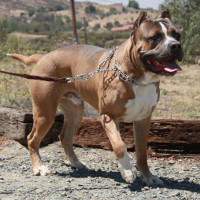
| The Ambullneo Mastiff is a relatively new breed that appeared in Southern California in the 1980s. An English Mastiff was crossed with a Naepolitan female. Two of the resulting puppies were crossed with a Game Bred Pitbull. Then these puppies were crossed to a Bullmastifff. These puppies were 55% Mastiff and 45% Bulldog. But that's not the end of the story. These puppies, which we'll call Pup1 for clarity, would be bred to Pup2. Pup2 had just as interesting a start as Pup1. An American bulldog/Pitbull was bred to a Bullmastiff. These puppies are Pup2, and Pup2 was 70% Bulldog and 30% Mastiff. When Pup1 was bred to Pup2, the result was 57.5% Bulldog and 42.5% Mastiff. This cross is what we now call the Ambullneo Mastiff. But more than a decade would pass before the breed was admitted to the National Kennel Club (NKC). The dogs obviously had to be tested for intelligence and fertility. Once this was done and their physical health assured, the dog was declared a recognized breed. Yet the breed is too new to be accepted by most associations worldwide. Ambullneo Mastiffs are robust dogs with large heads and strong jaws. The ears are usually cropped, but if left alone, they fall back rather like a retriever's ears. The neck is thick and the shoulders are strong and heavy. The tail is thick and long, dropping as low as the hocks when the dog is at rest. A large dog, the Ambullneo Mastiff can weigh up to 68 kilos, although females tend to be considerably smaller. This breed of dog is highly intelligent and a natural guardian. Once bonded to their family, they will guard it to the death. This dog is not stubborn, but it is sensitive. You must take care to assert yourself, but not to the point of having to shout at the dog. The Ambullneo Mastiff is very aware of tone, so keep your voice low. These dogs bond quickly, sometimes to the point of becoming aggressive to strangers. To avoid this, socialize your dog before he sticks too closely to you and your family. Obedience training is a must with the Ambullneo Mastiff. A curious dog, this breed loves to explore and learn new things, so keep your dog engaged and entertained. The Ambullneo Mastiff is a robust dog, but it is prone to hip dysplasia. To reduce the risk of your dog developing this condition, limit intense activity until the dog is at least two years old. This gives the hips time to mature fully. These dogs love activity and don't do well in an apartment. A fenced-in yard is best, but make the fence 1.80 meters high. No lower, otherwise the dog can just jump over it. The Ambullneo Mastiff likes to be outside, but not all the time. In cold weather, make sure a doghouse is provided. In hot weather, they need shade and plenty of water. If they have these things, they'll probably spend most of their time exploring their territory. If you're hoping for a low-maintenance breed, the Ambullneo Mastiff could be the right choice for you. This breed has short hair and little shedding, so a quick comb with a stiff bristle brush once a week is usually all that's needed. For bathing, consider a dry shampoo every three months. A full bath is only necessary when the dog is really dirty or smelly (which happens because they roll in everything they can find). You'll need to keep the nails trimmed to avoid damaging floors and furniture, but that's the worst you'll encounter with these breeds. The Ambullneo Mastiff makes a good pet if you manage this breed on its own merits. With plenty of socialization, they can learn to get along with most people and large animals. This breed is not a good idea for families with small children or pets (such as cats or small dogs), unless you're going to be present with your dog at all times. Otherwise, they're a good choice for anyone with a large yard. |



 English (United Kingdom)

Comments