 |
Canis Panther |
|
He is not recognized by the F.C.I. |
Origin |
U.S.A. | |
This breed is also known as |
American Canis Panther
|
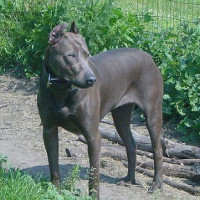
| The Canis Panther was developed by crossing the Doberman Pinscher, American Staffordshire Bull Terrier, Black Labrador Retriever and Great Dane in the 1970s in the USA by Mr. Stratten, Jones and Lopez. The three men were personal dog trainers who lived in the inner city and felt there were no dogs properly bred and trained for protection. The type of dog they wanted to develop was influenced by dogs in Germany. For many years, it was considered a mixed breed and, in fact, some still regard it as just one, although some researchers have suggested that at this stage, nearly 50 years later, it can be considered a new breed. It was bred to be a protector, used as a personal guard dog and as a family watchdog. As well as being developed to be very protective, he was also intelligent, agile and very attractive and strong. Shortening the tail, removing the rear dewclaws and trimming the ears was and still is common. The name Canis Panther was influenced by its sleek lines and also by the desire to have an intimidating name. It is not so named because it hunts panthers. There are now a few established lines with multi-generational pedigrees. He still has mixed onions about his status and is not recognized by any major kennel club at the moment. It is not a common dog, even in the USA where it is mainly bred. While the inclusion of the Great Dane and Lab in its early days meant that some working dog enthusiasts were not as welcoming as this dog, personal protection enthusiasts have welcomed it. The Canis Panther is a large to giant dog weighing 38.5 to 63.5 kilos and 61 to 76 centimeters in height. Males tend to be slightly larger than females. They are lean, muscular, strong and powerful, with a docked tail, dewclaws and broad chest. If left natural, the tail is long. Its coat is close and short, and common colors are solid and include black, browns and grays. Some may have a small amount of white on the belly and/or chest. The black and tan look can sometimes appear in some Doberman dogs. It has a fairly long muzzle that tapers a little to wide, powerful jaws and a large black nose. When properly bred, Dobermans are loving, sensitive family dogs. They are alert, very loyal, intelligent and protective, making them excellent watchdogs. They are courageous and bold when it comes to defending their territory and family. Early socialization is essential to ensure that his protective, territorial instincts don't take him too far. He is very wary of strangers and will need appropriate introductions and supervision with new visitors. Not a dog for new owners, he needs firm, experienced handling. It's important that he knows he's not the pack leader and that you are. Without this, he can become more aggressive, suspicious and stubborn, making him difficult to live with. He forms very strong bonds with his owners, which makes them such good guard dogs that he will literally do anything he can to protect you. With good socialization, he's a friendly dog once he knows there are no threats and gets on well with people. He's a very intelligent dog and really if you have experience and training as a firm, confident leader, it will be an easy process. However, there seems to be a mixture of reports saying he's a dominant dog and some saying he's submissive. The first way for any inexperienced trainer will be difficult, as it will seem that you're not sure you're the boss. Be gentle, patient and positive, but always assertive and compliant. Make sure he's also well socialized, and that starts at an early age. It's done by introducing him to different places, people, animals, sounds and situations and teaching him what the appropriate responses are. The Canis Panther is a very active dog that needs active owners so that everyone is happy with the amount of outdoor time he needs. He can adapt to apartment living, but needs space and a large yard to explore and play in. He loves playing dog as well as safe running time with long walks a day. They can require anything from an hour to two hours a day and this activity should include mental stimulation too. This is an energetic, agile dog and if not given enough to do so, it will become hyper, bored, restless, destructive and even aggressive and difficult to control. This breed is fairly easy to care for, its short coat is easy to brush, its size is small to medium and some hairs can be around the house. Brush once or twice a week and bathe as needed, but not too frequently. Dogs have natural oils in their coats that keep them healthy and if bathed too often, or using a shampoo not designed for dogs can damage these oils leading to skin problems. With socialization, the Canis Panther can get on well with children; they can be friendly, affectionate, playful and protective. Things go even better when he's been raised with children and a closer bond is formed. Also be sure to teach children how to approach, touch and play with them in an appropriate, kind and safe manner. He has a strong prey drive, so doesn't always get on well with other animals. He may get on better with other dogs with socialization, but not with strange dogs who arrive on his territory. |



 English (United Kingdom)

Comments