
 |
King Shepherd |
|
He is not recognized by the F.C.I. |
Origin |
U.S.A. | |
Translation |
Francis Vandersteen | |
This breed is also known as |
American King Shepherd |
A brief presentation of the King Shepherd |
| The King Shepherd is a new breed in development since the early 1990s. This dog was developed in the USA by breeders Shelley Watts-Cross and David Turkheimer to develop a dog similar in nature and appearance to the German Shepherd breed, but larger in size. These dogs have the confidence found in most German Shepherds, but tend to be calmer and more affectionate, making them suitable for livestock protection, personal protection and even therapy work. In most cases, King Shepherds are friendly but somewhat reserved towards strangers and get on well with other animals, but appropriate socialization must be offered to ensure they retain their easy-going temperament. |
History of the King Shepherd |
| The King Shepherd is a new breed of dog from the USA that is still considered to be in development. In the early '90s, Shelley Watts-Cross and David Turkheimer began developing this attractive dog using German Shepherds from America and Europe, as well as Shiloh Shepherds, another emerging breed, with additional contributions from Alaskan Malamute and Great Pyrenees dogs. Their intention was to develop a dog with the working ability and protective instincts of the German Shepherd, but larger, with fewer health problems and a friendlier disposition, and they have so far succeeded in their endeavor by founding the official King Shepherd Club in 1995. As this is a rare dog that is still in development, it has not yet been recognized by any of the major dog clubs. They can be registered with the American Rare Breed Association and the American King Shepherd Club. This striking dog has rapidly gained in popularity, and reputable breeders continue to carefully cultivate and perfect these dogs to further improve their overall health. Unique and not always easy to find, they are becoming more and more in demand, commanding quite a high price with well-bred puppies costing between $1,500 and $3,000. They're becoming more and more recognized, encouraging some less reputable breeders to try and cash in on their popularity. Some breed them without proper genetic and physical testing. So, if you're looking for a King Shepherd puppy, it's important to make sure your dog's parents are registered with the American King Shepherd Club. |
Appearance of the King Shepherd |
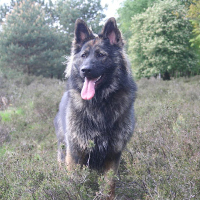
| These are very large dogs with strong bones and deep chests, standing 61 centimeters high at the shoulder and often weighing over 45 kilos. They are well muscled and slightly longer than they are tall, giving them a rectangular outline with a long, straight or slightly curved tail that is usually carried low. They have a large, well-defined skull with a square shape that narrows as they approach the eyes, and a well-balanced square muzzle with a strong jaw. The King Shepherd's almond-shaped eyes are dark brown and generally have a very lively but composed expression. Their large triangular ears are carried upright and open in front, often with heavily furred edges, and their nose is large and black in color. The association's standard states that there is no penalty for dogs with a snow nose, a condition in which the nose develops spots or streaks of lighter color, particularly during the winter months. |
Temperament of the King Shepherd |
| These are generally confident dogs, and while they may be a little wary of strangers, they are rarely shy or aggressive about it. King Shepherds are loyal and affectionate with their families, and while interactions between smaller children and dogs should always be closely monitored, they tend to be calm and trustworthy with toddlers. They have a natural protective streak and can be easily trained for protection and guarding work, but because of their friendly nature and stable temperament, they are just as talented as therapy dogs. These dogs are not as energetic as some breeds, but they have plenty of stamina, strength and agility, making them suitable as working dogs, herding and guarding livestock. They generally get on well with other dogs, although good socialization with these large dogs is essential if they are to retain their confidence and good nature. While they are generally friendly with other types of animals, such as cats, some dogs can develop a penchant for hunting them. |
Needs and activities of the King Shepherd |
| This large dog is generally quite robust and stable, and although athletic, is not prone to hyperactivity. That said, the King Shepherd was developed from several working breeds known for their strength and stamina, and these big dogs need exercise to keep fit. They should have at least an hour to an hour and a half of walking or jogging every day. These dogs are also highly intelligent, and mental stimulation and training should also be provided daily to prevent the development of harmful boredom-related behaviors. |
Maintenance of the King Shepherd |
| The King Shepherd has a thick, weather-resistant coat that doesn't need to be bathed too often, but it does require careful, regular brushing. Brushing your dog several times a week will help eliminate dead hairs and control their moderate shedding throughout the year, improve blood circulation and prevent the formation of dangerous knots and mats in the undercoat close to the skin. This breed also sheds more heavily during seasonal changes and should be brushed at least once a day to control heavy shedding during these periods. It's also important to examine their ears regularly for any dirt, debris or damage to prevent infection from developing. Their teeth should be cleaned at least once a week. Check their nails for excessive length every month. |



 English (United Kingdom)

Comments